Home > News > Industry News
Transparent LED displays have become one of the most exciting innovations in digital signage and stage design. Unlike traditional LED walls, these displays allow light and visibility to pass through the screen while still showing dynamic visuals.
A discussion among lighting designers on Reddit recently highlighted how these displays work and why they have become popular in concerts, DJ performances, and modern architectural spaces.
A transparent LED display uses a mesh-like structure with widely spaced LED pixels. Instead of forming a solid panel, the LEDs sit on thin strips or transparent materials. Large gaps between the pixels allow viewers to see through the screen while the LEDs generate images and animations.
Most transparent LED screens achieve 60%–90% transparency, which means natural light can pass through the display while digital content remains visible.
From a distance, the human eye blends the illuminated pixels into a single image. This effect creates the illusion that graphics float in mid-air.
Stage designers often choose transparent displays because they solve several common problems with traditional LED walls.
Solid LED screens block stage lighting and create shadows. Transparent mesh screens avoid this issue because lighting beams can pass through the gaps between pixels.
As a result, lighting designers maintain creative control without sacrificing video effects.
Traditional LED walls create a visual barrier behind performers. Transparent displays keep the stage open and maintain depth.
This design works especially well for:
DJ booths
live concerts
festival stages
immersive art installations
Mesh LED displays use fewer materials than solid panels. This structure lowers the weight of the screen and simplifies installation for touring stages or temporary events.
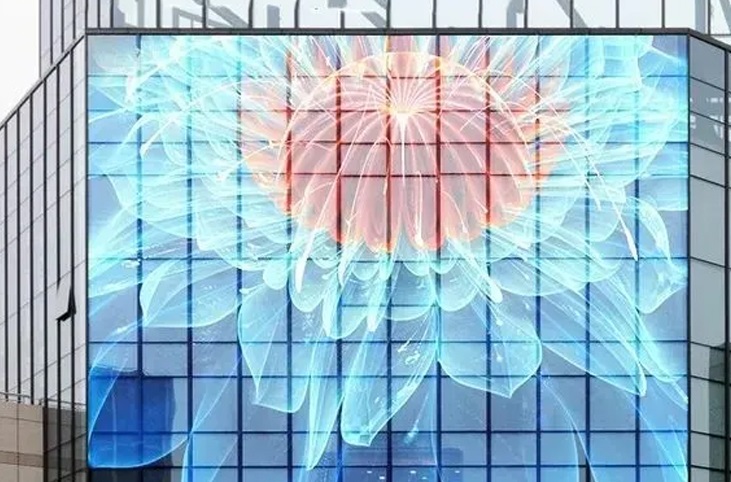
Transparent LED displays rely on a combination of specialized hardware and image mapping technology.
Each display contains rows of LEDs mounted on transparent strips or mesh panels. Large spacing between pixels creates the see-through effect.
A controller sends signals to each LED pixel. The system combines thousands of LEDs to create videos, graphics, and animations.
Despite the open structure, these displays can produce extremely bright visuals—often thousands of nits—so content remains visible even in bright environments.
 EN
EN
 AR
AR
 BG
BG
 HR
HR
 CS
CS
 DA
DA
 NL
NL
 FI
FI
 FR
FR
 DE
DE
 EL
EL
 HI
HI
 IT
IT
 JA
JA
 KO
KO
 NO
NO
 PL
PL
 PT
PT
 RO
RO
 RU
RU
 ES
ES
 SV
SV
 TL
TL
 ID
ID
 SR
SR
 UK
UK
 VI
VI
 ET
ET
 HU
HU
 TH
TH
 TR
TR
 FA
FA
 AF
AF
 MS
MS
 GA
GA
 HY
HY
 AZ
AZ
 MN
MN
 UZ
UZ