Home > News > Industry News
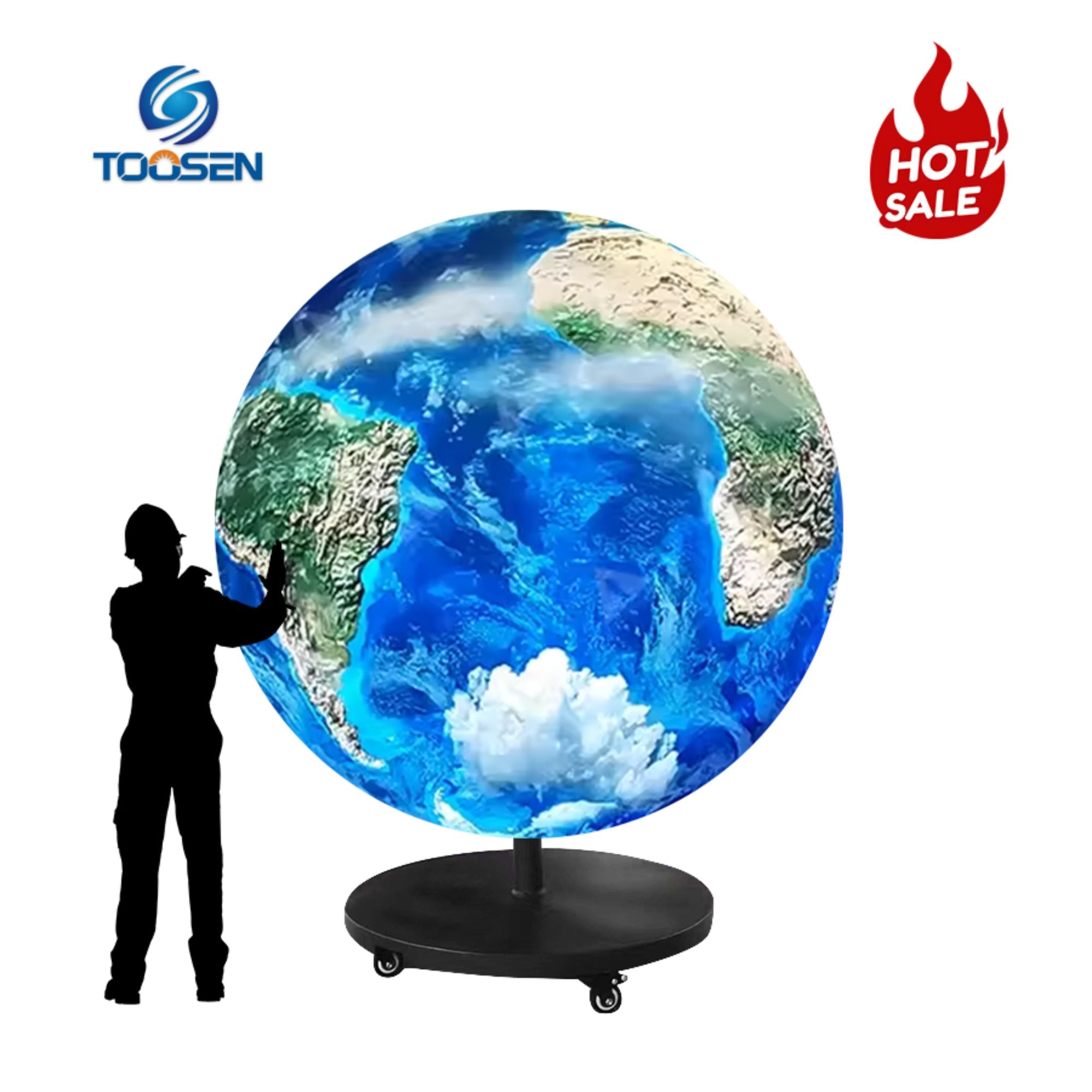
Circular LED screens break the visual limitations of traditional rectangular displays. Their geometric symmetry naturally attracts attention and creates immersive visual experiences. Retailers, exhibition organizers, and brand marketers often use circular LED displays to build memorable visual environments and strengthen brand identity.
To maximize their impact, designers must combine creative content design, spatial integration, and motion effects. Below are several effective strategies to create unique commercial display effects using a circular LED screen.
Circular screens work best when content flows naturally along the curved structure. Instead of static images, designers should use rotating or looping motion graphics.
Effective visual approaches include:
rotating product showcases
orbiting brand logos
circular countdown animations
flowing particle effects
These animations guide the viewer’s eyes around the entire screen. As a result, the display feels dynamic and immersive.
For example, a cosmetics brand might show a product bottle rotating slowly around the center of a circular LED display, surrounded by glowing particles.
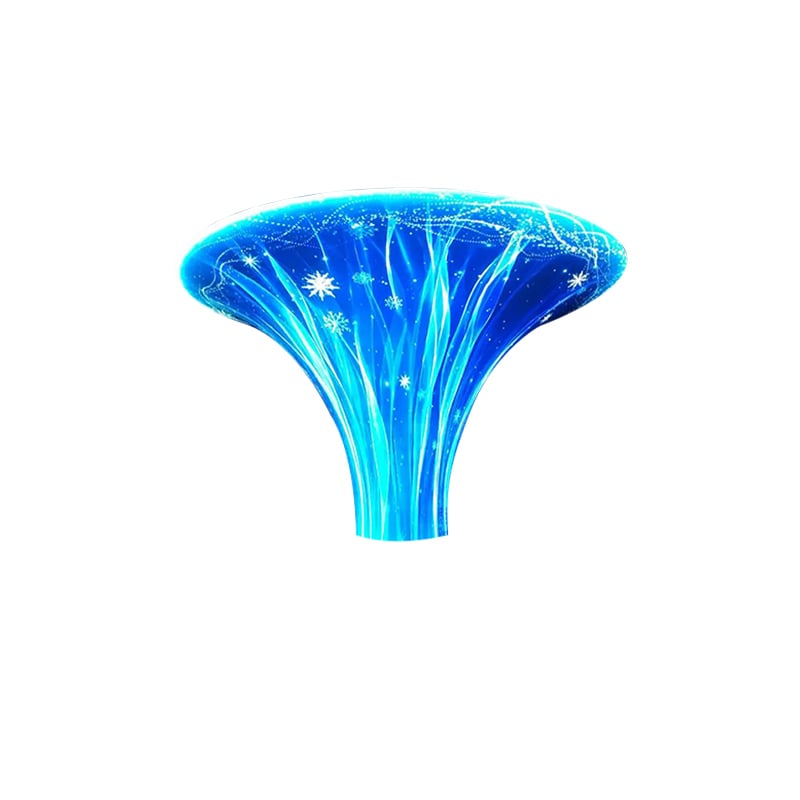
Circular LED screens can simulate depth and dimensionality. Designers often create tunnel or vortex animations that appear to pull viewers into the screen.
Common visual effects include:
galaxy or wormhole animations
digital tunnels
expanding rings
ripple or wave distortions
These effects create strong visual depth and make the screen look like a portal rather than a flat display. This technique works especially well in shopping malls, exhibitions, and entertainment venues.
A circular LED display becomes much more powerful when it interacts with the surrounding environment.
Designers can integrate the screen with:
ceiling structures
columns or cylindrical installations
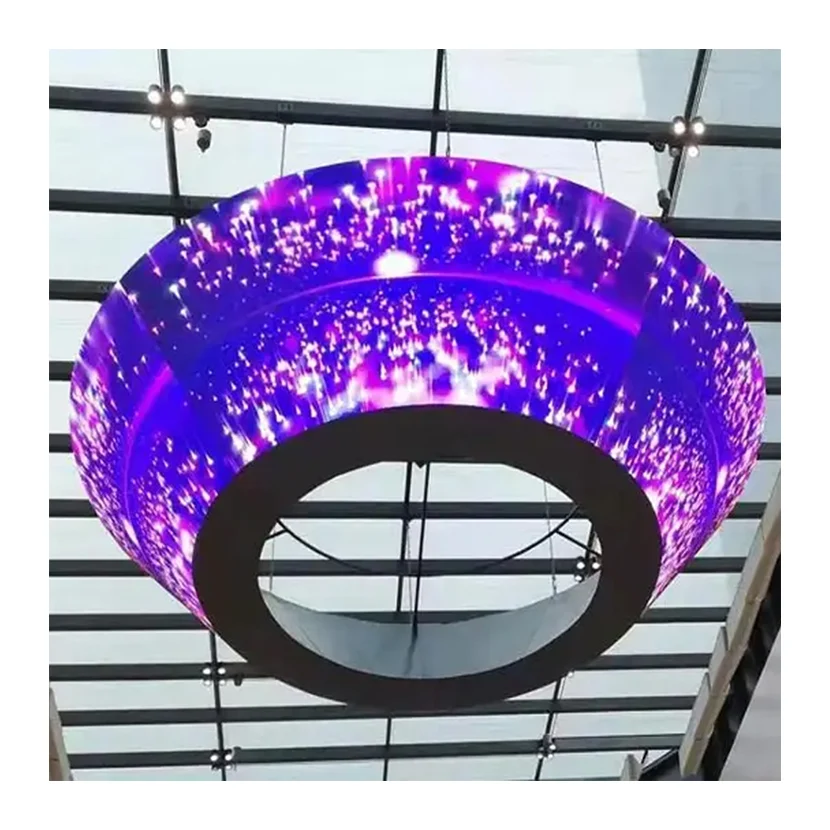
suspended ring displays
circular stage structures
For example, a circular LED screen installed above a retail atrium can display expanding light patterns that mirror the architectural shape of the ceiling. This alignment strengthens the spatial experience and makes the display feel part of the architecture rather than just a digital sign.
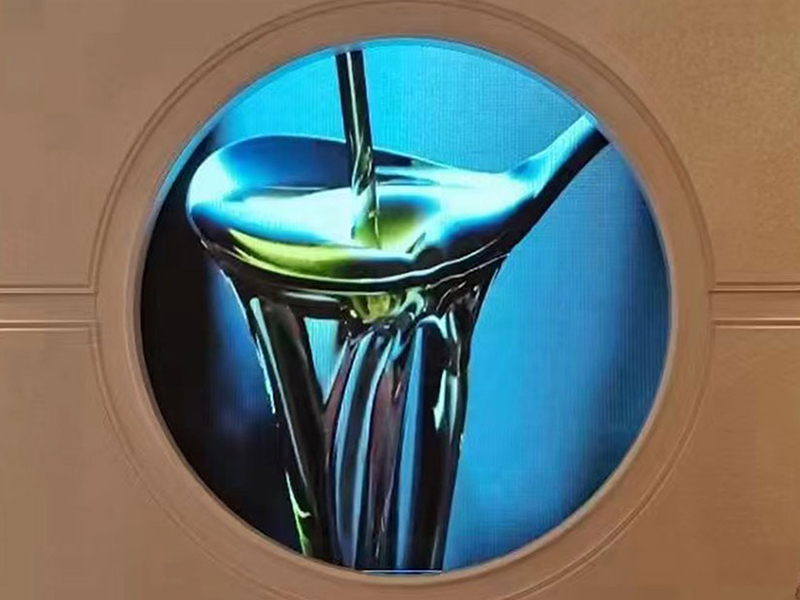
Many businesses simply crop rectangular videos to fit a circular screen. This approach wastes the creative potential of the display.
Instead, designers should create radial compositions that use the circular shape intentionally.
Key design strategies include:
placing the main subject in the center
arranging secondary elements in circular patterns
using rotating rings to frame the message
building symmetrical graphic layouts
Radial design ensures that the content looks balanced from every viewing angle.
Interactive features can dramatically increase engagement with circular LED displays.
Businesses often integrate:
motion sensors
touch interaction
camera tracking
QR code campaigns
For example, when visitors approach a circular LED display, the graphics might expand outward or trigger a brand animation. This interaction transforms the screen from a passive display into an experiential installation.
Another advanced approach involves combining multiple circular LED screens.
Examples include:
double-ring displays where inner and outer rings show synchronized content
stacked circular screens for layered depth
suspended halo LED rings in shopping centers
Layered installations allow designers to create complex visual storytelling and stronger spatial impact.
 EN
EN
 AR
AR
 BG
BG
 HR
HR
 CS
CS
 DA
DA
 NL
NL
 FI
FI
 FR
FR
 DE
DE
 EL
EL
 HI
HI
 IT
IT
 JA
JA
 KO
KO
 NO
NO
 PL
PL
 PT
PT
 RO
RO
 RU
RU
 ES
ES
 SV
SV
 TL
TL
 ID
ID
 SR
SR
 UK
UK
 VI
VI
 ET
ET
 HU
HU
 TH
TH
 TR
TR
 FA
FA
 AF
AF
 MS
MS
 GA
GA
 HY
HY
 AZ
AZ
 MN
MN
 UZ
UZ