Home > News > Industry News
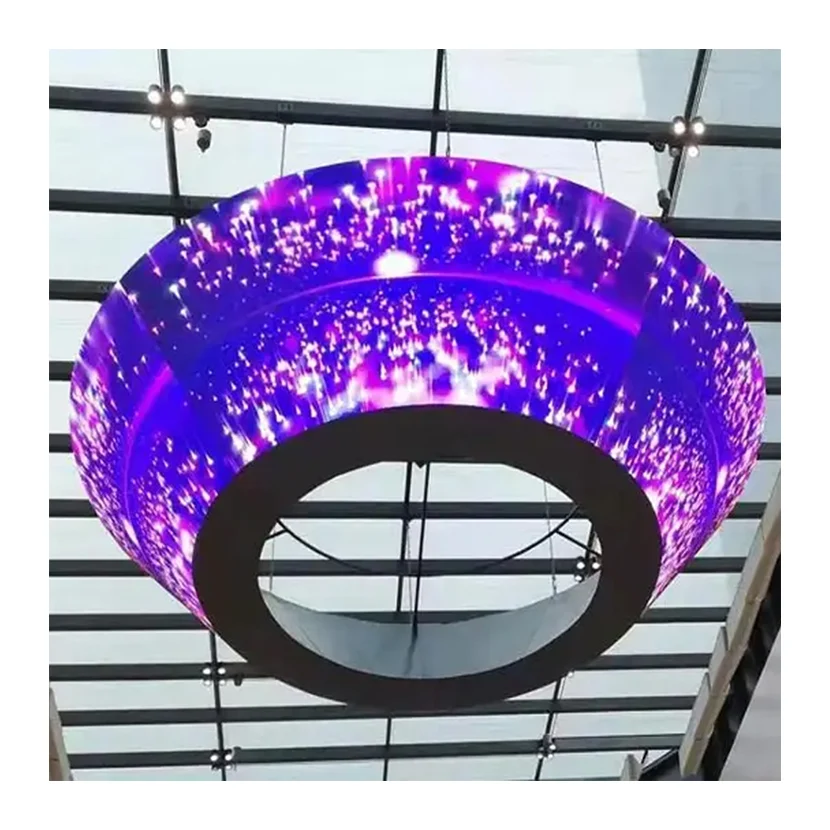
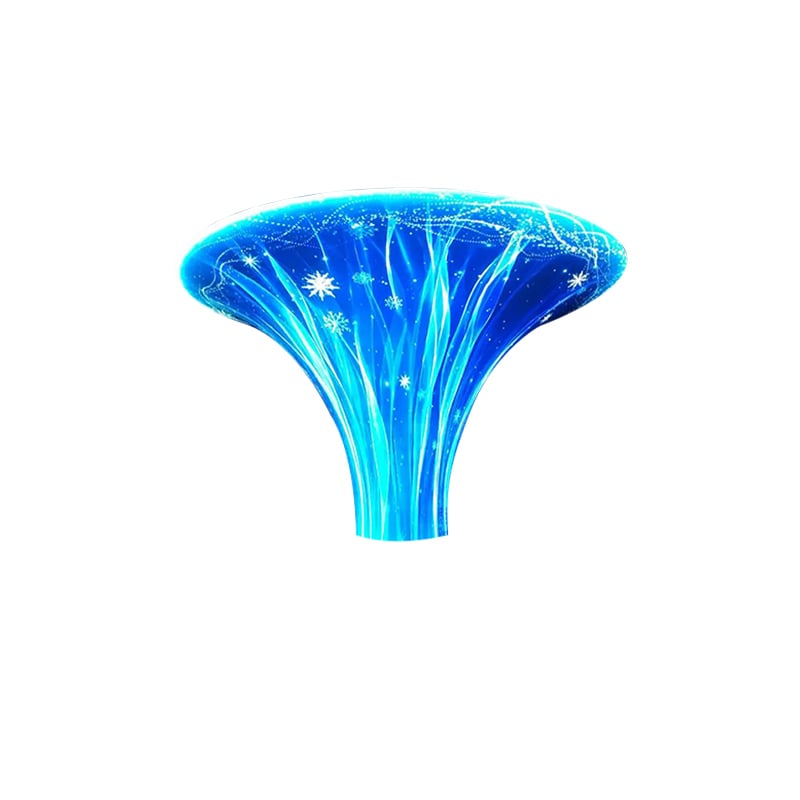
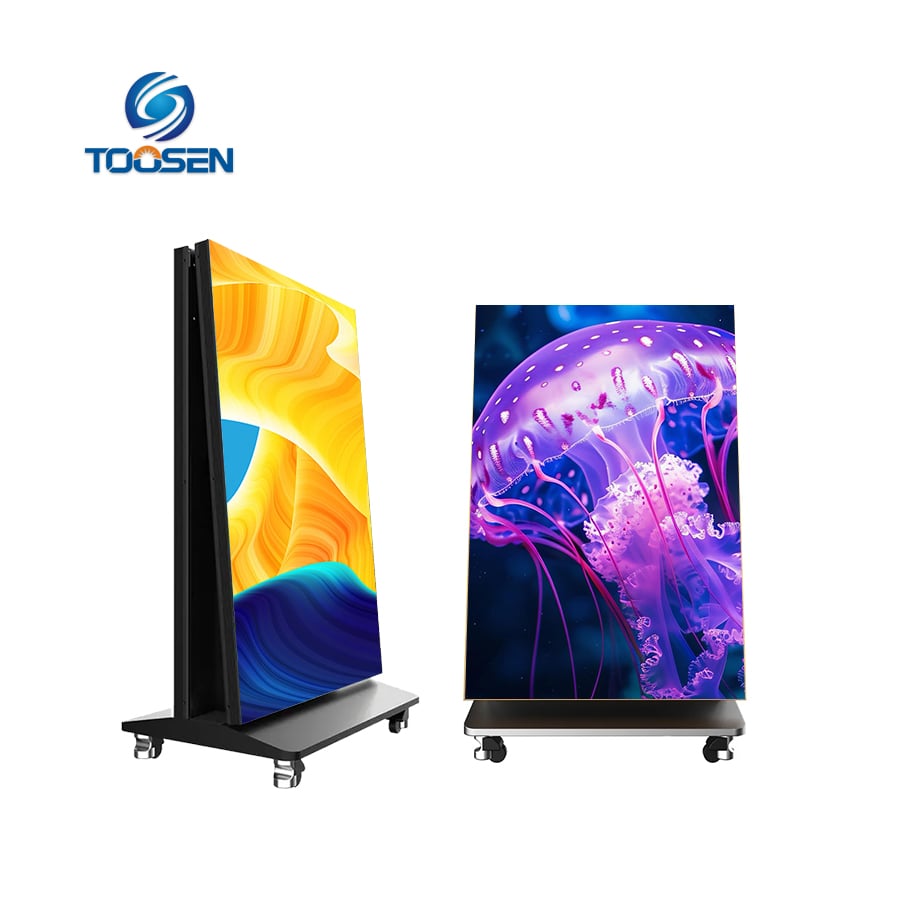
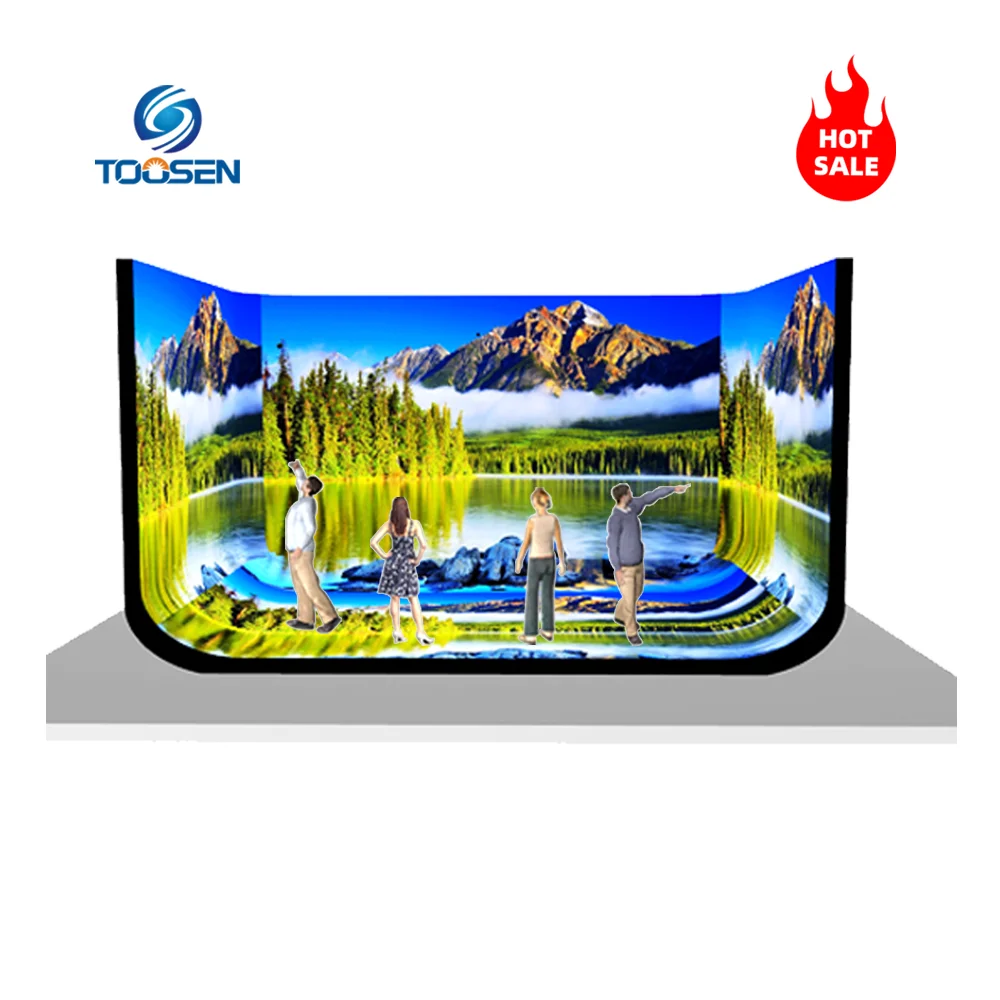
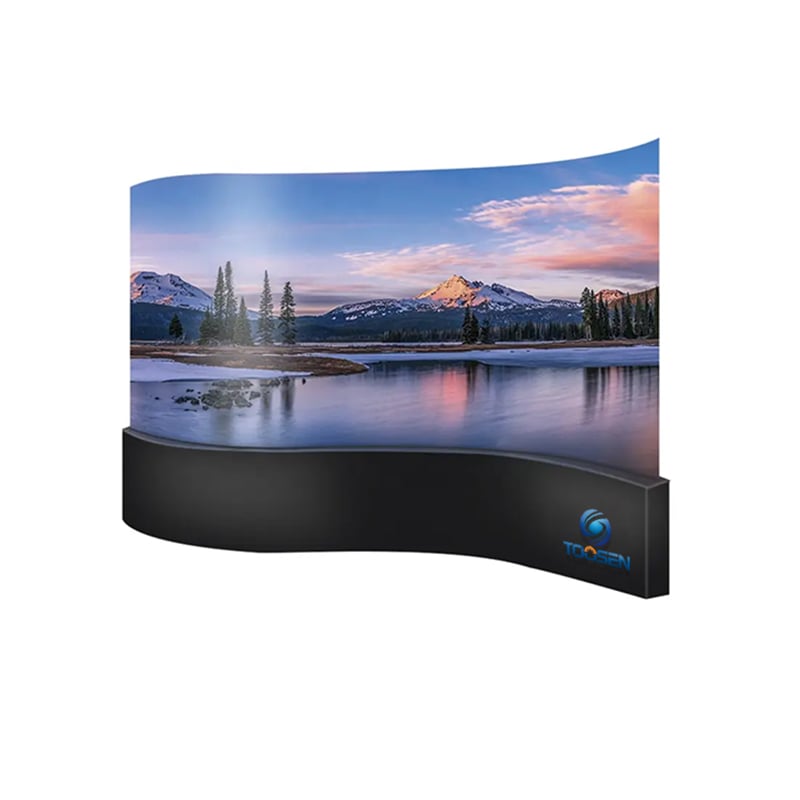
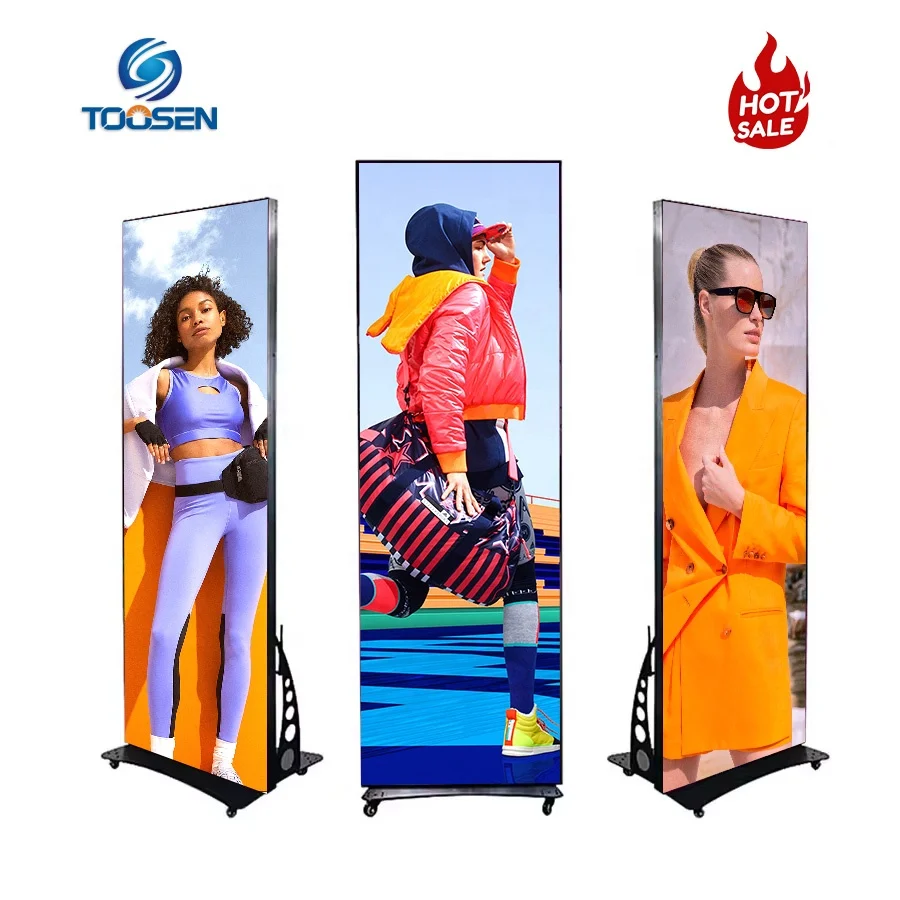
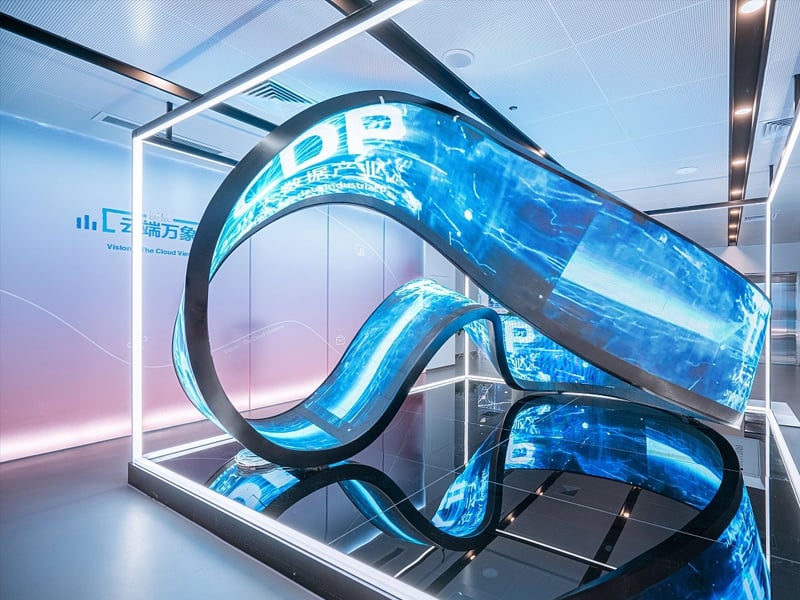
Special-shaped LED displays come in many shapes, such as circles, curves, waves, polygons, and artistic structures. Because these designs do not follow standard geometric forms, calculating their actual display area is often more complex than traditional rectangular LED screens. To get accurate results, you must combine geometric breakdown methods with LED module characteristics and on-site verification. This guide explains the core logic and offers practical calculation methods for different types of irregular LED displays.
Before calculating the size of any special-shaped LED screen, you need to clearly define two essential concepts. These parameters prevent miscalculations and ensure the final result reflects the true display area.
Effective Display Area:
The actual LED-lit surface. This is the only area used for quoting, pixel density evaluation, and content design.
Overall Dimensions:
Includes frames, borders, and structural components. This is used for installation planning rather than pricing.
For example, if the outer diameter of a circular display is 5.2m and the frame uses 10cm borders, the actual effective diameter is 5m.
If gaps are smaller than 1mm, you can ignore them.
If gaps are 2mm or more, you must calculate the total gap area and subtract it to get an accurate display area.
Depending on the shape, you can choose from three different approaches. These methods range from basic geometric breakdowns to module-based calculations and advanced 3D scanning.
Best for: circles, ellipses, polygons, curved screens, and combined shapes
Difficulty: Low
Accuracy: ≤2%
This method works well when you can divide the screen into standard geometric parts such as rectangles, triangles, arcs, semicircles, or trapezoids.
Circle: Area = πr²
Ellipse: Area = πab
Triangle: Area = ½ × base × height
Trapezoid: Area = ½ × (top + bottom) × height
Cylinder surface (arc screen): Area = πD × H
Partial arcs: Area = (Angle / 360°) × πD × H
Half circle: Diameter = 4m → Area = ½ × π × 2² ≈ 6.28㎡
Rectangle: 4m × 2m → Area = 8㎡
Module gaps: 0.1㎡
Total area = 6.28 + 8 – 0.1 = 14.18㎡
Best for: wave-shaped screens, twisted shapes, artistic contours
Difficulty: Medium to High
Accuracy: 0.5%–1%
When the screen cannot be broken down into simple geometry, you can rely on grid-based estimation or high-precision 3D scanning.
This is a practical, low-cost solution.
Steps:
Project a grid (10cm × 10cm or smaller) on the surface.
Count full grid squares inside the display area.
Count partial squares larger than half and round them up.
Multiply by the area of a single grid.
Example:
Full squares = 800
Partial squares = 120
Total area = (800 + 120) × 0.01 = 9.2㎡
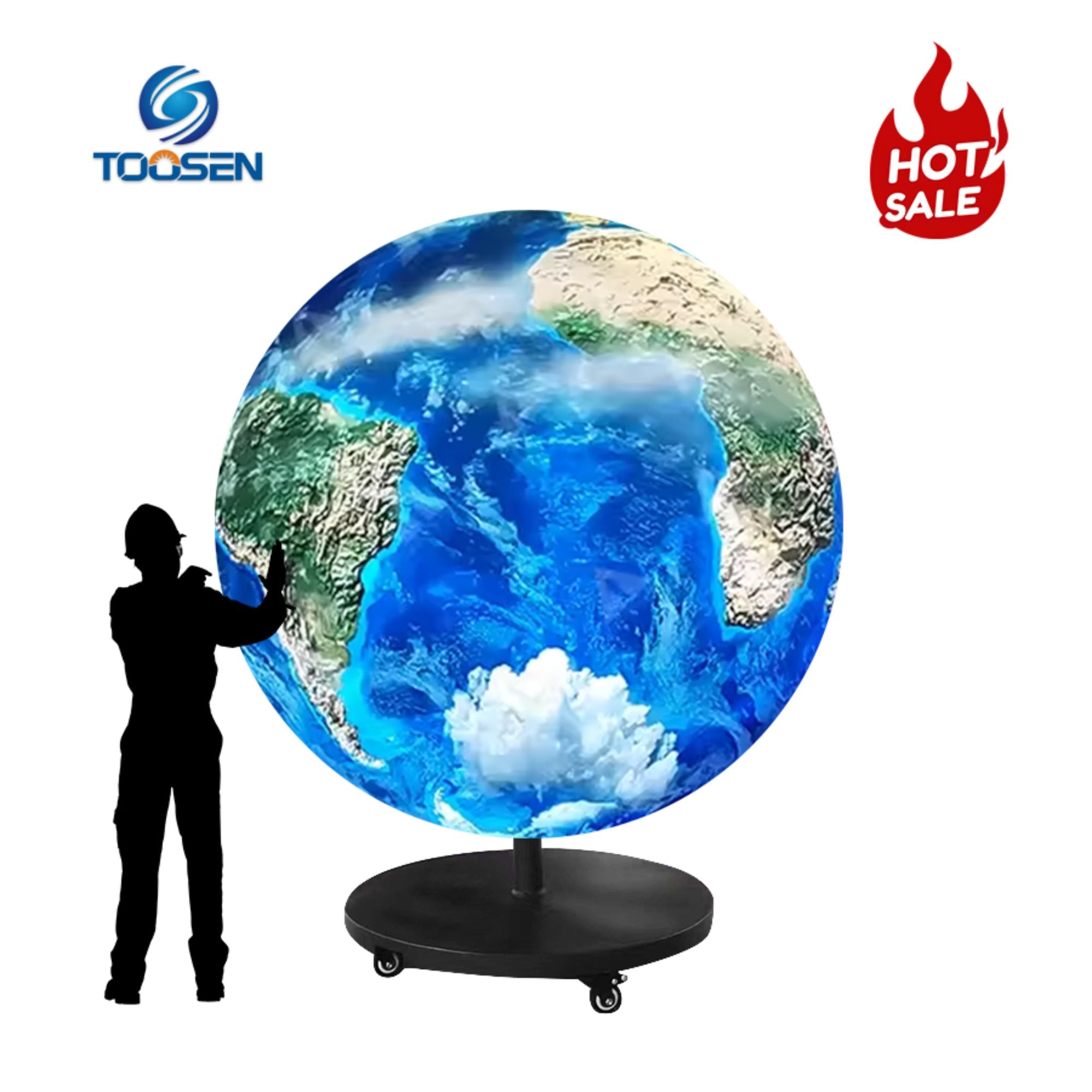
This is the most accurate solution for complicated curves such as spheres or sculptural surfaces.
You scan the actual display surface using a 3D scanner, generate a mesh model, and measure the curved area directly in software like AutoCAD or SketchUp.
Accuracy can reach ≤0.5%.
Best for: all irregular LED screens, especially those using custom-shaped modules
Difficulty: Low
Accuracy: ≤1% (most recommended)
Every LED module has a fixed effective display area. So the most reliable method is to calculate:
Total Area = (Number of Active Modules × Area per Module)
If some modules are cut or only partially lit, calculate the proportion based on the actual emission area.
20 fan-shaped modules (0.3㎡ each)
5 half modules (0.15㎡ each)
Total area = 20×0.3 + 5×0.15 = 6.75㎡
This method avoids errors related to irregular outlines, uneven gaps, or non-flat shapes.
To improve accuracy, keep the following points in mind:
These methods reduce error to below 1%, especially for artistic or complex forms.
≤1mm → ignore
≥2mm → calculate total gap area (gap width × total seam length)
After finishing the design calculation, measure the key dimensions using a laser distance meter.
If the difference exceeds 3%, recalculate.
Protective glass does not change the effective display area, but it affects the overall installation size.
| Screen Type | Recommended Method | Accuracy | Cost |
|---|---|---|---|
| Circular, Elliptical, Polygonal | Geometric Breakdown | ≤2% | Low |
| Wave-Shaped, Artistic | Grid Method / Module Summation | ≤1% | Medium |
| Spherical, Complex Curves | 3D Scanning / Module Summation | ≤0.5% | High |
Core principle:
→ Split the shape when possible; use module counting or 3D scanning when it becomes too complex.
Always base calculations on the effective display area, not the outer frame.
Calculating the size and display area of irregular LED screens requires a deliberate and structured approach. By understanding effective display regions, handling module gaps correctly, and choosing the right calculation method for the shape, you can achieve precise results. Whether you’re working with simple geometric forms or complex artistic surfaces, using these techniques ensures accurate budgeting, better design alignment, and smoother installation planning.
 EN
EN
 AR
AR
 BG
BG
 HR
HR
 CS
CS
 DA
DA
 NL
NL
 FI
FI
 FR
FR
 DE
DE
 EL
EL
 HI
HI
 IT
IT
 JA
JA
 KO
KO
 NO
NO
 PL
PL
 PT
PT
 RO
RO
 RU
RU
 ES
ES
 SV
SV
 TL
TL
 ID
ID
 SR
SR
 UK
UK
 VI
VI
 ET
ET
 HU
HU
 TH
TH
 TR
TR
 FA
FA
 AF
AF
 MS
MS
 GA
GA
 HY
HY
 AZ
AZ
 MN
MN
 UZ
UZ