Home > News > Industry News
Many people face the same question after installing an LED display:
Should the LED screen stay powered on when not in use, or should you turn it off?
Sometimes the screen already has a brightness timer. It becomes dim during idle hours. However, many users still worry whether leaving the power on is harmful, or if shutting it down will damage the power supply or cause settings to be lost.
This guide explains the best practice and helps you understand how to operate your LED screen safely. It also gives you clear rules you can follow for different usage scenarios.
There is no single rule for all LED screens. Instead, the decision depends on how long the screen will be idle.
However, one thing is always true: avoid frequent on–off switching.
This is because rapid power cycling may damage the power supply, reduce LED lifespan, or cause the receiving card to lose configuration.
So, the key is to manage your power based on short breaks or long breaks.
If the idle time is short—such as during lunch breaks, meeting breaks, or gaps shorter than two hours—the best choice is to leave the LED screen powered on. You can place it in standby mode or black screen mode.
These modes reduce brightness and lower power consumption. They also protect the display by avoiding power surges.
There are several reasons:
Every time an LED screen turns on, the power supply and LED modules suffer a large current shock. This is similar to starting a car engine again and again. Over time, this stress reduces the lifespan of internal components.
An LED screen works best when it stays in a stable thermal state. When you turn it off and on again, temperature drops and rises quickly. This “thermal shock” accelerates aging.
Some receiving cards or processors may reset or lose parameters after a sudden shutdown. Keeping the system powered avoids unnecessary software or calibration tasks later.
Therefore, for short idle periods, standby mode or black screen mode is the safest and most efficient choice.
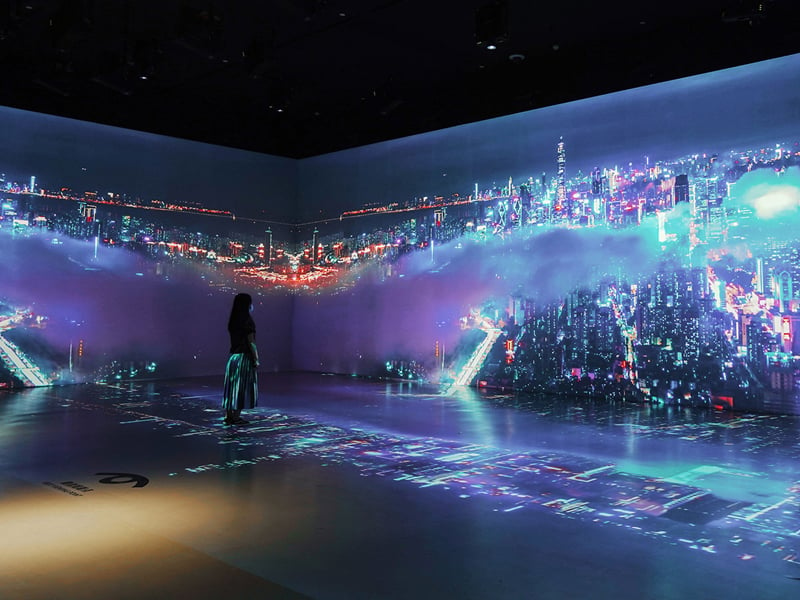
When the LED display will not be used for several days—such as weekends, holidays, long exhibitions breaks, or city-wide events—it is safer to turn off the main power and even the breaker in the distribution box.
Even when showing a black image, the internal circuits still work. They consume energy and produce heat.
Over long periods, this increases electricity costs and accelerates component aging.
A powered system always carries risk. A long-term unattended LED display may face:
power overload
short circuit
abnormal voltage in the power grid
rare but possible fire hazards
Turning it off completely removes all electrical risks during long idle periods.
Outdoor LED displays are vulnerable to lightning strikes. Disconnecting power is one of the most effective protection methods.
Continuous operation for many days without supervision may push parts beyond their safe limits. Powering off eliminates this risk.
For these reasons, full power-off is the correct choice for long-term idle periods.
No matter when you operate your LED display, you should follow the correct order.
Wrong handling—for example, pulling the breaker directly—may damage system files or interrupt the control card.
Turn on the main power.
Turn on the control system (processor, sender, receiving card).
Open the software and start sending the signal.
Stop the signal and close the software.
Turn off the control system.
Turn off the main power last.
These steps protect the screen and keep all settings stable.
Most LED control systems include a “black screen” button.
This helps dim the screen instantly while keeping it ready for use. It is safer than switching it on and off repeatedly and can extend the device’s lifespan.
The environment also affects the decision.
For outdoor screens in rainy seasons or humid areas, powering the screen off may cause condensation inside the cabinet. When turned back on, moisture can cause short circuits.
In these cases, keeping the screen working at low brightness helps remove humidity and protect internal parts.
Whether an LED display should stay powered on or turned off depends on how long it will remain idle.
For short breaks, keep it on and use standby or black screen mode.
For long breaks, disconnect the main power.
Most importantly, avoid frequent power cycling and always follow the correct startup and shutdown sequence. With proper operation, your LED screen will last longer, stay stable, and perform at its best.
Yes. Frequent switching creates strong current and thermal shocks, which shorten the lifespan of the power supply and LED modules.
Yes. Standby or black screen mode reduces power use and protects the screen while avoiding harmful power cycling.
Yes. During storms or lightning, turning off and disconnecting power is the safest option.
 EN
EN
 AR
AR
 BG
BG
 HR
HR
 CS
CS
 DA
DA
 NL
NL
 FI
FI
 FR
FR
 DE
DE
 EL
EL
 HI
HI
 IT
IT
 JA
JA
 KO
KO
 NO
NO
 PL
PL
 PT
PT
 RO
RO
 RU
RU
 ES
ES
 SV
SV
 TL
TL
 ID
ID
 SR
SR
 UK
UK
 VI
VI
 ET
ET
 HU
HU
 TH
TH
 TR
TR
 FA
FA
 AF
AF
 MS
MS
 GA
GA
 HY
HY
 AZ
AZ
 MN
MN
 UZ
UZ