Home > News > Industry News
LED floor tile screens are becoming popular in stages, exhibitions, and commercial spaces. They differ significantly from traditional LED displays in structure, function, and application.
In this article, we explain what LED floor tile screens are, how they work, and why they outperform standard LED screens in interactive environments.
An LED floor tile screen is a display installed on the ground like flooring. People can walk, jump, and perform on it. Because of this, the screen must handle high load, impact, and moisture.
Most professional LED floor tile screens support up to 1,000 kg per square meter, which meets stage and public venue safety requirements.
1. Load-Bearing Capacity
Traditional LED screens are designed for walls or hanging structures. They do not support weight.
In contrast, LED floor tile screens use reinforced cabinets and tempered glass or PC masks. This design allows heavy foot traffic and even vehicle load in some cases.
Typical performance benchmarks:
These specifications make floor LED screens suitable for concerts and exhibitions.
2. Interactive Sensing Capability
Traditional LED screens only display content from a signal source such as a computer.
LED floor tile screens can also detect human movement. Some models include built-in or external sensors. These sensors track position and pressure in real time.
For example, radar sensors can scan up to 6 meters in radius, with one sensor covering about 30 m². This system supports accurate real-time interaction.
When people step on the screen, the system triggers visual effects such as ripples, footprints, or color changes.
This capability makes LED floor screens ideal for immersive experiences.
3. Protective Design
LED floor tile screens use thicker surface masks and sealed structures.
Key protective features include:
Traditional LED screens usually do not require such heavy protection.
4. Signal Transmission Differences
A traditional LED screen only receives video signals.
An LED floor tile screen both receives and sends data. The system sends position and pressure data back to the control system. Then the software generates dynamic visuals at the exact physical location.
This two-way data flow enables interactive digital floors.
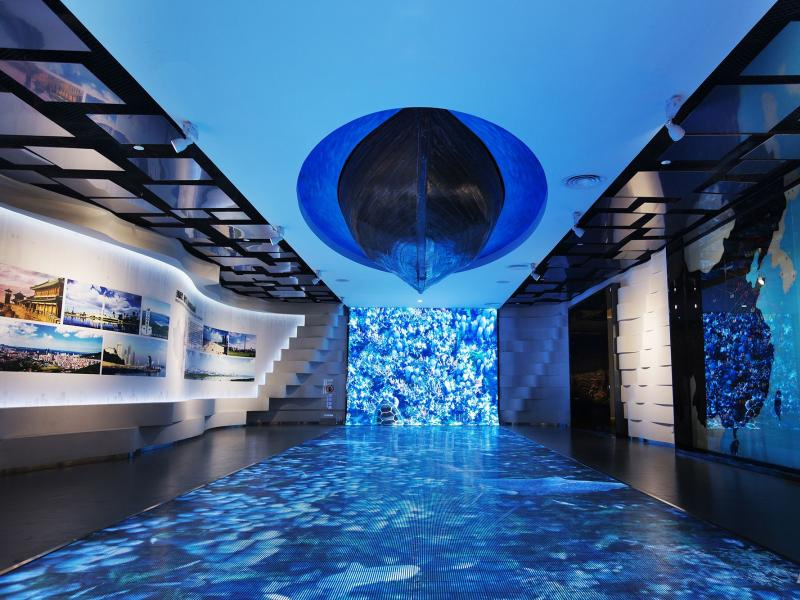
LED floor tile screens use pressure sensors under the modules. When someone steps on the surface, the pressure transfers through the tempered layer to the sensor film.
The sensor converts physical deformation into electrical signals. Then the controller triggers LED effects at the corresponding location.
This system creates real-time interactive effects such as:
These effects significantly enhance audience engagement.
1. Flat-Lay Installation
This method places the screen directly on a flat surface.
Advantages:
Limitations:
2. Embedded Installation
This method integrates the screen into the floor.
Advantages:
Limitations:
This method suits museums, shopping malls, and permanent installations.
3. Frame Structure Installation
This method uses a steel frame structure under the screen.
Advantages:
Limitations:
1. Fashion Runways and Shows
LED floor screens create dynamic entrances for models and guests. Designers use interactive graphics to enhance storytelling and visual impact.
2. Concerts and Music Festivals
Many global concerts use LED floor screens to synchronize visuals with music beats. Dancers interact with real-time effects, which increases audience immersion.
Industry data shows that interactive LED stages can increase audience engagement time by 30–50% compared with static stages.
3. Commercial Exhibitions and Brand Activations
Brands install interactive LED floors in stores and exhibitions. Customers trigger content by stepping on the floor, which improves dwell time and conversion rates.
For example, interactive digital installations in retail environments can increase customer interaction rates by up to 40%, according to experiential marketing studies.
LED floor tile screens transform passive viewing into active participation. They combine display technology, sensors, and software into one platform.
Compared with traditional LED screens, they offer:
As experience-driven marketing grows, LED floor tile screens will become a key tool in entertainment, retail, and smart spaces
1. Can LED floor tile screens handle heavy loads?
Yes. Many professional models support up to 1,000 kg per square meter, which meets stage and public safety standards.
2. Do LED floor tile screens need special maintenance?
Yes. They require regular surface cleaning, sensor calibration, and ventilation checks to ensure stable performance.
3. Are LED floor tile screens suitable for outdoor use?
Yes. Outdoor models use IP65 or higher protection levels and anti-slip surfaces, making them suitable for public plazas and events.
 EN
EN
 AR
AR
 BG
BG
 HR
HR
 CS
CS
 DA
DA
 NL
NL
 FI
FI
 FR
FR
 DE
DE
 EL
EL
 HI
HI
 IT
IT
 JA
JA
 KO
KO
 NO
NO
 PL
PL
 PT
PT
 RO
RO
 RU
RU
 ES
ES
 SV
SV
 TL
TL
 ID
ID
 SR
SR
 UK
UK
 VI
VI
 ET
ET
 HU
HU
 TH
TH
 TR
TR
 FA
FA
 AF
AF
 MS
MS
 GA
GA
 HY
HY
 AZ
AZ
 MN
MN
 UZ
UZ