Home > News > Industry News
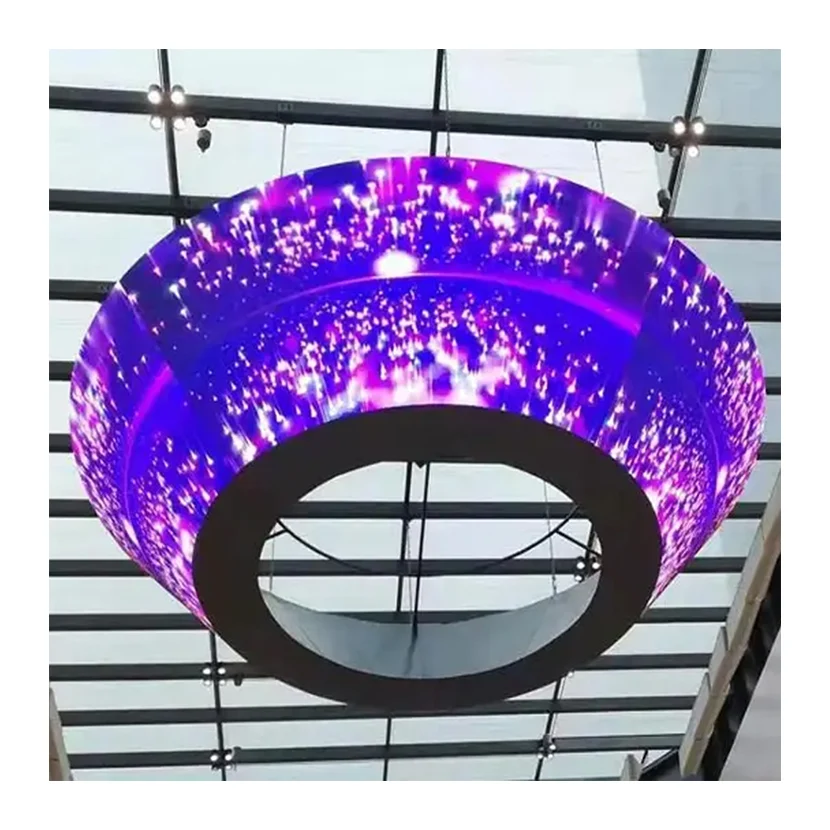
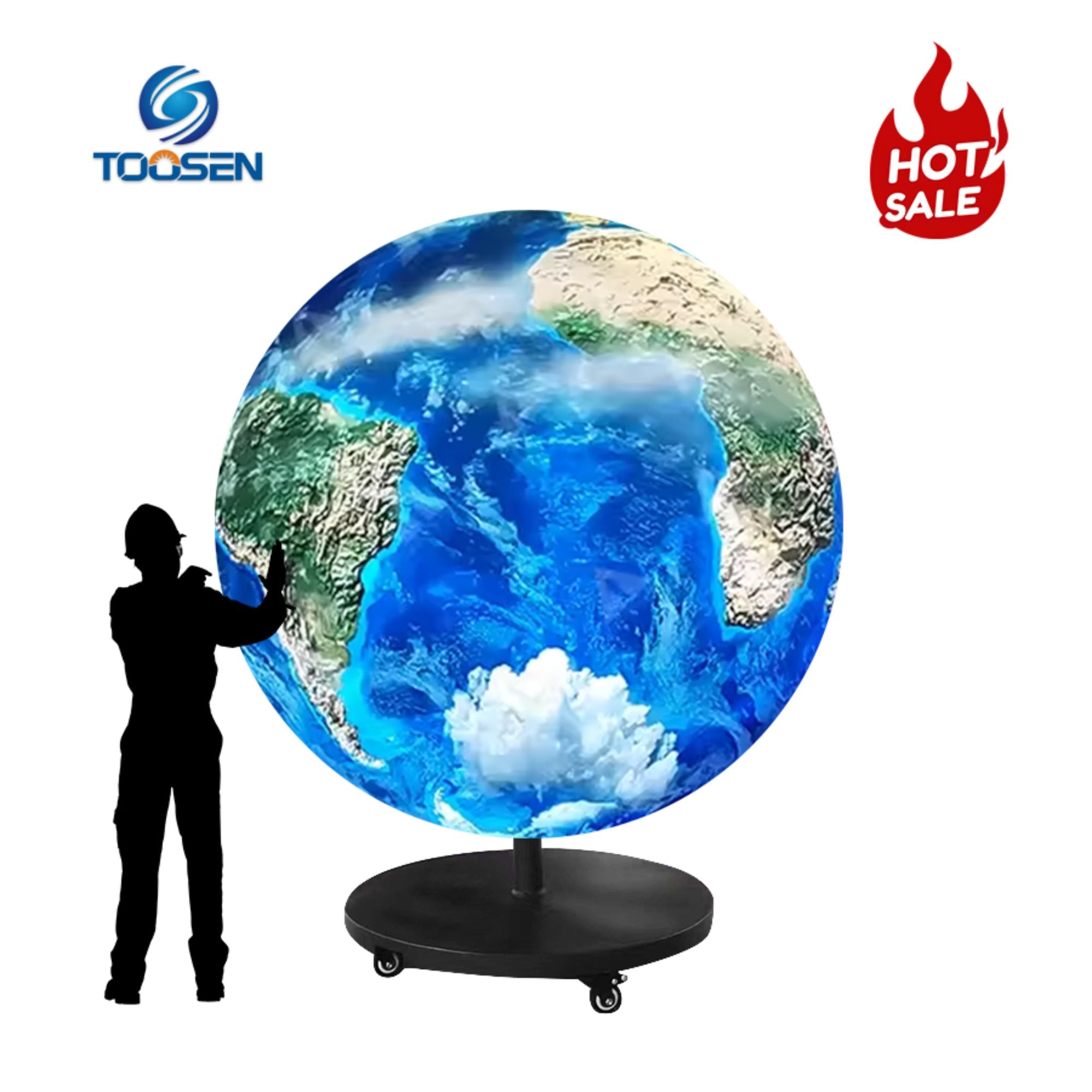
Installing a suspended spherical LED display requires much more than simply hanging the screen. Because of its irregular structure, 360-degree visibility, and elevated installation position, factors such as load-bearing safety, structural balance, heat dissipation, and maintenance access all become critical.
Below are the most important points to consider during design and installation.
Safety always comes first.
Before installation, calculate the total weight of:
The ceiling steel beams, hanging brackets, and suspension components must provide sufficient load-bearing capacity. Never reduce material quality or structural strength to cut costs.
At the same time, always install secondary safety protection such as anti-fall safety cables to prevent accidents if the primary suspension structure fails.
A spherical LED display is an irregular curved structure, so the suspension center point must be positioned accurately.
The installation must ensure:
If the center of gravity is not correctly aligned, the screen may tilt or deform over time. Uneven stress can also enlarge cabinet seams and affect overall appearance.
Before lifting the screen, technicians should fully pre-assemble the structure on the ground and carefully adjust:
Once the sphere is suspended in the air, fine adjustments become much more difficult.
Proper pre-installation helps prevent problems such as:
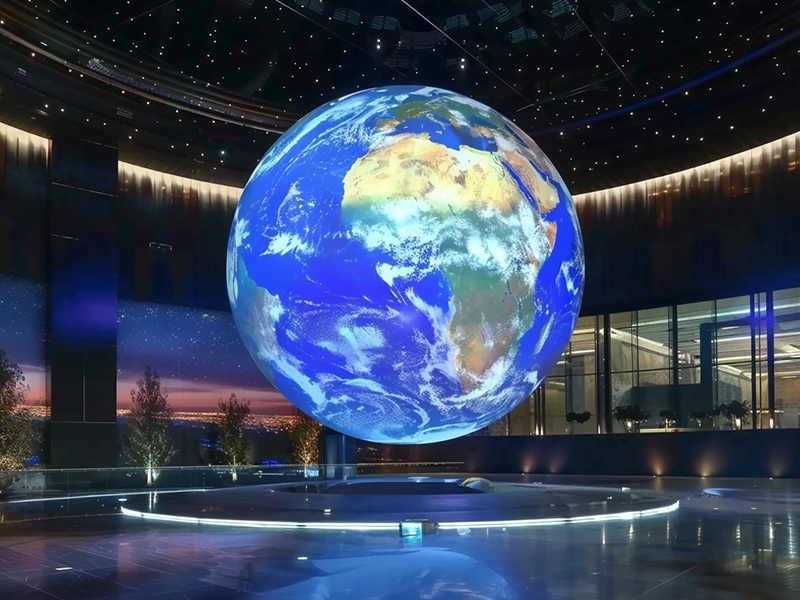
Spherical LED displays usually have a relatively enclosed structure, which makes heat dissipation more challenging.
When installing the screen, leave enough ventilation space around the structure and design an effective airflow path to prevent heat accumulation inside the sphere.
Poor heat management may cause:
Even indoor spherical LED displays should include proper rear sealing and moisture protection.
For semi-outdoor installations or large open atrium environments, additional protection against humidity and condensation is essential.
Without proper moisture control, internal components may suffer from:
Power cables and signal cables should be concealed whenever possible to maintain a clean appearance and improve safety.
During structural design, reserve dedicated cable-routing holes near suspension points.
At the same time:
Proper cable management reduces long-term wear and minimizes signal instability.
Because suspended spherical LED displays are often installed at significant heights, maintenance access must be considered from the beginning.
The design should include:
This allows technicians to replace modules or repair power supplies without dismantling the entire screen.
Good maintenance planning significantly reduces future service costs and downtime.
Suspended installations are naturally more vulnerable to vibration, airflow, and slight structural movement.
To improve long-term stability:
Continuous movement or vibration may eventually loosen:
The display should use a dedicated and stable power supply system.
At the same time, proper grounding and lightning protection are essential to prevent:
Reliable electrical protection is especially important for large suspended installations in public spaces.
A spherical LED display is designed for 360-degree viewing, so brightness and color consistency must remain uniform from all angles.
During commissioning, carefully calibrate:
Without proper calibration, viewers may notice visible differences in brightness or color when viewing the sphere from different directions.
A well-calibrated spherical LED display delivers a smoother, more immersive visual experience.
 EN
EN
 AR
AR
 BG
BG
 HR
HR
 CS
CS
 DA
DA
 NL
NL
 FI
FI
 FR
FR
 DE
DE
 EL
EL
 HI
HI
 IT
IT
 JA
JA
 KO
KO
 NO
NO
 PL
PL
 PT
PT
 RO
RO
 RU
RU
 ES
ES
 SV
SV
 TL
TL
 ID
ID
 SR
SR
 UK
UK
 VI
VI
 ET
ET
 HU
HU
 TH
TH
 TR
TR
 FA
FA
 AF
AF
 MS
MS
 GA
GA
 HY
HY
 AZ
AZ
 MN
MN
 UZ
UZ