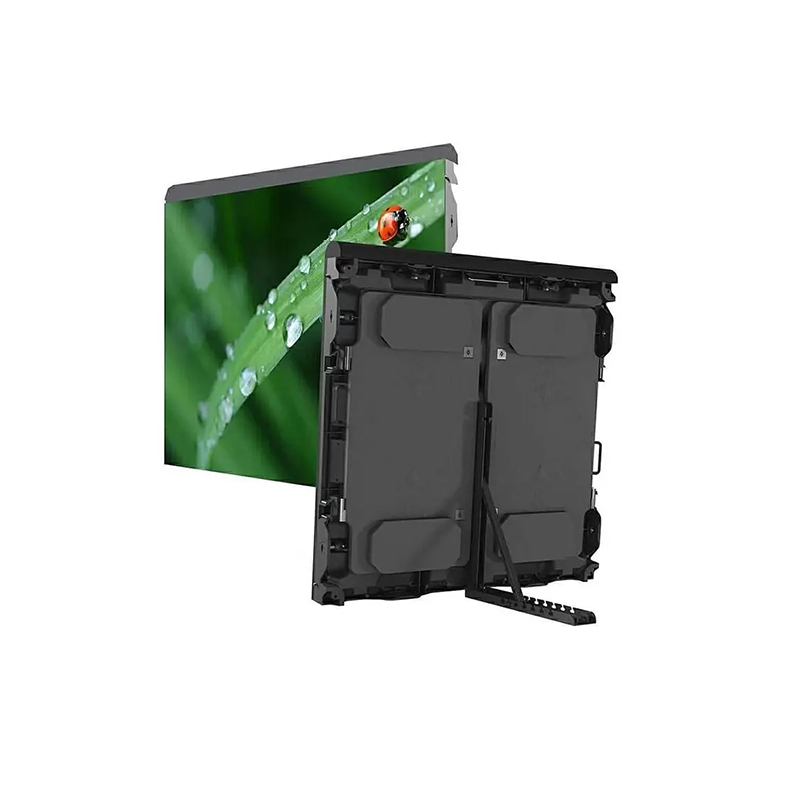
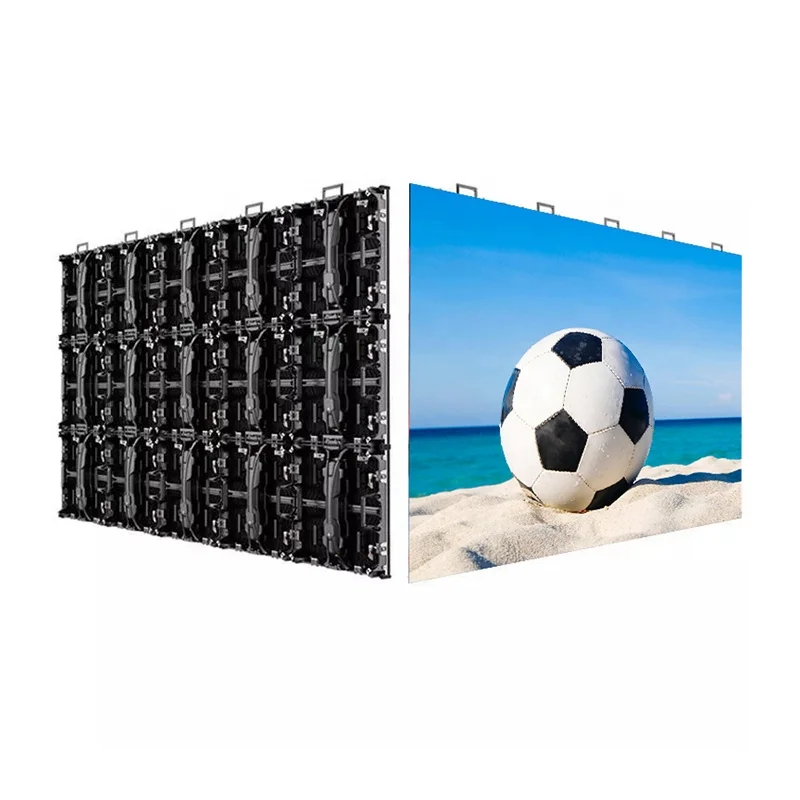
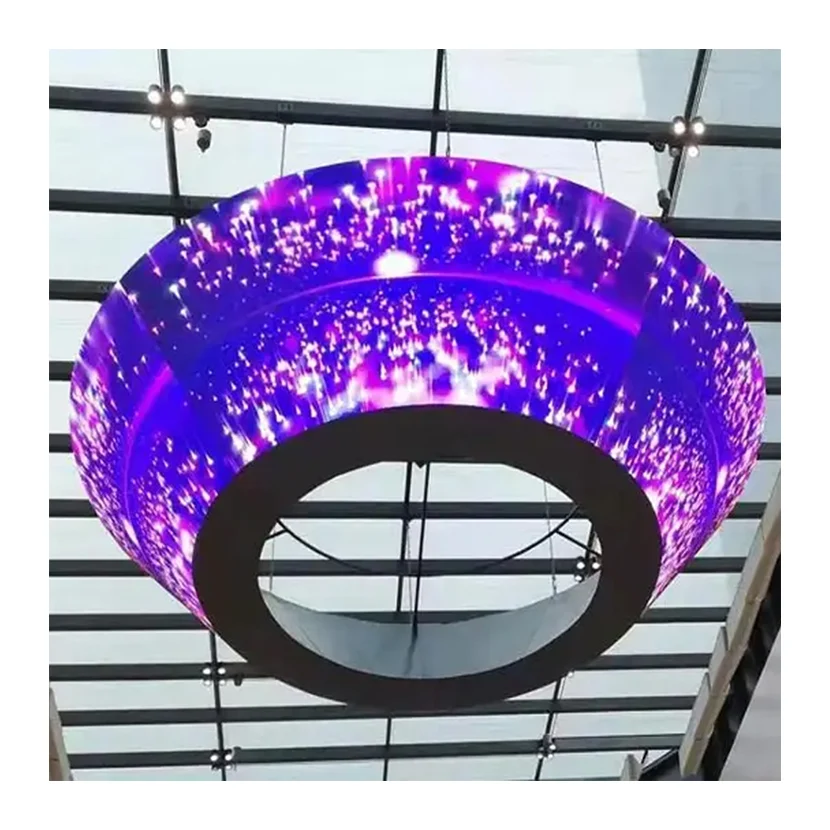
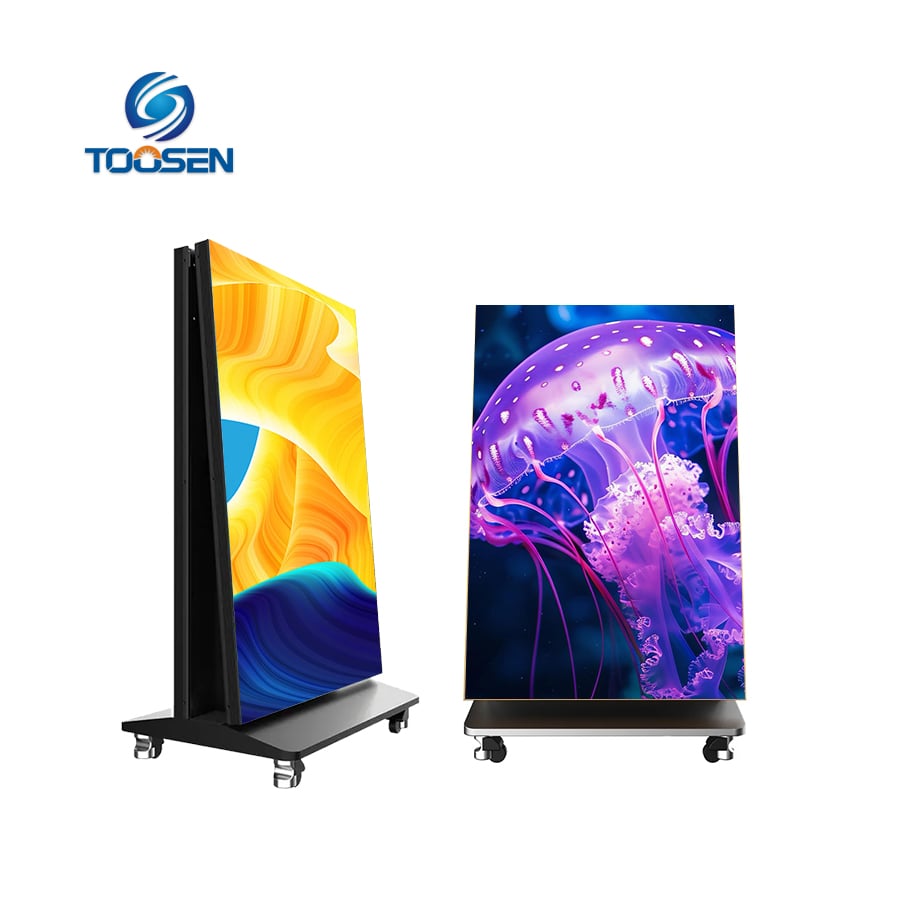
Brightness is one of the most important performance indicators for an LED display. It refers to the amount of light emitted by the screen under specific conditions and is typically measured in candelas per square meter (cd/m²).
In general, a brighter LED display delivers stronger light output, higher contrast, and better resistance to ambient light interference. The required brightness mainly depends on the installation environment and viewing conditions.
To understand LED display brightness, you first need to understand several key concepts.
1. Brightness of a Single LED Lamp
The brightness of a single LED lamp refers to the light intensity emitted by each color chip inside the LED package. It is usually measured in millicandelas (mcd).
The brightness level of an LED depends on factors such as:
- LED material
- Manufacturing process
- Driving current
- Chip quality
Different LED colors also have different brightness levels. Typical values are:
| LED Color |
Typical Brightness |
| Red LED |
800–1000 mcd |
| Green LED |
2000–3000 mcd |
| Blue LED |
300–500 mcd |
2. Brightness of Each Pixel
Each pixel in an LED display consists of multiple LED lamps in different colors. Therefore, the brightness of one pixel equals the combined brightness of all LEDs within that pixel and is usually expressed in candelas (cd).
The actual pixel brightness depends on:
- The number of LEDs per pixel
- The color combination ratio
- The display model and configuration
For example, a P16 LED display may use a pixel structure such as 2R1G1B (2 red LEDs, 1 green LED, and 1 blue LED). The total pixel brightness is the sum of the brightness contributed by each color.
3. Overall Screen Brightness
The overall brightness of an LED display refers to the total luminous output of all pixels divided by the screen area. This value is measured in cd/m².
Several factors affect the final screen brightness, including:
- Pixel density (resolution)
- Scan mode
- Driving current
- LED quality
- Display configuration
For example, a P16 LED display with:
- 3906 pixels per square meter
- 1/4 scan mode
can theoretically achieve a brightness of approximately 4138–4150 cd/m².
Brightness Calculation Formulas
1. Single LED Lamp Brightness
Single LED Brightness=Resolution×LEDs Per PixelScreen Brightness×Area×Scan Rate
2. Brightness of Each Pixel
Pixel Brightness=Single LED Brightness×LEDs Per Pixel
3. Overall Screen Brightness
Screen Brightness=Area×Scan RatePixel Brightness×Resolution
Example: P16 Outdoor LED Display Brightness Calculation
Assume a P16 outdoor LED display with the following specifications:
- Pixel configuration: 2R1G1B
- Scan mode: 1/4 scan
- Pixel density: 3906 pixels/m²
- Red LED brightness: 800 mcd
- Green LED brightness: 2300 mcd
- Blue LED brightness: 350 mcd
Step 1: Calculate Pixel Brightness
(800×2+2300+350)=4250 mcd
Step 2: Calculate Theoretical Screen Brightness
1000×4(800×2+2300+350)×3906≈4150 cd/m2
Therefore, the theoretical maximum brightness of this P16 LED display is approximately:

How to Calculate Single LED Brightness from Known Screen Brightness and Pixel Density
If the screen brightness and pixel density are known, you can estimate the brightness of each individual LED.
Calculation Formula
Assuming a 2R1G1B pixel configuration:
Red LED Brightness
Pixel DensityBrightness (cd/m2)×0.3÷2
Green LED Brightness
Pixel DensityBrightness (cd/m2)×0.6
Blue LED Brightness
Pixel DensityBrightness (cd/m2)×0.1
Practical Example
Assume:
- Pixel density: 2500 pixels/m²
- Pixel structure: 2R1G1B
- Screen brightness: 5000 cd/m²
Red LED Brightness
Green LED Brightness
Blue LED Brightness
Total Pixel Brightness
So, the brightness of each pixel is:

 EN
EN
 AR
AR
 BG
BG
 HR
HR
 CS
CS
 DA
DA
 NL
NL
 FI
FI
 FR
FR
 DE
DE
 EL
EL
 HI
HI
 IT
IT
 JA
JA
 KO
KO
 NO
NO
 PL
PL
 PT
PT
 RO
RO
 RU
RU
 ES
ES
 SV
SV
 TL
TL
 ID
ID
 SR
SR
 UK
UK
 VI
VI
 ET
ET
 HU
HU
 TH
TH
 TR
TR
 FA
FA
 AF
AF
 MS
MS
 GA
GA
 HY
HY
 AZ
AZ
 MN
MN
 UZ
UZ