Home > News > Industry News
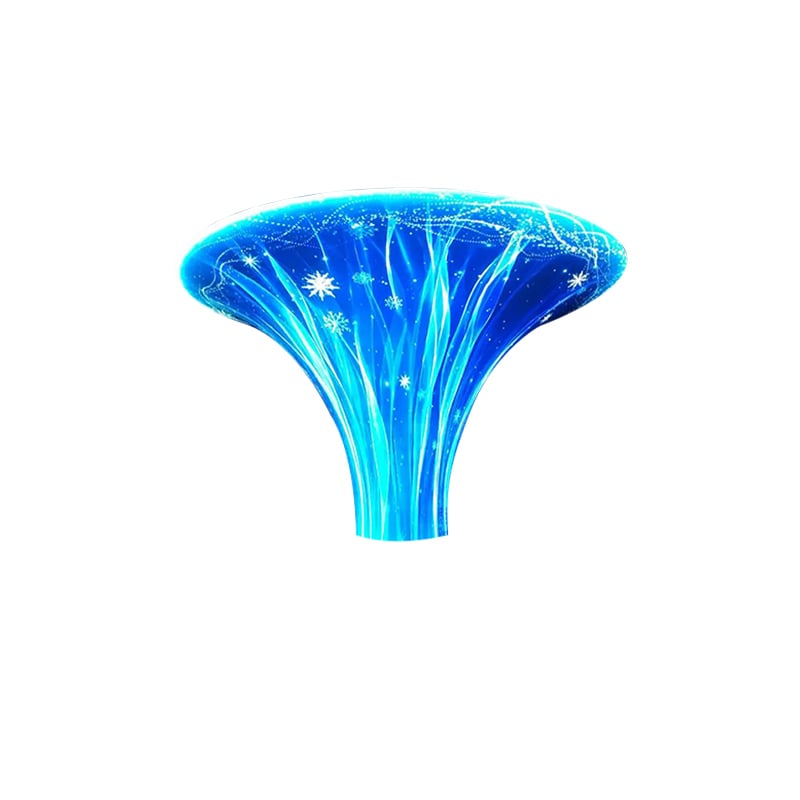
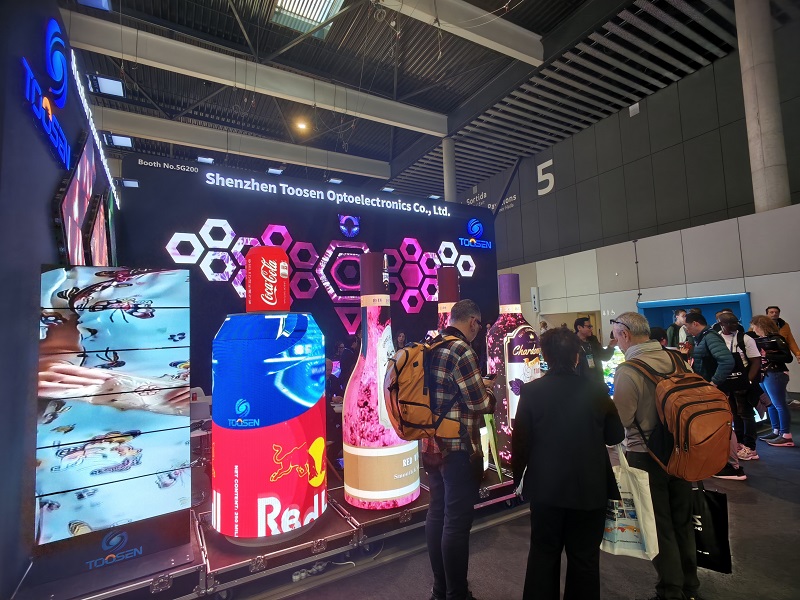
When people first see a can-shaped LED screen, they usually ask the same question:
“How does that work?”
At first glance, the display looks almost impossible. Videos wrap smoothly around a curved surface, animations stay proportional, and the content appears perfectly aligned from multiple viewing angles. However, the secret is not magic. In most cases, the effect comes from LED control system mapping and sending card configuration.
Recently, a creator answered this exact question with a short reply:
“Just adjust sending card’s control system.”
Although the answer sounds simple, it actually reveals several important things about how cylindrical LED displays operate.
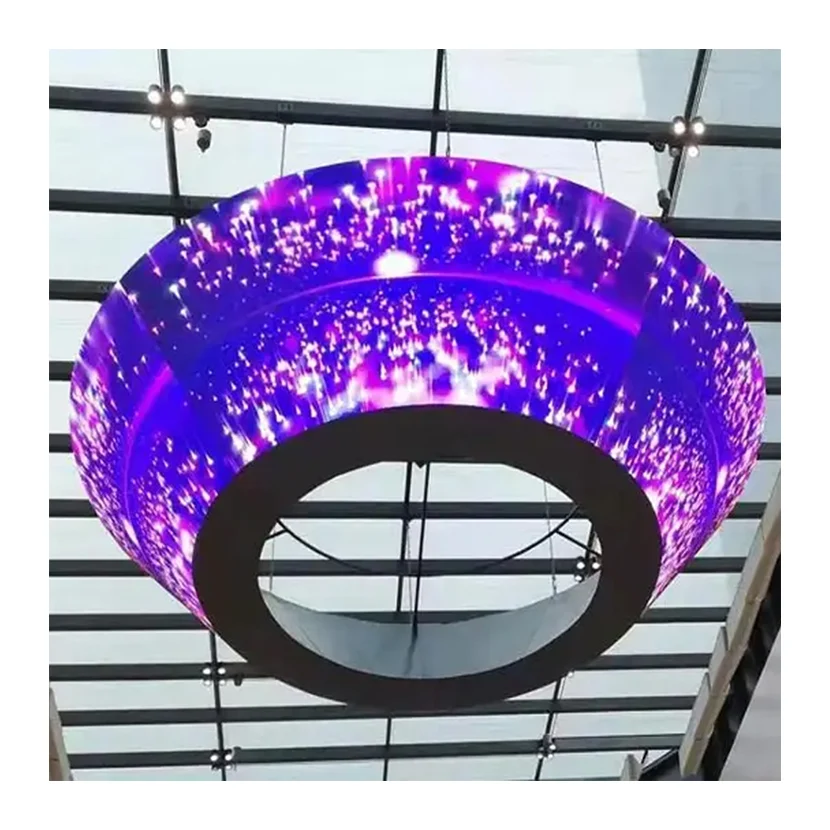
A can-shaped LED screen is a cylindrical LED display built to resemble a beverage can or round column. Manufacturers commonly use these displays for:
Unlike flat LED screens, cylindrical LED displays must wrap video content around a curved structure without distortion. That challenge requires both hardware design and software mapping.
Many people assume these displays require specially manufactured curved panels. In reality, most projects use standard LED modules or flexible LED modules arranged into a circular structure.
The engineering team typically:
As a result, the display can show seamless content around the entire surface.
The phrase “adjust sending card’s control system” mainly refers to LED pixel mapping.
In a normal flat screen, pixels follow a simple rectangular layout. However, a can-shaped LED screen uses a non-standard structure. Therefore, engineers must redefine how the controller distributes video data across the screen.
This process includes:
Without proper mapping, the video would appear stretched, broken, or misaligned.
The sending card acts as the brain of the LED display system. It receives video signals from a media source and distributes data to receiving cards inside the LED cabinets.
Popular LED control system brands include:
These systems allow engineers to configure irregular LED layouts directly inside the control software.
For example, technicians can:
Consequently, the audience sees a perfectly wrapped image even though the physical screen shape is unusual.
Sometimes yes — but not always.
There are two main ways to create visuals for a cylindrical LED display.
In this method, creators distort the video before playback. The screen then restores the image visually when wrapped around the cylinder.
This approach works, but it has limitations:
Most professional projects prefer this method.
Instead of editing every video manually, engineers configure the LED control system to handle the mapping automatically.
As a result:
That is why the original comment focused on the sending card rather than the video itself.
 EN
EN
 AR
AR
 BG
BG
 HR
HR
 CS
CS
 DA
DA
 NL
NL
 FI
FI
 FR
FR
 DE
DE
 EL
EL
 HI
HI
 IT
IT
 JA
JA
 KO
KO
 NO
NO
 PL
PL
 PT
PT
 RO
RO
 RU
RU
 ES
ES
 SV
SV
 TL
TL
 ID
ID
 SR
SR
 UK
UK
 VI
VI
 ET
ET
 HU
HU
 TH
TH
 TR
TR
 FA
FA
 AF
AF
 MS
MS
 GA
GA
 HY
HY
 AZ
AZ
 MN
MN
 UZ
UZ