Home > News > Company News
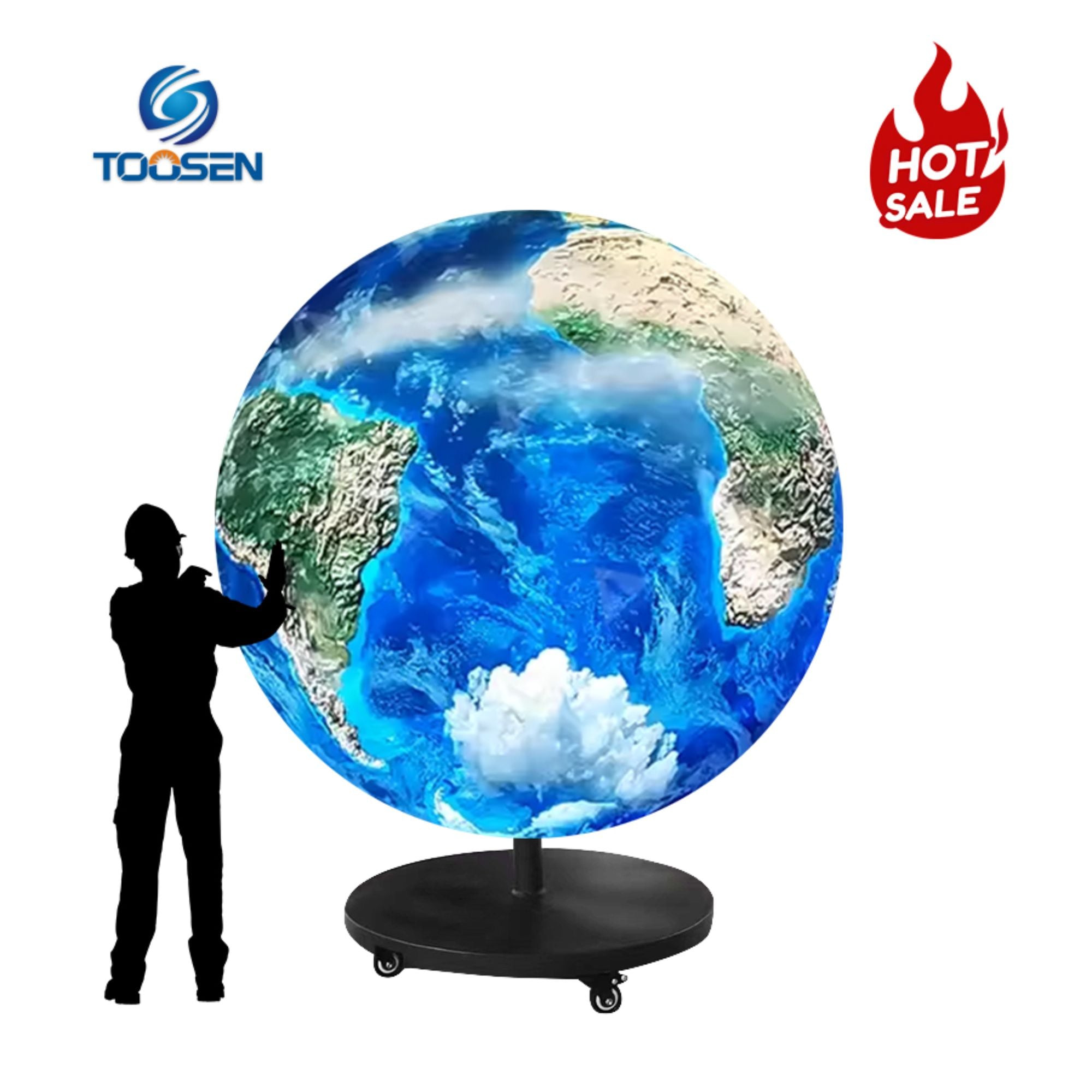
Convention centers host exhibitions, trade shows, product launches, and corporate events throughout the year. A sphere LED display can become a major visual attraction, but installing one inside a busy exhibition venue requires more than assembling the screen.
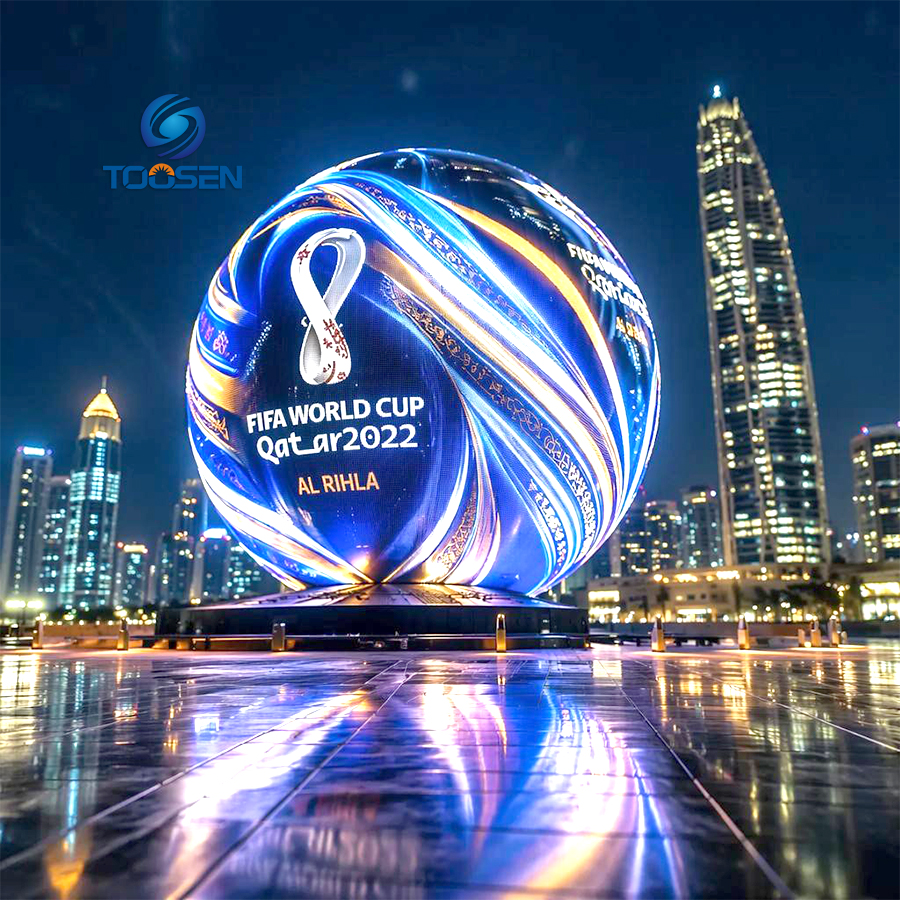
Unlike standard flat LED walls, a spherical LED display has a three-dimensional structure. Its size, transportation requirements, support system, and installation position all affect the project schedule.
For example, a large sphere may need to pass through service entrances, travel along loading corridors, and reach an installation area where other exhibitors are already preparing their booths.
Without proper planning, the installation team may face restricted access, delayed deliveries, or limited rigging time.
Therefore, loading access, rigging windows, and event changeovers should be considered before the equipment leaves the factory.
Poor installation planning can affect the entire exhibition schedule.
First, delivery problems may delay other construction work. If the sphere LED screen cannot pass through a service door or freight elevator, the team may need to find another transportation route.
Second, rigging delays can increase labor costs. Convention centers often have fixed working hours and require approval before overhead installation begins.
Third, an unfinished installation may affect other exhibitors. Cranes, lifting equipment, and temporary work areas can block shared spaces.
There is also a risk of damaging the display during repeated movement or rushed assembly.
For event organizers, these problems can affect opening times, visitor experiences, and the overall quality of the exhibition.
The first step is to confirm the complete transportation route from the loading dock to the final installation position.
Do not measure only the main entrance. Check service doors, corridors, corners, elevators, ramps, and temporary storage areas.
Important measurements include:
Door width and height.
Freight elevator dimensions and weight capacity.
Corridor width and turning radius.
Loading dock height and vehicle access.
Available space for temporary equipment storage.
For a large sphere LED display, transporting the complete structure may not be practical.
A modular transportation plan can make delivery easier. The screen and supporting components can be separated into manageable sections, protected with suitable packaging, and assembled at the venue.
Before shipment, prepare a component list showing package dimensions, weights, quantities, and unloading requirements.
This allows the venue team to arrange the correct handling equipment in advance.
Rigging is one of the most important stages of a convention center LED display project.
Many venues only allow overhead work during specific time windows. These periods may be scheduled before the exhibition opens, after other construction work finishes, or during approved overnight shifts.
The project team should confirm the following details:
Rigging approval: Check venue regulations and obtain approval for the proposed installation method.
Load assessment: Confirm that ceiling structures and designated rigging points can support the total suspended load.
Installation height: Measure the distance between the floor, ceiling, rigging points, and surrounding structures.
Lifting equipment: Select suitable lifting equipment based on the screen dimensions, weight, and working space.
Safety area: Establish a restricted working zone during overhead operations.
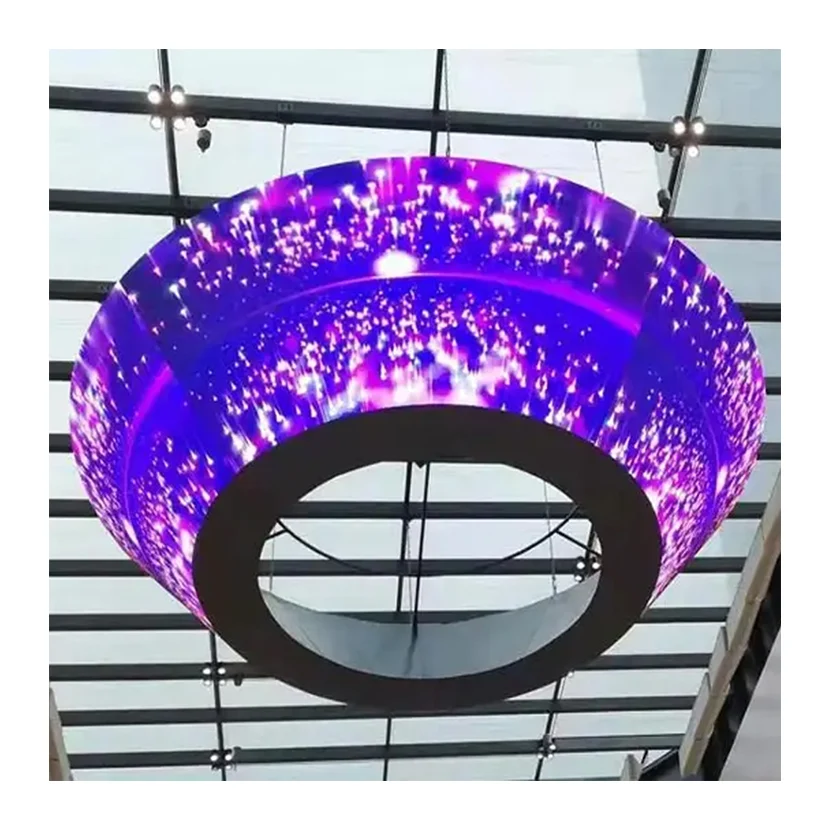
The installation method depends on the sphere's size and project requirements. Hanging installation can save floor space and provide 360-degree viewing, while a floor-standing structure may be more suitable when ceiling access is limited.
For suspended displays, qualified rigging professionals should verify the complete load path, including the supporting structure, connection points, and lifting accessories.
A successful installation is not complete when the sphere is physically in position.
The team should complete a series of checks before the venue opens.
Start with a structural inspection. Check frame connections, mounting points, cable routing, and the stability of the supporting structure.
Next, inspect the electrical and signal connections. Confirm that power distribution, grounding, control equipment, and communication cables are correctly installed.
Then, run a full-screen playback test.
For a sphere LED display, test content from different viewing angles rather than checking only one side. Verify brightness consistency, color performance, image alignment, and signal stability.
It is also useful to prepare several test videos in advance:
Full-white content for brightness inspection.
Full-black content for identifying abnormal bright pixels.
Color patterns for checking color consistency.
Moving graphics for checking playback continuity.
Project-specific content for verifying the final mapping.
Any problem should be recorded and corrected before the exhibition begins.
Different convention center projects require different display configurations.
The sphere diameter, pixel pitch, installation height, viewing distance, and event duration should all be considered during product selection.
TOOSEN provides customized sphere LED displays with different diameters and pixel pitches, including P1.2, P1.5, P1.8, P2, P2.5, P3, P4, and P5 options.
Available configurations include indoor and outdoor models, with hanging, floor-standing, and customized structural installation options.
For exhibition projects, several components deserve attention:
Supporting frame: Provides the structural connection between the display and its installation system.
Mounting accessories: Help connect the display to the approved support structure.
Power distribution: Supports stable electrical operation.
Control system: Manages image playback and content distribution.
Spare components: Help reduce downtime if a display component requires replacement.
The product should be selected according to the actual venue conditions rather than appearance alone.
Learn more about TOOSEN Sphere LED Displays.
Convention centers often have very short periods between exhibitions. A display used for one event may need to be removed, relocated, or reconfigured for the next event.
A practical changeover plan should include three stages.
Before the event ends: Back up the content files, prepare the removal tools, and confirm the next installation schedule.
During the changeover: Disconnect power safely, remove components according to the approved procedure, and inspect connectors and supporting parts.
Before the next event: Reinstall the display, check structural connections, test the control system, and upload the new content.
A clear labeling system for cables, modules, and structural components can save considerable time.
It is also useful to keep a record of the original installation position and connection layout. This makes repeated installation more organized and reduces unnecessary troubleshooting.
Q1: Can a large sphere LED display be transported through a standard exhibition entrance?
It depends on the sphere diameter and the venue's access dimensions. Large projects may require modular transportation and on-site assembly.
Q2: How early should rigging arrangements be confirmed?
Confirm them during the project planning stage, before delivery and installation schedules are finalized. Venue approval and structural checks should not be left until the last minute.
Q3: Is hanging installation always better than floor-standing installation?
No. Hanging installation saves floor space and provides a floating visual effect. Floor-standing installation may be more convenient when ceiling rigging is unavailable.
Q4: How can event changeovers become faster?
Prepare labeled components, organized cables, documented installation positions, backup content, and a clear removal and reinstallation schedule.
Q5: Can TOOSEN customize sphere LED displays for convention centers?
Yes. TOOSEN offers customized sphere LED displays with different diameters, pixel pitches, and installation configurations to meet different exhibition and commercial project requirements.
A successful convention center sphere LED display project depends on coordination between product design, transportation, structural installation, and event scheduling.
TOOSEN is a professional LED display manufacturer specializing in spherical and special-shaped LED displays. We provide OEM and ODM customization, different screen sizes and pixel pitches, and installation guidance for international projects.
From product selection and factory testing to transportation planning and technical support, our team helps customers prepare for different exhibition environments.
Whether you need a compact indoor sphere for a trade show or a large customized spherical LED display for a convention center, TOOSEN can provide a solution based on your project requirements.
Visit TOOSEN Official Website to explore more LED display solutions and discuss your next exhibition project.
 EN
 AR
 BG
 HR
 CS
 DA
 NL
 FI
 FR
 DE
 EL
 HI
 IT
 JA
 KO
 NO
 PL
 PT
 RO
 RU
 ES
 SV
 TL
 ID
 SR
 UK
 VI
 ET
 HU
 TH
 TR
 FA
 AF
 MS
 GA
 HY
 AZ
 MN
 UZ