Home > News > Industry News
For every project manager, there is one real nightmare. The event is live. The audience is watching. Then suddenly, parts of the LED screen go black. Or some panels lose signal, then come back after a few seconds. This situation creates stress and risk at the same time.
If this happens, do not panic. In most cases, the issue has a clear cause. With the right checks, you can find the problem fast and fix it before it becomes serious.
This guide explains the most common reasons for LED screen signal loss during events. It also shows you how to troubleshoot step by step.
First, you need to understand the signal structure.
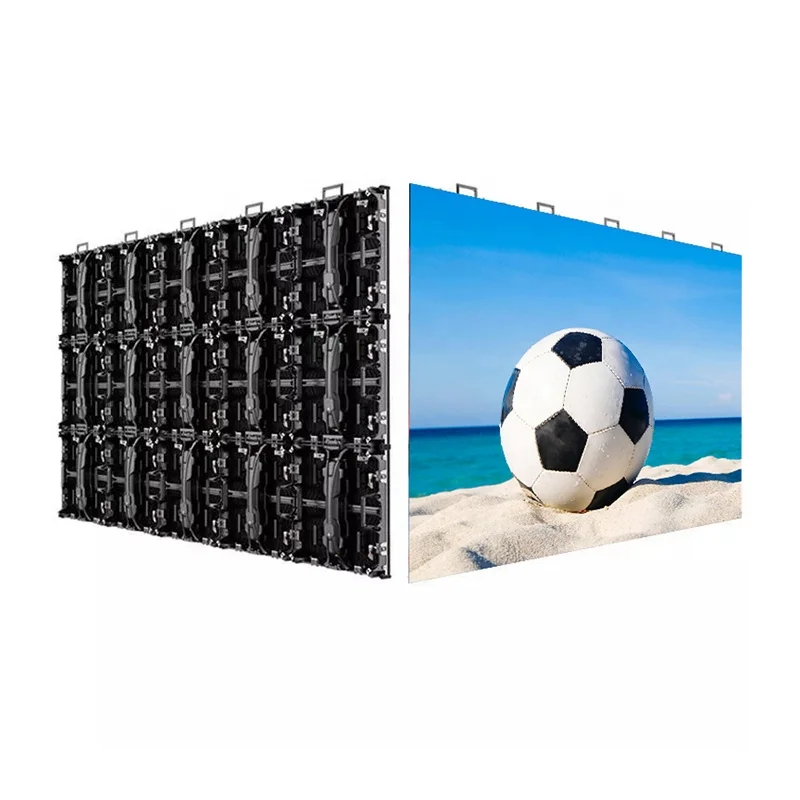
Most modern LED screens use a daisy chain topology. This means the signal flows in one direction. It starts from the sending device, such as a sending card or video processor. Then it goes to the first cabinet. From there, it passes to the second cabinet, then the third, and so on.
Think of it like flowers on a string. One connects to the next.
Because of this structure, signal problems often do not come from the cabinet that looks faulty.
If cabinet number 15 loses signal, the problem is usually not inside cabinet 15.
In most cases, the issue is one of these:
The output port of cabinet 14
The network cable between cabinet 14 and 15
This logic helps you narrow down the problem fast. Always check the previous cabinet first.
Loose connections cause many LED screen issues.
During events, stages vibrate. Sound systems are loud. People walk around. If the cabinet locks or connectors are low quality, they may loosen.
This can break the signal for a short time. Then it reconnects. This causes black screens or flashing panels.
If the issue appears at random, replace all related patch cables. This is often faster than testing them one by one.
If changing network cables does not solve the problem, look at the electrical environment.
Signal transmission depends on voltage difference. If the grounding of the LED screen power system is different from the grounding of the control system, interference can enter the signal line.
This interference can cause data errors. The receiving card may read wrong data. As a result, the screen may flicker or lose signal.
Grounding issues are very common but often ignored.
If the LED screen power ground and the sending card ground have a voltage difference, current may flow through the signal cable. This creates noise and instability.
Also, static electricity can cause issues. This often happens in dry indoor spaces or booths with carpet. Static can build up and discharge suddenly. This may interrupt the signal for a moment.
You can follow these checks:
Make sure all power distribution boxes share the same ground
Ensure the sending device and LED screen are grounded together
Use shielded network cables
Check that the cable shielding is properly grounded
These steps reduce interference and improve signal stability.
Many large events use main and backup signal redundancy. This is done for safety. However, redundancy can also cause problems if not set correctly.
The screen switches rapidly between two signals. It looks like strong flickering.
If the main signal has slight packet loss, the system may judge it as unstable. Then it switches to the backup signal.
If the backup signal is also not perfect, the system keeps switching back and forth. The two signals start to “fight” each other.
There is a simple test.
Temporarily unplug the backup signal cable at the end of the loop. If the screen becomes stable right away, the issue is related to redundancy settings or signal judgment errors.
This test helps you confirm the cause within seconds.
If all physical connections are fine, you need to look inside the cabinet.
Receiving card failure is rare, but it happens. The gold fingers between the receiving card and the HUB board may oxidize. Also, chips may enter thermal protection if they overheat.
If rental cabinets come from different batches, the receiving cards may use different firmware versions. This can cause handshake failure between cabinets.
Some technicians have reported this issue during mixed-rental projects.
Use the control software, such as NovaLCT.
Check if all receiving cards are online
Confirm that all firmware versions match
Inspect ribbon cables inside the cabinet
Make sure flat cables are firmly connected
These checks help you catch hidden issues.
LED screen signal loss during an event is stressful, but it is usually fixable. Most problems come from cables, grounding, redundancy setup, or small hardware details.
If you follow a clear logic, you can locate the issue fast. Start from the signal path. Then check connections. After that, check grounding, redundancy, and firmware.
Good preparation and systematic troubleshooting help you avoid panic and protect your event.
Q1: Why does only one section of the LED screen go black?
A: In a daisy chain system, the problem is often in the previous cabinet or the cable before it.
Q2: Can redundancy cause screen flickering?
A: Yes. If both main and backup signals are unstable, the system may switch repeatedly.
Q3: Does grounding really affect LED screen signals?
A: Yes. Poor grounding can introduce interference and cause signal errors.
 EN
EN
 AR
AR
 BG
BG
 HR
HR
 CS
CS
 DA
DA
 NL
NL
 FI
FI
 FR
FR
 DE
DE
 EL
EL
 HI
HI
 IT
IT
 JA
JA
 KO
KO
 NO
NO
 PL
PL
 PT
PT
 RO
RO
 RU
RU
 ES
ES
 SV
SV
 TL
TL
 ID
ID
 SR
SR
 UK
UK
 VI
VI
 ET
ET
 HU
HU
 TH
TH
 TR
TR
 FA
FA
 AF
AF
 MS
MS
 GA
GA
 HY
HY
 AZ
AZ
 MN
MN
 UZ
UZ