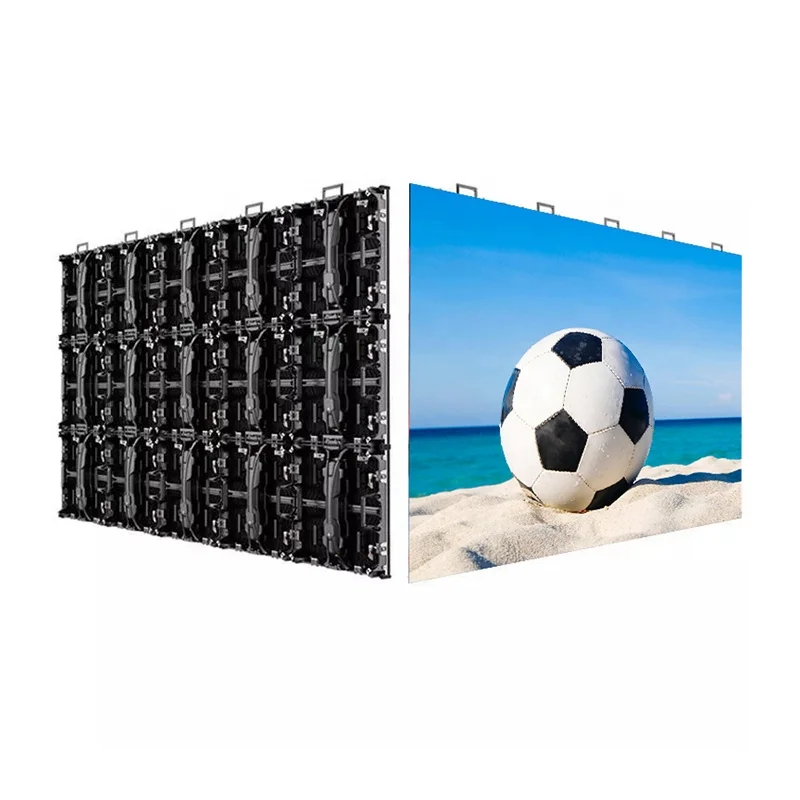
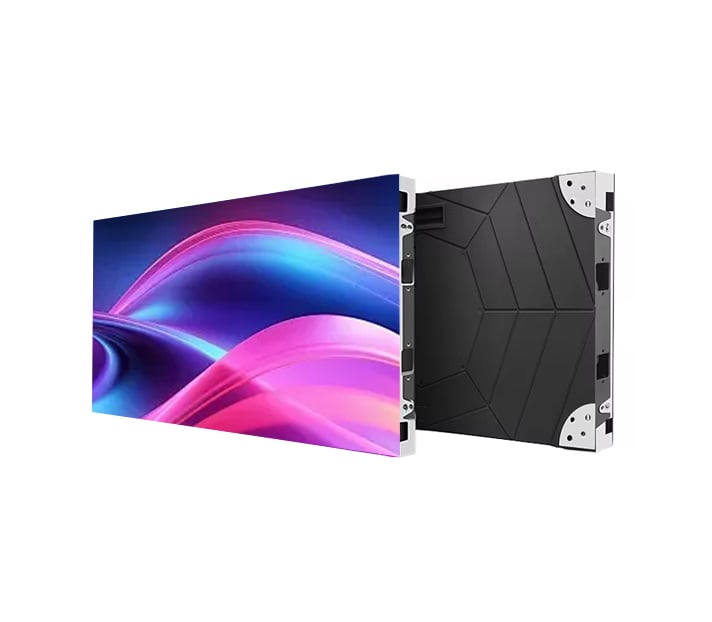
If you are looking to buy an LED wall but have very little experience with them, and are on a tight budget, how to choose the best bang for the buck LED wall? This article aims to address your problem. Helping you find the high-quality price ratio product.
The fundamental requirements for LED displays vary significantly across different scenarios. Defining the intended use upfront allows for cost control at the source, avoiding the pursuit of high specifications blindly. For instance, in close-viewing environments like indoor conference rooms or exhibition halls, a small pitch display with a pixel pitch of P1.2 to P2.5 and a brightness of 1000 to 2000 cd/m² is sufficient. Outdoor advertising screens have to withstand intense sunlight and weather-beaten conditions, requiring models with brightness exceeding 5000 cd/m² and an IP65 or higher waterproof rating. Pixel pitches of P6 to P10 are sufficient—there's no need for excessively fine pitches that drive up costs. For semi-outdoor settings like areas under eaves, brightness levels between 2000 and 3500 cd/m² are adequate.
Low-cost, substandard screens are prone to malfunctions over time, with maintenance costs eventually offsetting the initial price difference. Therefore, close attention must be paid to hardware and manufacturing details. For LED displays, the quality of the LEDs and integrated circuit chips is paramount. High-quality LEDs emit uniform light and have longer lifespans, while low-power driver chips effectively reduce electricity costs and alleviate heat dissipation pressure. For instance, Toosen Optoelectronics utilizes Kinglight LEDs—a highly reputable brand in the industry. These chips offer exceptional stability and lower annual maintenance costs, making them more cost-effective over extended use. Additionally, screen module flatness must be inspected; premium screens exhibit surface undulations ≤1mm, as deviations beyond this limit compromise image integrity after splicing. Simultaneously, verify adjacent modules for color consistency and absence of mosaic patterns to prevent pixel loss or other display defects.
Core parameters directly determine display quality. Select them based on specific needs rather than blindly pursuing top-tier specifications:
Pixel Pitch: Smaller pitch yields sharper images but at a higher cost. For viewing distances under 3 meters (e.g., small meeting rooms), choose P1.2–P2.0; for 5–10 meters (e.g., school auditoriums), select P3–P4; For distant viewing in stadiums or similar venues, P5 or larger is sufficient without incurring extra costs. Selecting cameras equipped with an OPLF helps reduce moire patterns.
Refresh Rate: For standard displays, choose products ≥1920Hz to prevent motion blur. For live streaming or sports broadcasts, select ≥3840Hz models to ensure smooth motion. Note that higher refresh rates increase costs—avoid over-speccing for general use.
Contrast Ratio and Color Gamut: A contrast ratio ≥3000:1 delivers sharp black-and-white definition and clear gradation. For daily displays, a color gamut ≥85% NTSC suffices. For specialized applications like art exhibitions or high-definition video playback, consider wide-gamut products exceeding 90% NTSC. Avoid overspending on rarely used high-performance features.
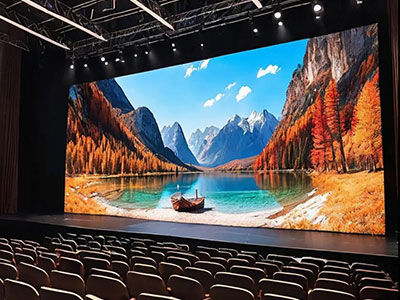
The controller significantly impacts display smoothness, operational convenience, and adaptability. When purchasing, prioritize reputable brands with strong market credibility, such as Novastar, which offers manufacturing quality assurance and proven reliability with low failure rates. And Toosen LED usually chooses the Novastar processor, which is bang for your buck.
For general display applications, SMD technology remains the mainstream solution, offering excellent cost-performance and suitability for projects with pixel pitches of P1.5 or larger. However, its weaker protective properties may increase maintenance costs during long-term operation or frequent installation/removal.
For display projects demanding superior image quality, stability, and extended service life (e.g., year-round exhibition halls or command centers), COB technology is the superior choice. Its higher integration, enhanced impact resistance, and superior heat dissipation effectively reduce failure rates. Although the initial investment is approximately 40%-50% higher, COB proves more energy-efficient and durable over the long term, resulting in lower overall costs.
Even in indoor environments, dust and particulates can cause gradual damage to electronic components. Selecting displays with an IP54 rating or higher provides effective dust and moisture resistance, extending the display's lifespan.
Additionally, modular heat dissipation designs help maintain stable temperatures during prolonged operation. This not only enhances display performance but also reduces failure risks caused by overheating.
Selecting LED displays with common cathode energy-saving technology reduces power consumption by 45%-60% compared to traditional common anode solutions. For users, this translates to significant electricity cost savings while minimizing device heat generation. This further extends operational lifespan, enabling truly green and low-carbon operation.
High cost-effectiveness is reflected not only in price advantages during procurement but also in long-term energy consumption, maintenance, and service experience. Toosen products come with a two-year warranty and are backed by an experienced technical support team to assist you throughout installation, commissioning, and operation.
Should any issues arise, our 24-hour rapid response mechanism ensures prompt resolution, minimizing downtime risks and providing peace of mind for your project's seamless operation.
If you want more LED Display inform, feel free to contact us.
 EN
EN
 AR
AR
 BG
BG
 HR
HR
 CS
CS
 DA
DA
 NL
NL
 FI
FI
 FR
FR
 DE
DE
 EL
EL
 HI
HI
 IT
IT
 JA
JA
 KO
KO
 NO
NO
 PL
PL
 PT
PT
 RO
RO
 RU
RU
 ES
ES
 SV
SV
 TL
TL
 ID
ID
 SR
SR
 UK
UK
 VI
VI
 ET
ET
 HU
HU
 TH
TH
 TR
TR
 FA
FA
 AF
AF
 MS
MS
 GA
GA
 HY
HY
 AZ
AZ
 MN
MN
 UZ
UZ