Home > News > Industry News
When buying a COB flexible LED display, weight is often listed as a simple number, such as kilograms per cabinet or kilograms per square meter. However, this number does not always show how much weight the building or mounting structure must support.
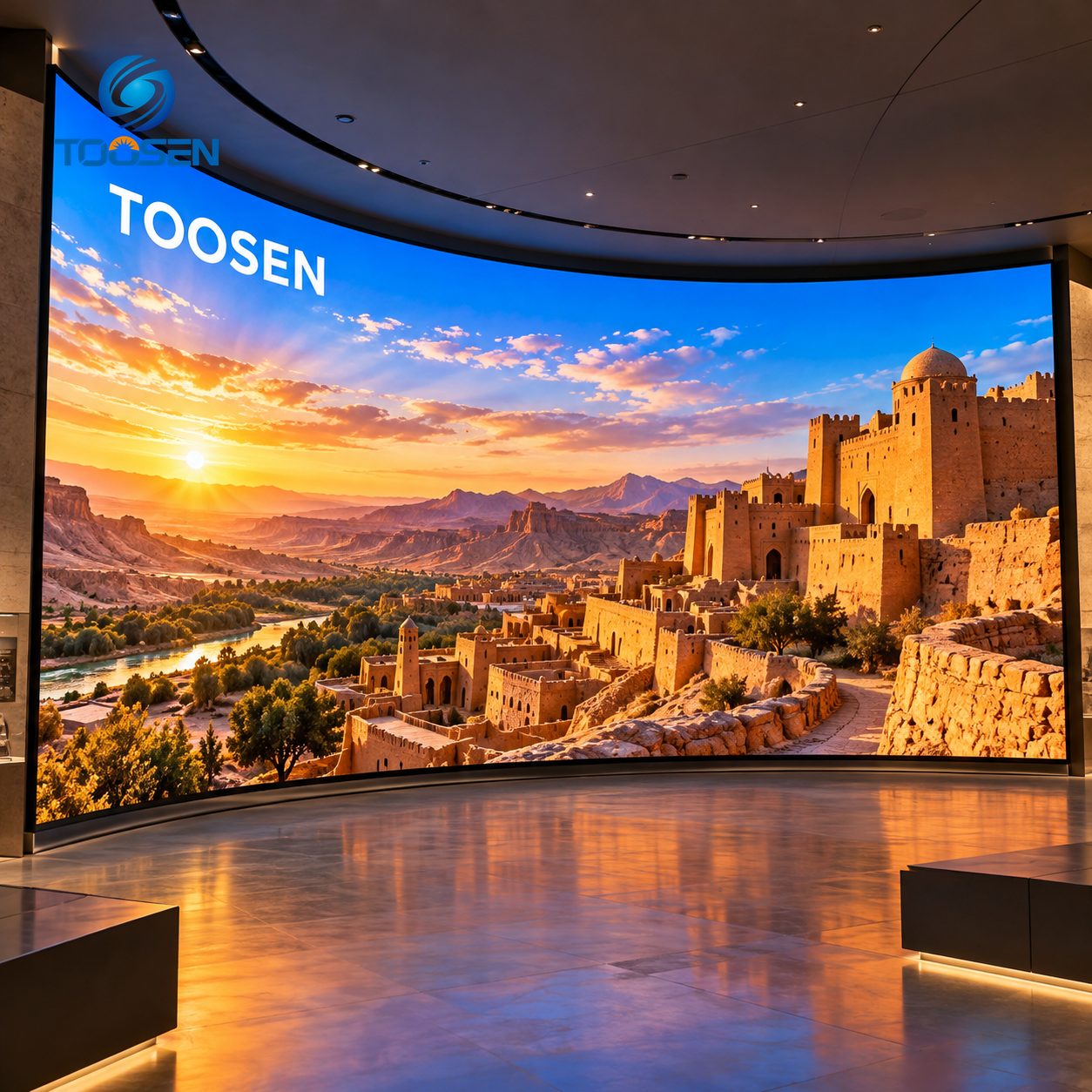
A lightweight LED cabinet does not mean the complete installation will be equally light. Support frames, brackets, cables, and power equipment can add considerable weight.
For buyers planning a curved video wall, cylindrical screen, or suspended display, understanding cabinet weight versus total installed weight is important for safe installation and accurate budgeting.
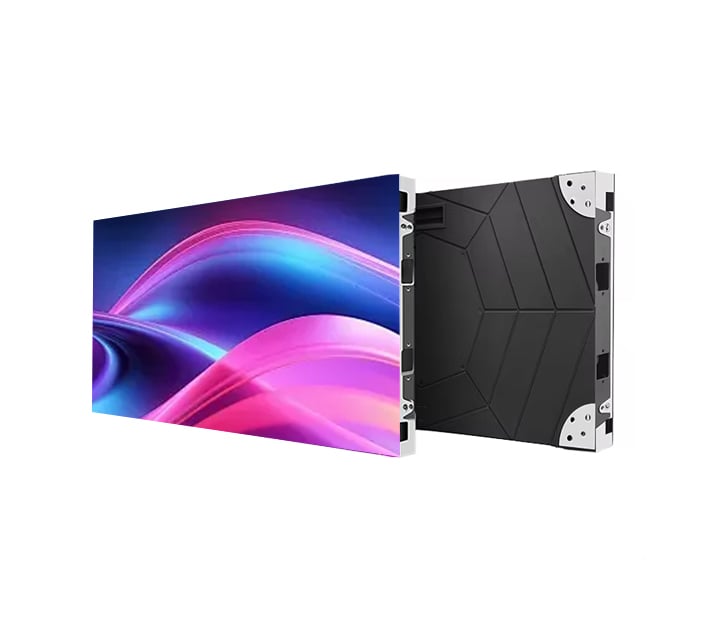
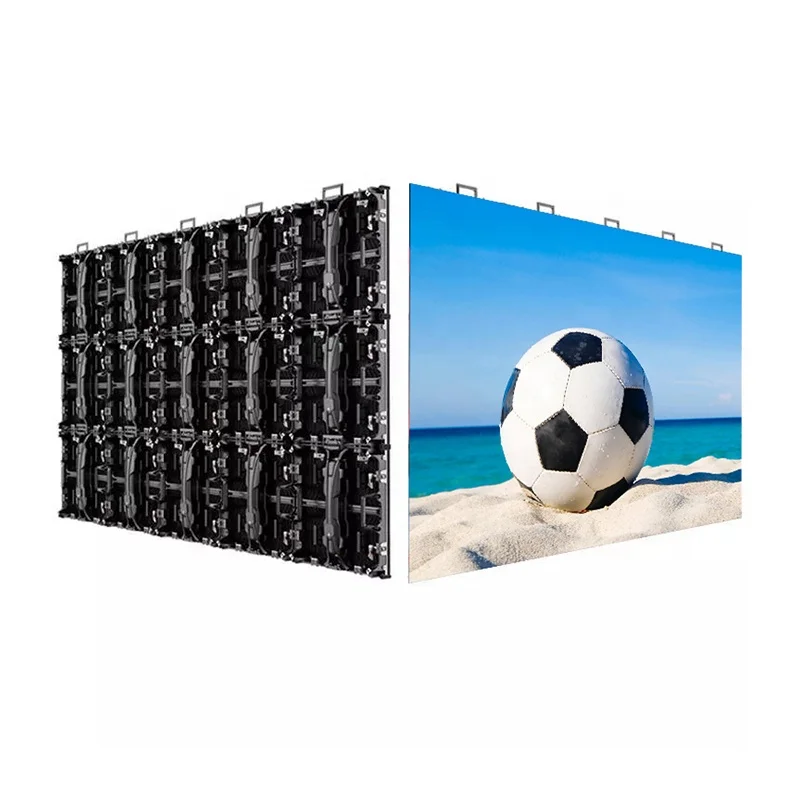
Cabinet weight refers to the weight of the LED display cabinet itself. Depending on the product design, it may include LED modules, cabinet frames, power supplies, and receiving cards.
However, manufacturers may use different definitions. Some flexible LED systems use individual modules instead of standard rigid cabinets.
Total installed weight includes the display and all components needed to hold it in position.
These components may include:
LED cabinets or flexible modules
Steel or aluminum support frames
Mounting brackets and connectors
Power and signal cables
Additional installation accessories
This difference matters because building structures must support the complete system, not just the LED panels.
An incorrect weight estimate can cause problems during installation.
For wall-mounted displays, additional weight increases the load on mounting brackets and wall anchors. For ceiling-hung screens, the suspension system must safely carry the entire assembly.
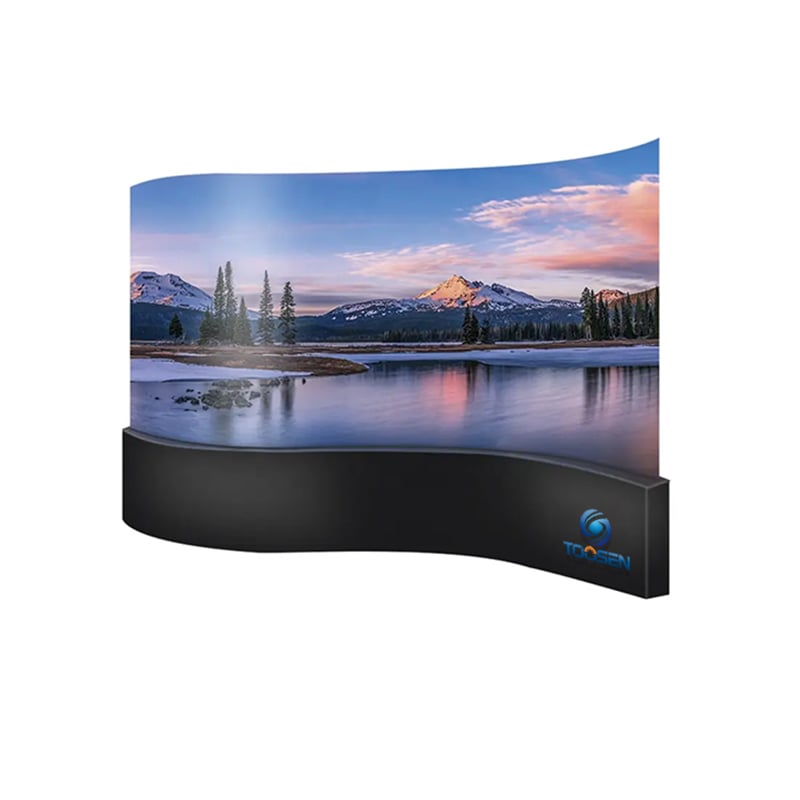
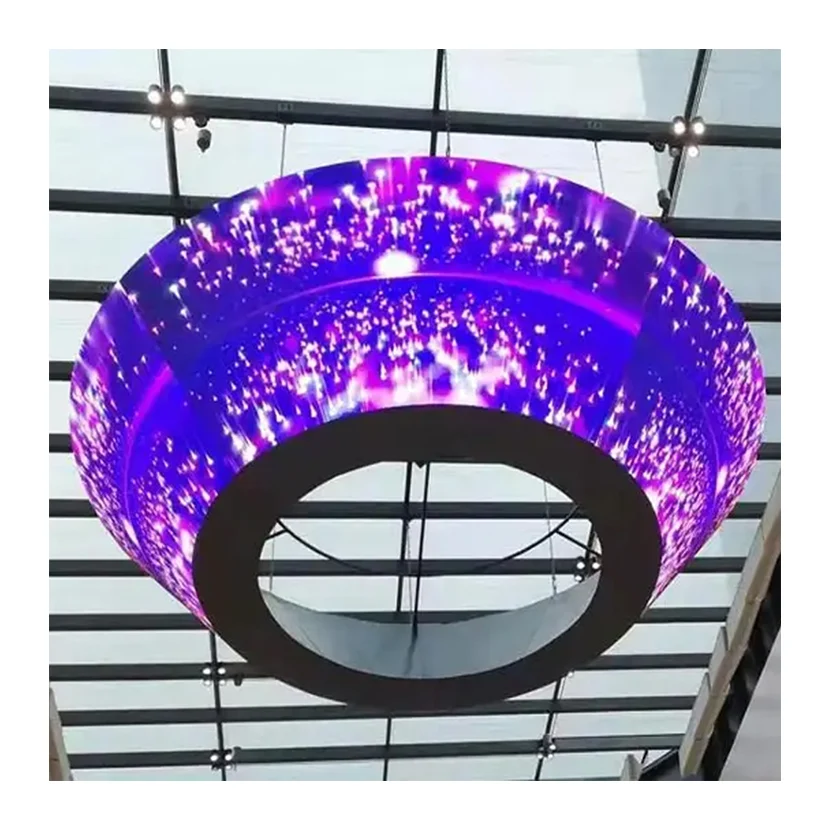
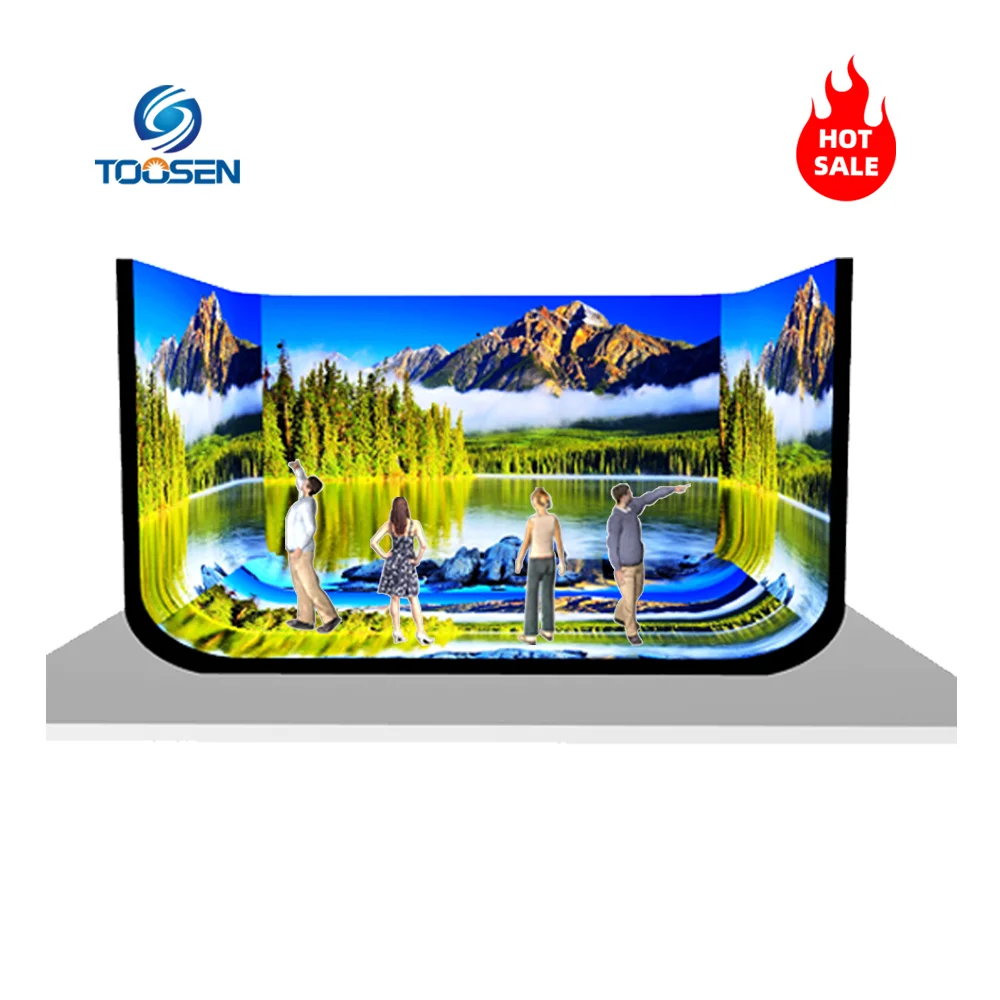
Curved installations require particular attention. A cylindrical display may need a custom circular frame, while a wave-shaped screen may require several support points.
If buyers calculate only the cabinet weight, they may underestimate structural requirements and installation costs.
Weight also affects transportation, handling, and maintenance access. These factors should be considered before finalizing the display design.
The most practical method is to calculate each part separately.
Total Installed Weight = LED Display Weight + Support Structure Weight + Accessories Weight
Consider a hypothetical indoor COB flexible LED display project with a screen area of 20 m².
| Component | Example weight |
|---|---|
| LED display at 18 kg/m² | 360 kg |
| Steel support structure | 120 kg |
| Brackets and connectors | 25 kg |
| Cables and accessories | 15 kg |
| Total installed weight | 520 kg |
These figures are examples, not specifications for a particular product.
The display itself weighs 360 kg, but the complete installation weighs 520 kg.
This shows why buyers should request both the LED cabinet weight and the estimated weight of the complete installation.
For curved displays, the screen area should be calculated along the actual surface rather than using only the straight-line width.
Several design choices influence the weight of a COB flexible LED display.
Cabinet material: Aluminum structures are generally lighter than comparable steel structures, although actual weight depends on thickness and design.
Installation method: Wall-mounted, suspended, and freestanding displays require different supporting structures.
Screen shape: Curved, cylindrical, and irregular displays may need customized mounting frames.
Accessories: Power supplies, receiving cards, cables, protective covers, and mounting hardware also contribute to the final weight.
COB technology mainly refers to how LED chips are packaged. It does not automatically determine the complete display weight.
Buyers should therefore compare actual product specifications instead of assuming every COB flexible screen has the same weight.
Before placing an order, ask the LED display manufacturer for a detailed weight breakdown.
The technical documents should identify the weight per module or cabinet, the weight per square meter, and which components are included.
For custom installations, buyers should also request a mounting drawing and support-frame weight estimate.
A sample cabinet or module can be weighed to check the stated specifications. The final assembly weight should then be checked against the approved installation design.
Structural engineers should verify the mounting points, anchors, and load capacity. Suspended displays also require consideration of relevant dynamic loads and safety requirements.
A product aging test can help verify electronic performance, but it cannot replace structural load verification.
Consider a shopping mall installing a cylindrical COB flexible LED screen around a decorative column.
The flexible modules may be relatively light, but the project still requires a circular mounting structure, connectors, and cables.
The installer must calculate the complete load and confirm that the column and attachment points can safely support it.
Another example is a suspended curved display in an exhibition hall. In this case, the weight of the hanging frame and suspension hardware must be included before selecting the rigging system.
Both examples show why total weight should be considered early in project planning.
Is cabinet weight the same as shipping weight?
No. Shipping weight usually includes packaging, protective materials, and shipping cases. Installed weight includes the components that remain in the finished installation.
Does a flexible COB LED screen always weigh less than a rigid screen?
Not necessarily. Weight depends on the modules, cabinet design, support structure, and installation method.
Should buyers calculate weight per square meter?
Yes. Weight per square meter is useful for comparing displays, but the final calculation must include supporting structures and accessories.
TOOSEN manufactures LED displays for indoor, outdoor, curved, and special-shaped applications.
Its COB flexible LED display includes solutions for curved video walls, columns, and customized installations. TOOSEN also provides product design, manufacturing, technical support, and quality inspection services.
For your next project, share the screen dimensions, installation location, and required shape with TOOSEN.
Request a detailed weight breakdown and mounting proposal before confirming your order. This helps your installation team evaluate structural requirements, control costs, and plan a safer installation.
 EN
 AR
 BG
 HR
 CS
 DA
 NL
 FI
 FR
 DE
 EL
 HI
 IT
 JA
 KO
 NO
 PL
 PT
 RO
 RU
 ES
 SV
 TL
 ID
 SR
 UK
 VI
 ET
 HU
 TH
 TR
 FA
 AF
 MS
 GA
 HY
 AZ
 MN
 UZ