Home > News > Industry News
Choosing the right LED display for sports events is not just a procurement decision—it’s a system-level investment that directly impacts fan experience, broadcast quality, and commercial ROI. To make the right call, you need to evaluate both technical specifications and project execution capabilities.
Before comparing products, clarify how and where you will deploy the screen. Stadium perimeter boards, scoreboards, fan zones, and immersive installations all require different configurations.
For example, outdoor stadium environments demand higher brightness and stronger weather resistance, while indoor arenas prioritize finer pixel pitch and visual detail. By aligning specifications with the actual use case, you avoid overengineering—or worse, underperformance.
Fast-paced sports content places strict demands on display performance.
If your display cannot handle motion clarity, it will fail in real match conditions—no matter how good it looks on paper.
Custom LED projects often involve complex geometries and tight timelines. Therefore, structural design matters as much as display quality.
Look for:
A well-designed system reduces both installation cost and long-term operational friction.
A professional LED project must integrate seamlessly with existing stadium systems.
Without proper integration, even the best hardware becomes operationally inefficient.
Sports events demand continuous, high-intensity operation.
Failure during a live event is not just a technical issue—it’s a reputational risk.
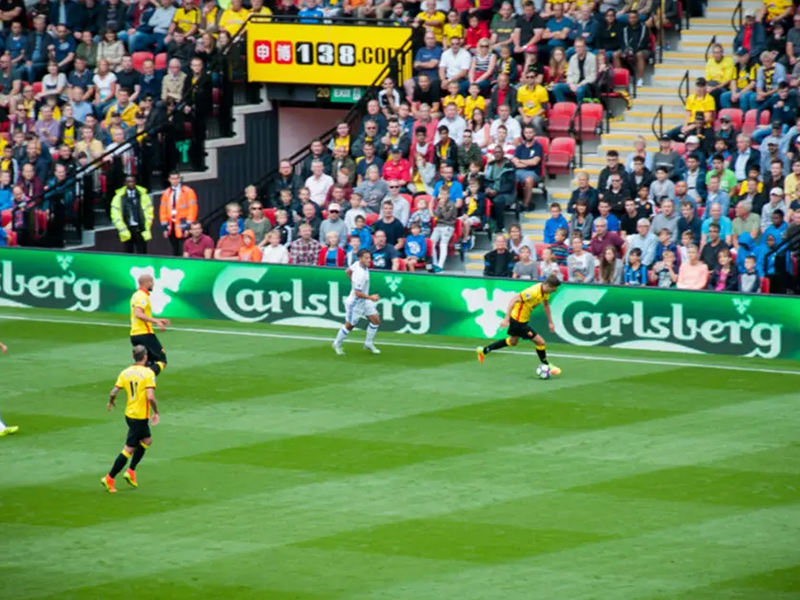
Finally, the supplier determines whether your project succeeds or struggles.
A qualified partner should offer:
In practice, you are not just buying a screen—you are selecting a long-term technology partner.
A successful sports LED installation balances performance, reliability, and integration. When you evaluate both product specifications and supplier capabilities together, you ensure that your investment delivers not only visual impact but also operational efficiency and commercial value.
 EN
EN
 AR
AR
 BG
BG
 HR
HR
 CS
CS
 DA
DA
 NL
NL
 FI
FI
 FR
FR
 DE
DE
 EL
EL
 HI
HI
 IT
IT
 JA
JA
 KO
KO
 NO
NO
 PL
PL
 PT
PT
 RO
RO
 RU
RU
 ES
ES
 SV
SV
 TL
TL
 ID
ID
 SR
SR
 UK
UK
 VI
VI
 ET
ET
 HU
HU
 TH
TH
 TR
TR
 FA
FA
 AF
AF
 MS
MS
 GA
GA
 HY
HY
 AZ
AZ
 MN
MN
 UZ
UZ