Home > News > Industry News
Direct-view LED video walls are becoming increasingly popular in control rooms, retail environments, corporate lobbies, and broadcast studios. As more businesses adopt this technology, many installers and project planners ask the same question: Can you wall-mount an LED video wall directly on a wall?
The short answer is yes. However, successful installation requires proper planning, the right display design, and a reliable mounting structure. In this guide, we explain how wall-mounted LED video walls work and what you should consider before installation.
Wall mounting offers several advantages compared with floor stacking or truss installation.
First, it saves valuable floor space. Many indoor environments—such as conference rooms or retail stores—need clean and minimal layouts. A wall-mounted LED video wall integrates neatly into the architecture without occupying additional space.
Second, wall mounting creates a seamless visual presentation. Since the display sits close to the wall, viewers experience a more immersive and professional look.
Finally, fixed wall installations often improve stability. Once properly installed, the structure remains secure and resistant to vibration.
However, the installation method must match the LED display design.
When planning a wall-mounted LED video wall, front service capability becomes essential.
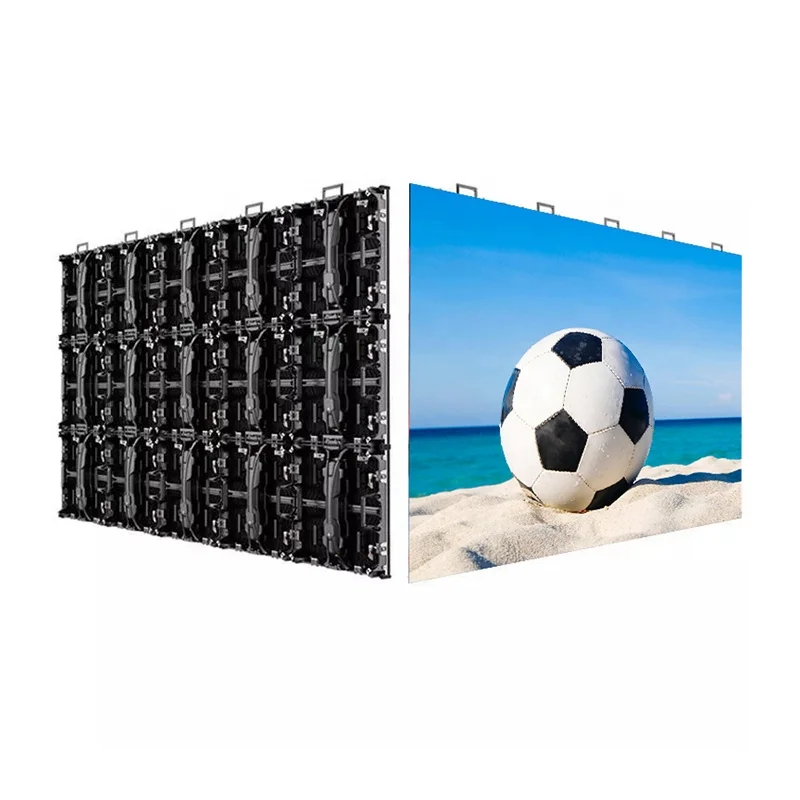
Many LED panels support rear maintenance. Technicians access power supplies, receiving cards, and modules from the back of the display. This design works well for:
Rental LED screens
Stage LED walls
Truss-mounted displays
However, rear service designs require maintenance space behind the screen. If you mount such a display directly on a wall, technicians cannot access internal components.
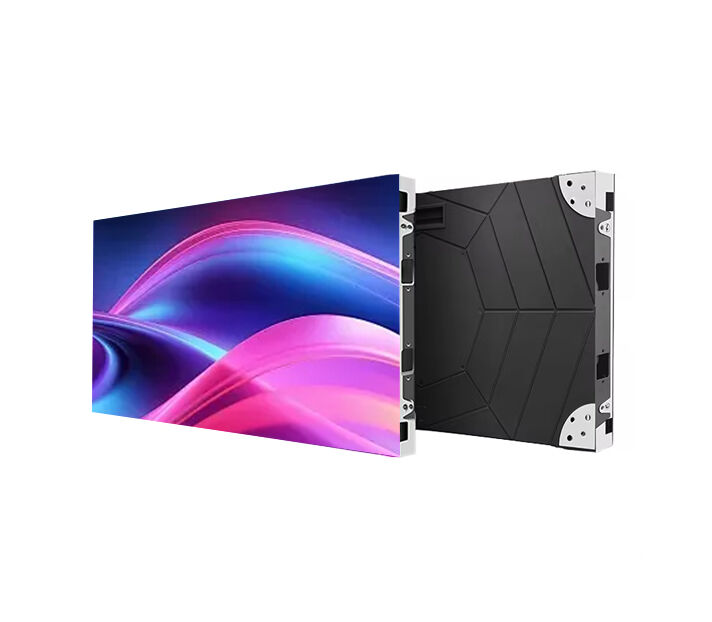
Therefore, most wall-mounted installations use front-service LED panels. With this design, technicians remove LED modules from the front using magnetic tools or vacuum extractors. They can then access the internal components without removing the entire display.
As a result, front-service displays simplify maintenance and make wall mounting practical.
Next, evaluate the wall itself. The structural integrity of the wall determines whether it can support the weight of the LED video wall.
LED displays can weigh 25–50 kg per square meter or more, depending on pixel pitch and cabinet design. Because of this, the wall must provide adequate structural support.
Installers usually anchor the mounting system to:
Concrete walls
Structural steel
Reinforced studs
In addition, the wall surface should remain as flat as possible. Even small alignment errors can create visible seams between LED cabinets. Therefore, installers often level the mounting frame before installing the display.
In many projects, installers do not attach LED cabinets directly to the wall. Instead, they build a support frame or rail system first.
These structures help in several ways.
Walls are rarely perfectly flat. A metal frame allows installers to adjust alignment points and ensure the entire LED wall sits on a single plane.
Rail systems guide cabinet placement and simplify installation. Installers can quickly align multiple cabinets without repeated measurements.
A reinforced frame distributes weight evenly across multiple anchor points. This approach reduces stress on individual mounting bolts and increases long-term stability.
Many installers use metal channel systems such as Unistrut or specialized LED mounting frames. These frameworks attach securely to the wall and provide adjustable mounting positions for each cabinet.
Although custom metal frames can work well, professional mounting systems often simplify the process.
Several manufacturers offer dedicated dvLED mounting solutions with features such as:
precision alignment brackets
adjustable depth control
integrated cable management
quick-lock cabinet installation
These systems reduce installation time and help maintain perfect panel alignment.
In large commercial installations—such as broadcast studios or control rooms—these professional systems often deliver the most reliable results.
Before starting any installation, contact the LED display manufacturer and request technical documentation.
Reliable manufacturers typically provide:
structural drawings
load calculations
mounting guidelines
recommended maintenance clearances
This information ensures the installation meets safety and performance requirements.
If a supplier cannot provide installation guidance, you should reconsider the product. Professional LED manufacturers always support integrators with proper engineering documentation.
Wall-mounted LED video walls deliver a sleek and modern display solution for many indoor environments. However, successful installation requires careful planning.
First, choose front-service LED panels to allow maintenance access. Next, confirm that the wall structure can support the display weight. Then, install a mounting frame or rail system to achieve perfect alignment and stability. Finally, consult the LED manufacturer for technical guidance.
By following these steps, you can install a reliable wall-mounted LED video wall that delivers both outstanding visual performance and long-term durability.
 EN
EN
 AR
AR
 BG
BG
 HR
HR
 CS
CS
 DA
DA
 NL
NL
 FI
FI
 FR
FR
 DE
DE
 EL
EL
 HI
HI
 IT
IT
 JA
JA
 KO
KO
 NO
NO
 PL
PL
 PT
PT
 RO
RO
 RU
RU
 ES
ES
 SV
SV
 TL
TL
 ID
ID
 SR
SR
 UK
UK
 VI
VI
 ET
ET
 HU
HU
 TH
TH
 TR
TR
 FA
FA
 AF
AF
 MS
MS
 GA
GA
 HY
HY
 AZ
AZ
 MN
MN
 UZ
UZ