Home > News > Company News
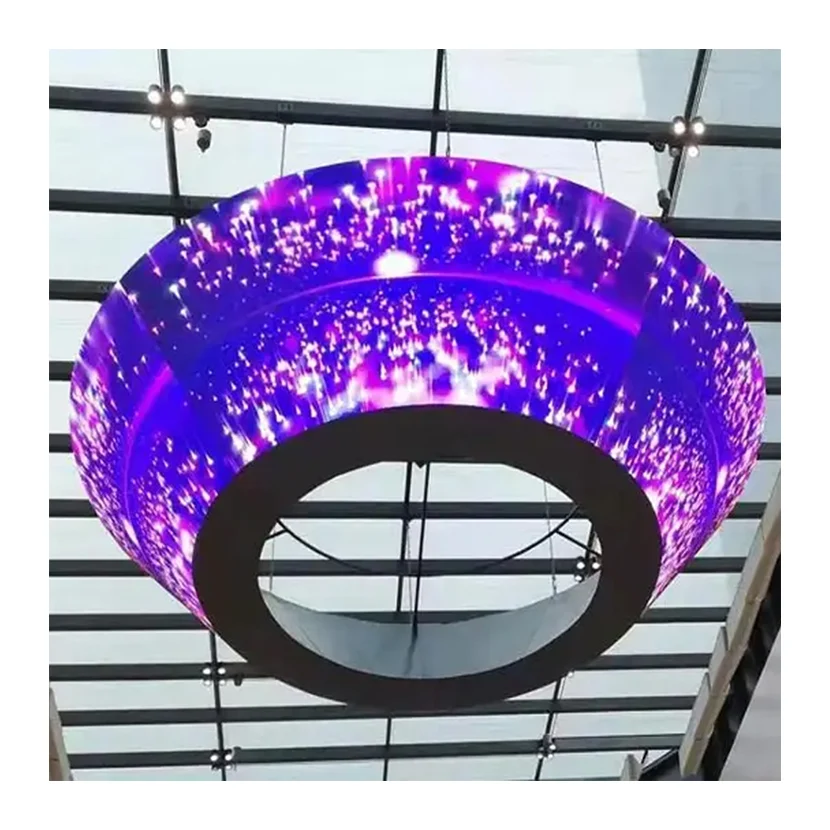
A spherical LED display usually costs more than a standard flat LED screen. It requires a customized structure, curved LED modules, special content mapping, and more careful installation.
So, is the extra cost worth it?
For projects that need 360-degree visibility, a strong visual centerpiece, or a memorable visitor experience, the answer is often yes. But for simple information display or one-direction viewing, a conventional LED screen may offer better value.
The key is not simply the purchase price. You need to look at how the screen will be used and what value it can create over its service life.
The cost of a spherical LED display is affected by several factors.
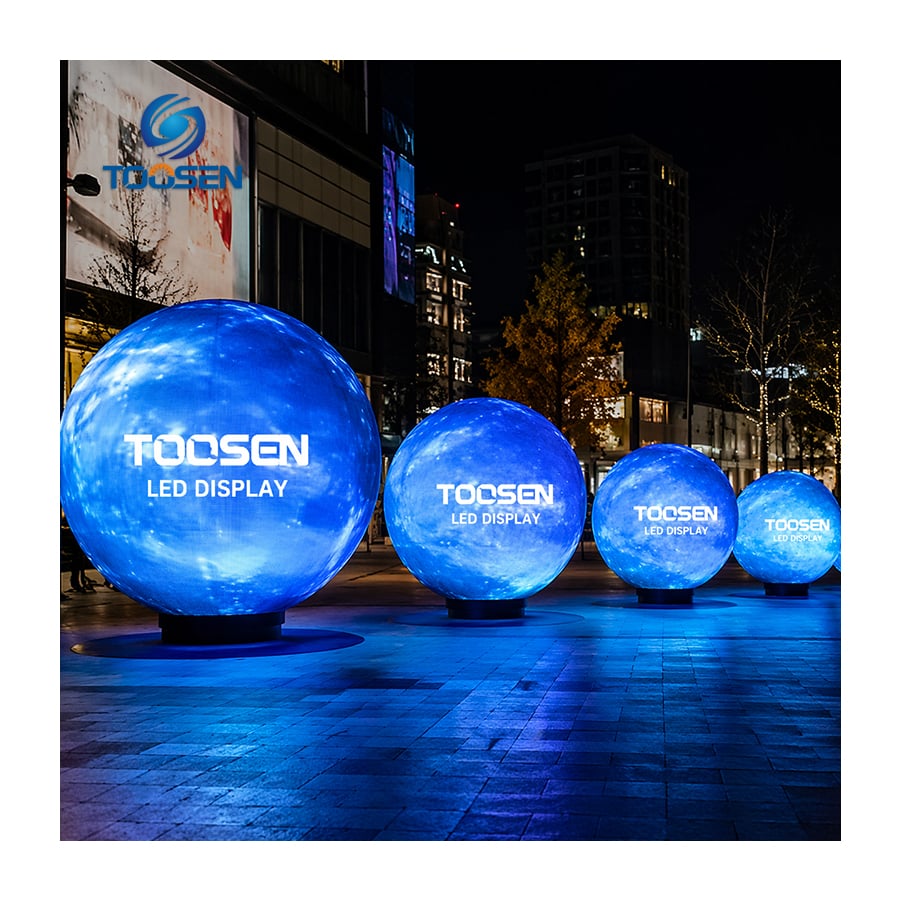
A larger diameter requires more LED modules, a larger supporting structure, more power supplies, and additional installation work.
A small LED sphere used inside a retail store is very different from a large outdoor sphere designed as a landmark.
This is why diameter should be selected according to the viewing environment rather than simply choosing the largest possible screen.
Pixel pitch has a major influence on both image quality and cost.
Fine pixel pitches such as P1.2, P1.5, P1.8, and P2 are suitable for applications where visitors stand relatively close to the display. Larger pixel pitches such as P4, P5, P6, P8, and P10 are more suitable for longer viewing distances and large installations.
Using a very fine pixel pitch when viewers are far away can increase the budget without providing much practical benefit.
Outdoor spherical LED displays normally require stronger weather protection, higher brightness, and a more robust supporting structure.
For example, Toosen spherical LED displays are available for both indoor and outdoor applications, with different brightness and protection options depending on the project.
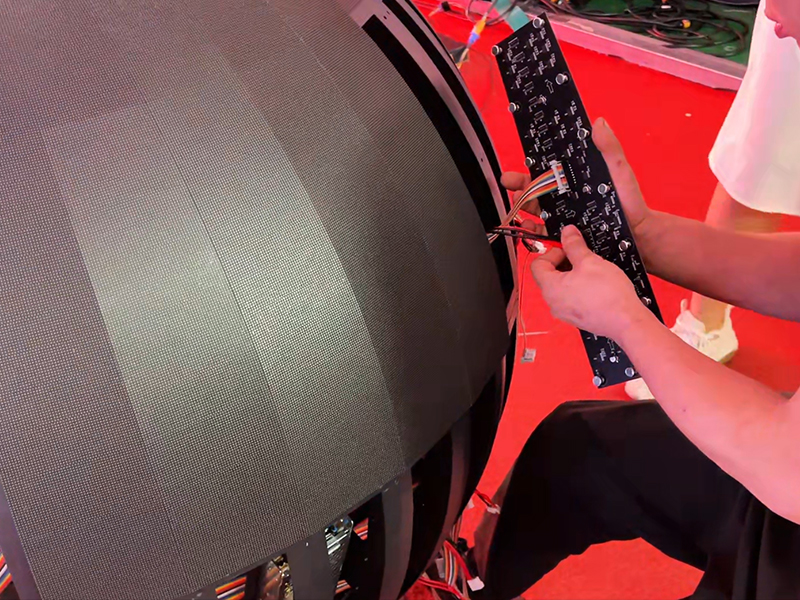
A sphere is more complex to install than a flat LED wall.
Depending on the location, it can be:
The supporting structure, installation method, access for maintenance, and local site conditions should therefore be considered before calculating the final budget.
The purchase price is only part of the investment.
A more realistic budget should include:
LED screen + structure + control system + transportation + installation + content production + spare parts + maintenance
Content is especially important.
A normal 16:9 video is designed for a flat rectangle. When the same content is displayed on a sphere, images can become distorted if the content is not properly mapped.
For a globe, planet, product animation, logo, or 3D visual effect, the content should be designed with the spherical surface in mind.
This is an important cost that buyers sometimes overlook.
A flat LED screen usually wins on initial cost and simplicity.
A sphere offers a different kind of value.
| Factor | Spherical LED Display | Flat LED Display |
|---|---|---|
| Initial cost | Higher | Lower |
| Viewing direction | 360° | Mainly front-facing |
| Installation | More complex | Simpler |
| Content requirements | May require spherical mapping | Standard content |
| Visual differentiation | Very high | Moderate |
| Landmark potential | High | Moderate |
| Best use | Creative and immersive projects | Conventional information and advertising |
If people only approach the display from the front, paying for a 360-degree structure may not make sense.
But consider a shopping mall atrium.
Visitors may approach from several directions and different floors. A conventional LED wall has a clear front and back, while a sphere can remain visible as people move around the space.
In this situation, the additional cost can have a clear purpose.
The return on investment of a sphere LED display is not always measured through direct sales.
For many projects, value comes from four areas.
A large spherical screen is unusual enough to become a visual focal point.
At exhibitions, shopping malls, brand events, and entertainment venues, this can help attract visitors toward a specific area.
For flagship stores and branded spaces, the display itself can become part of the environment.
Instead of using the LED screen only to show advertisements, companies can use the sphere as a digital sculpture that continuously changes its content.
Museums, science centers, planetariums, and educational spaces are particularly suitable for spherical displays.
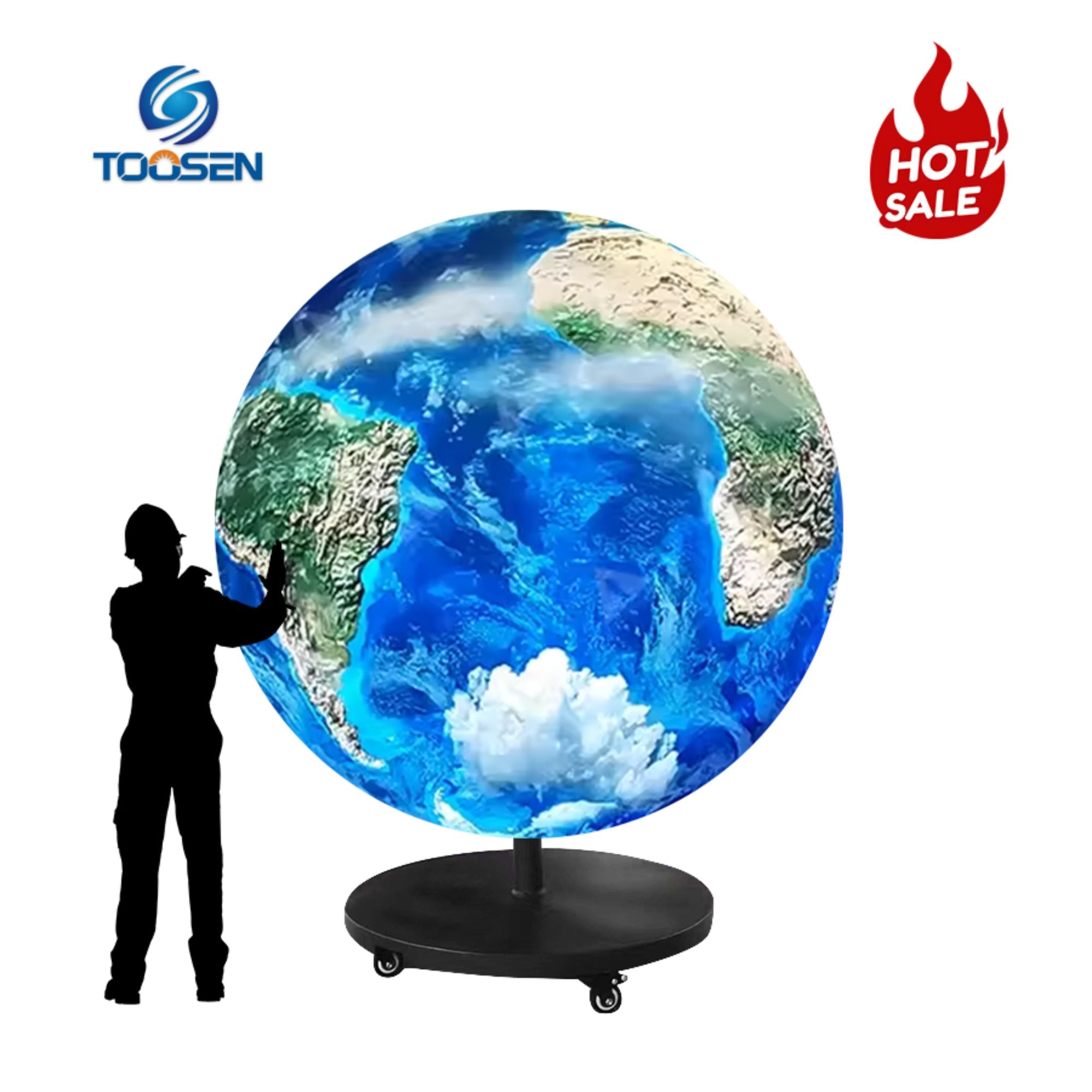
Earth imagery, planets, weather information, geographic data, and other global visualizations naturally fit a spherical surface.
A physical decoration normally needs to be replaced when a campaign changes.
An LED display can stay in place while the digital content is updated for a new product, season, event, or marketing campaign.
For long-term installations, this flexibility can improve the value of the initial investment.
It can be a good investment when installed in an atrium or another open area with traffic coming from several directions.
The sphere can work as both a digital advertising platform and a visual landmark.
This is one of the strongest applications.
A sphere LED screen can display Earth, planets, scientific data, historical information, and artistic content in a format that matches the subject.
A sphere can help a booth stand out in a crowded exhibition hall.
However, for a one-time event, buyers should compare the cost of purchasing, renting, transporting, and reinstalling the display.
For premium brands, technology showrooms, entertainment stores, and experiential retail spaces, a spherical display can become part of the store design.
For a small shop that only needs to show prices and promotions, a standard screen will normally be more economical.
Large outdoor LED spheres can create a strong visual impact, but these projects require careful engineering.
Brightness, waterproofing, structural strength, maintenance access, power supply, and local environmental conditions all need to be evaluated before installation.
A spherical LED display is not automatically the best choice for every project.
You may be better off choosing a flat LED display if:
This is why the first question should not be:
“How much does a spherical LED display cost?”
A better question is:
“What does the spherical shape add to this project?”
If the answer is very little, choose a conventional screen.
If the spherical shape improves visibility, attracts visitors, supports the content, or becomes an important part of the venue, the additional investment is easier to justify.
The best way to control costs is to design the LED sphere around the real project requirements.
Start with the viewing distance.
A shorter viewing distance normally requires a finer pixel pitch. For a large sphere viewed from farther away, a larger pixel pitch can reduce the cost without significantly affecting the viewing experience.
Next, choose the correct diameter.
The sphere should match the scale of the venue. A larger diameter is not always better.
You should also consider maintenance before installation. Power supplies, modules, receiving cards, and cables should remain accessible after the sphere is installed.
Finally, prepare the content strategy early. Knowing what will be displayed helps determine the required resolution and pixel pitch before production begins.
Toosen focuses on spherical and special-shaped LED display solutions and provides OEM and ODM services for customized projects.
Our spherical LED screens are available for indoor and outdoor applications, with pixel pitch options from P1.2 to P10. Different diameters can be produced according to project requirements.
For common applications, customers can choose hanging, floor-standing, or mobile installation.
Rather than simply recommending the highest specification, the goal should be to match the diameter, pixel pitch, brightness, installation structure, and control system to the real viewing environment.
This can help avoid unnecessary costs while maintaining the visual performance required by the project.
Yes—but only for the right project.
A spherical LED display is worth considering when 360-degree visibility, visual differentiation, immersive content, or landmark value plays an important role in the project.
If the goal is only to display standard information from one direction, a flat LED display will usually be more cost-effective.
The best investment is therefore not necessarily the largest sphere or the smallest pixel pitch.
It is the LED sphere that matches the viewing distance, installation environment, audience, content, and long-term purpose of the project.
There is no single standard price. Diameter, pixel pitch, indoor or outdoor use, structure, installation method, control system, and customization all affect the final cost.
It depends mainly on viewing distance, sphere diameter, content, and budget. Fine pixel pitches are generally more suitable for close viewing, while larger pixel pitches can be more economical for large spheres viewed from farther away.
 EN
EN
 AR
AR
 BG
BG
 HR
HR
 CS
CS
 DA
DA
 NL
NL
 FI
FI
 FR
FR
 DE
DE
 EL
EL
 HI
HI
 IT
IT
 JA
JA
 KO
KO
 NO
NO
 PL
PL
 PT
PT
 RO
RO
 RU
RU
 ES
ES
 SV
SV
 TL
TL
 ID
ID
 SR
SR
 UK
UK
 VI
VI
 ET
ET
 HU
HU
 TH
TH
 TR
TR
 FA
FA
 AF
AF
 MS
MS
 GA
GA
 HY
HY
 AZ
AZ
 MN
MN
 UZ
UZ