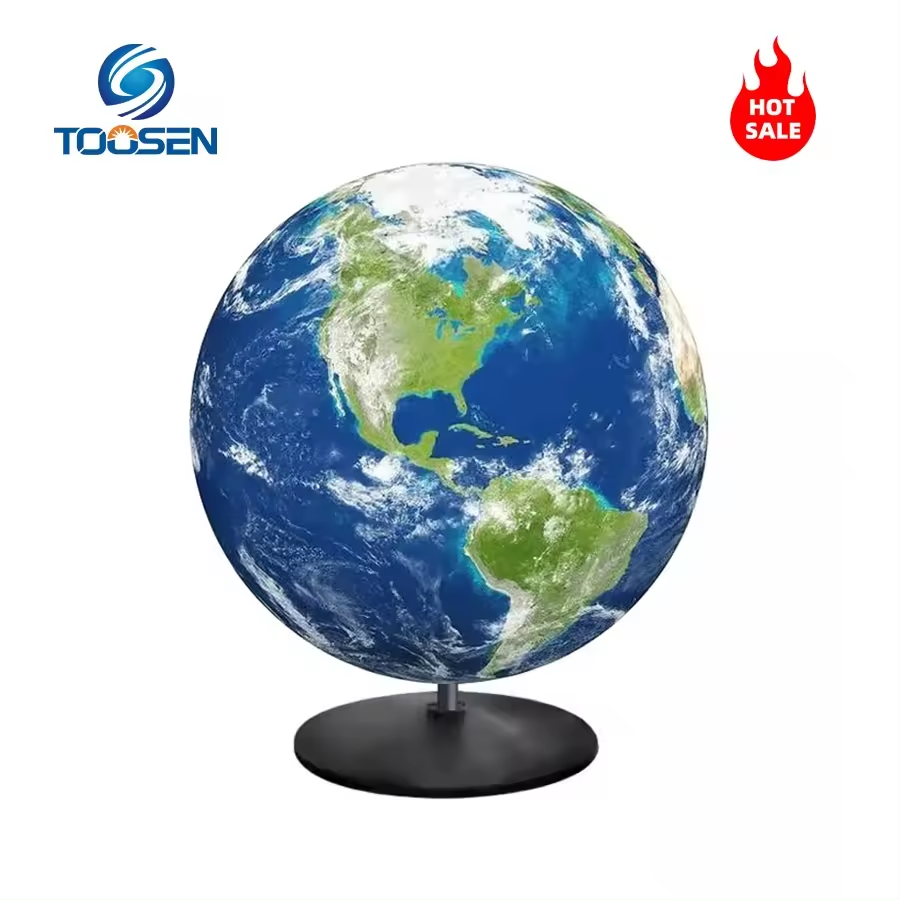
2m indoor P1.8 sphere LED display project in South Korea with floor-mounted installation, ≥7680Hz refresh rate and 360° visual performance.
Contact Us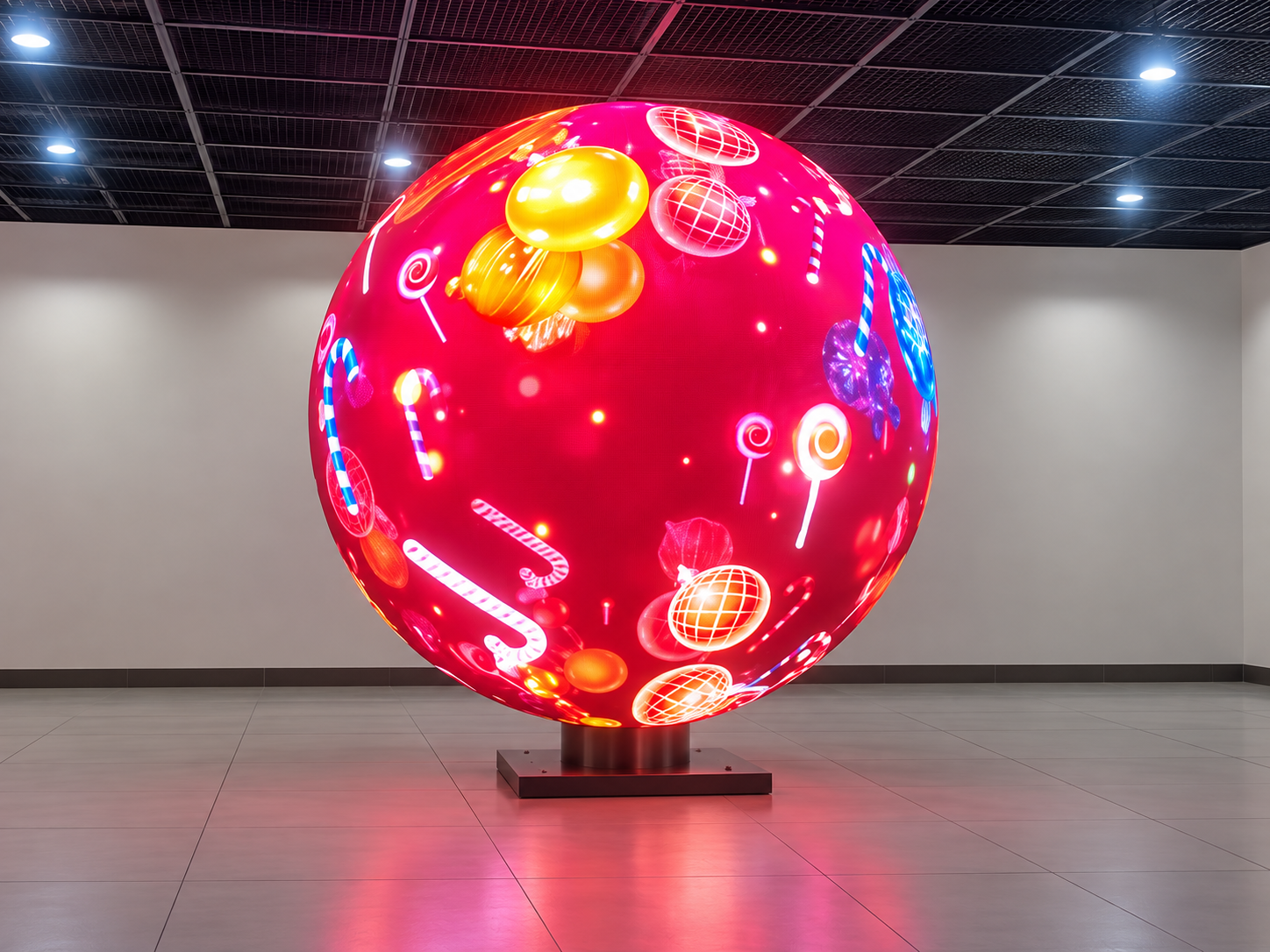
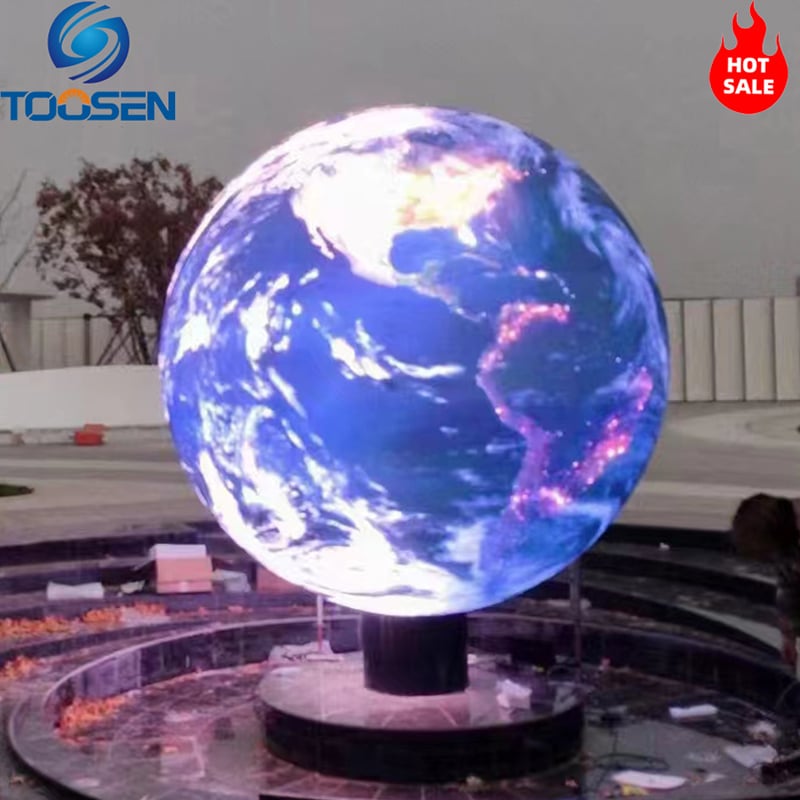
A 2-meter P1.8 sphere LED display was recently completed for an indoor project in South Korea. The screen uses a floor-mounted structure and is designed to create a strong visual centerpiece while maintaining clear image quality at a relatively close viewing distance.
Unlike a standard flat LED screen, a sphere LED display can show content across a full 360-degree surface. Visitors can see the screen from different directions, making it suitable for shopping malls, exhibition halls, brand showrooms, museums, technology centers and other indoor public spaces.
Project Location: South Korea
Product: P1.8 Sphere LED Display
Installation: Indoor Floor-Mounted
Diameter: 2 meters
Pixel Pitch: P1.8
Refresh Rate: ≥7680Hz
Input Voltage: AC 90–264V
Output Voltage: DC 5V
Display Type: 360° Spherical LED Screen
Application: Indoor commercial and exhibition display
For a 2-meter indoor sphere LED display, viewing distance is an important factor.
Visitors may stand relatively close to the screen, so a larger pixel pitch could make individual pixels more noticeable. The P1.8 pixel pitch provides a higher pixel density and helps the sphere display detailed images, videos, logos and animation more clearly.
This makes the screen especially suitable for indoor spaces where people can walk around the sphere and view the content from different angles.
The smaller pixel pitch also helps maintain smoother visual details around the curved surface.
This Korean project uses a floor-mounted sphere LED display rather than a hanging structure.
A floor-mounted design provides a stable supporting base underneath the sphere. It is a practical solution for indoor projects where ceiling suspension is difficult or where the customer wants the LED sphere to become a central visual installation.
Before installation, the supporting frame needs to be properly leveled. The weight of the sphere, power supplies, internal frame and LED modules must also be distributed evenly.
A stable structure helps reduce movement and keeps the joints between different sections of the sphere aligned.
One of the main challenges of a sphere LED display is maintaining a natural image across a curved surface.
The screen is divided into carefully designed sections so that the LED modules can follow the spherical structure. Content is then mapped according to the shape and resolution of the screen.
This allows videos and animations to wrap around the sphere instead of appearing like a flat image placed on a curved surface.
For this project, the refresh rate is ≥7680Hz, helping the screen provide smooth visual performance.
A high refresh rate is particularly useful when the LED sphere is photographed or recorded by cameras. It can help reduce visible scan lines and flickering in videos.
The sphere LED display supports an input voltage of AC 90–264V, making the power system suitable for different project environments.
The power supply converts the input power to DC 5V for the LED modules and related electronic components.
For a 2-meter sphere, power cables and signal cables must be planned carefully inside the structure. Good cable management makes installation cleaner and also makes future maintenance easier.
Before final delivery, the complete screen should be tested for brightness consistency, color performance, signal stability and continuous operation.
A 2-meter indoor P1.8 sphere LED display can work as both a digital display and a decorative installation.
It can be used in:
Shopping malls and commercial centers
Museums and science centers
Corporate showrooms
Exhibition halls
Hotel lobbies
Brand experience centers
Entertainment venues
Indoor event spaces
Because the content can be seen from multiple directions, the sphere works particularly well in open areas with visitor traffic coming from different sides.
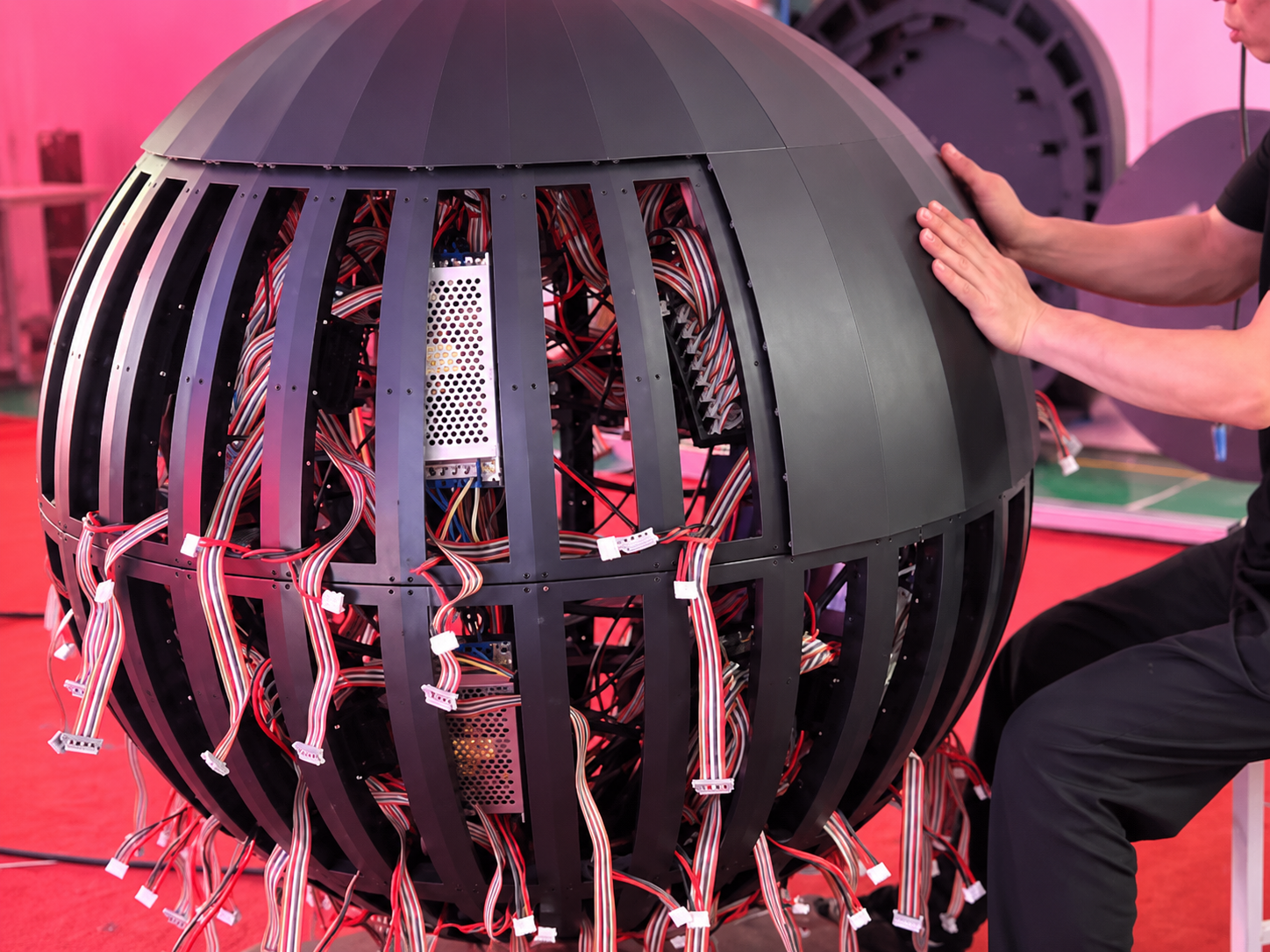
Before shipment, the 2m P1.8 sphere LED display is fully assembled and tested in our factory.
The first step is a complete screen lighting test. We check whether all LED modules work normally and whether there are dead pixels, dark areas or abnormal lines on the spherical surface.
Next, the engineering team checks brightness and color consistency. Because a sphere is viewed from different angles, uneven brightness or color differences can be more noticeable than on a flat LED screen.
The screen also goes through a signal and content playback test. Videos, pictures and dynamic content are played continuously to confirm that the control system, receiving cards and signal transmission remain stable.
We also check the power system, including the AC 90–264V input and DC 5V output, to make sure the power supplies and internal wiring work correctly.
Finally, the complete sphere runs for several hours before packing. During this aging test, technicians monitor the screen for overheating, signal loss, abnormal modules or unstable brightness.
Only after the display passes these factory tests is it prepared for packaging and delivery to the project site in South Korea.
Sphere LED screens require more customization than conventional rectangular displays.
The diameter, pixel pitch, installation method, internal supporting frame, power system and content mapping should all be considered before production.
For different projects, the sphere diameter and pixel pitch can be customized according to viewing distance, installation space and visual requirements.
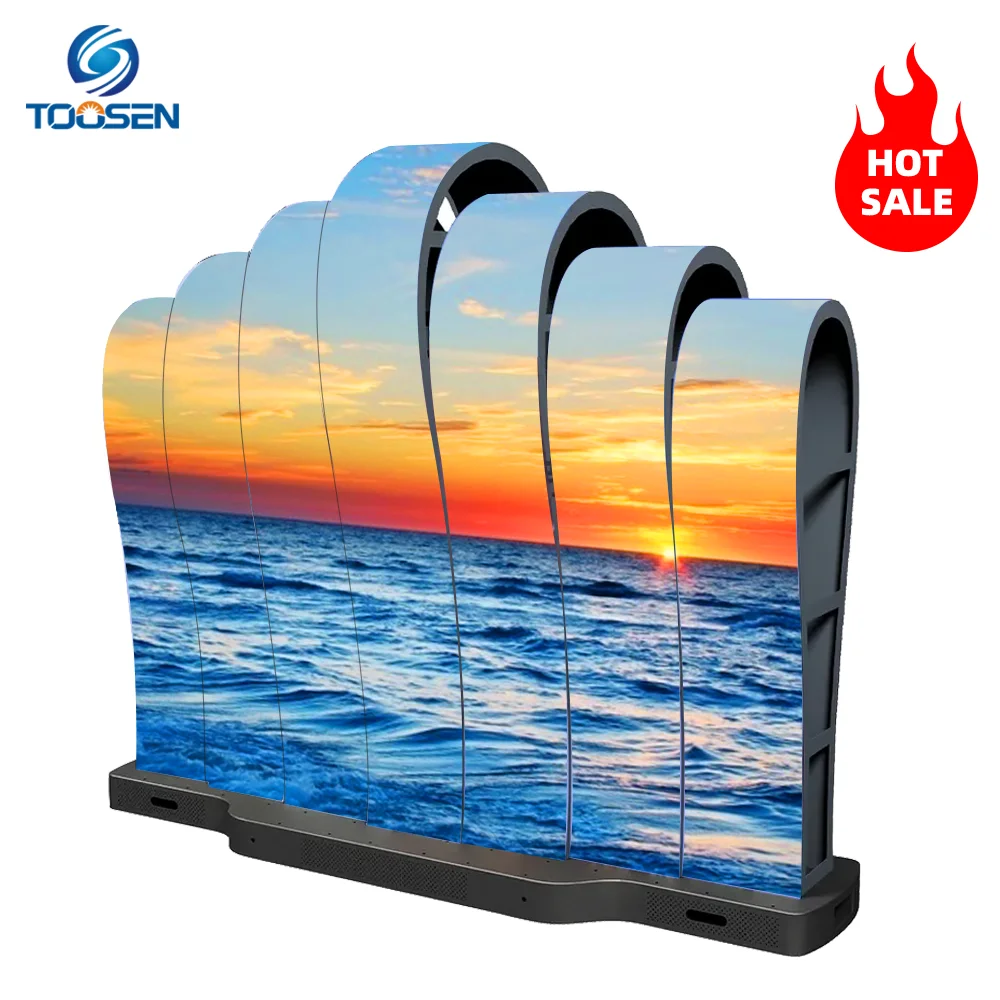
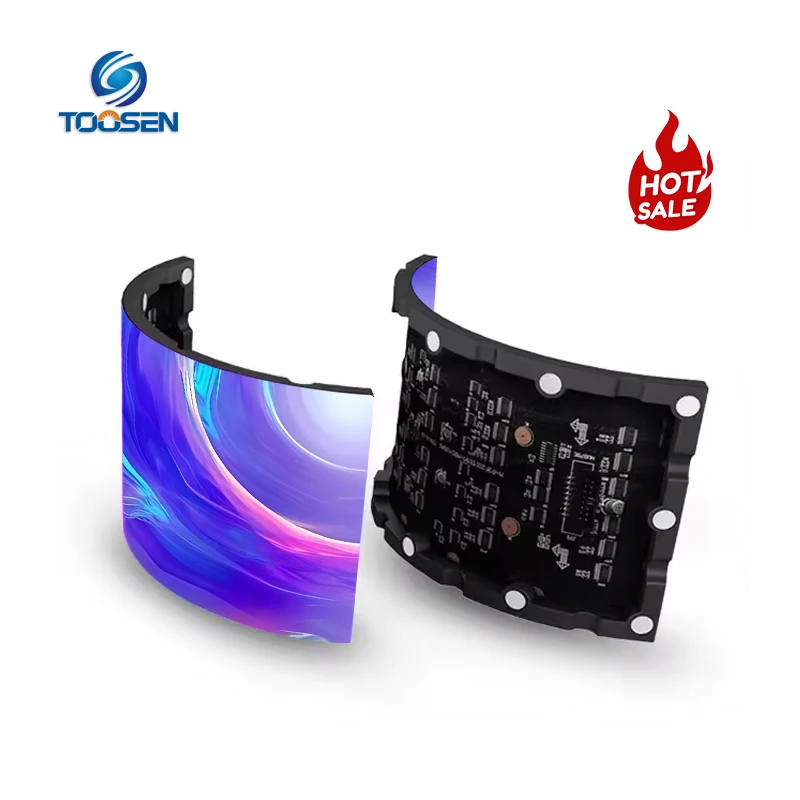
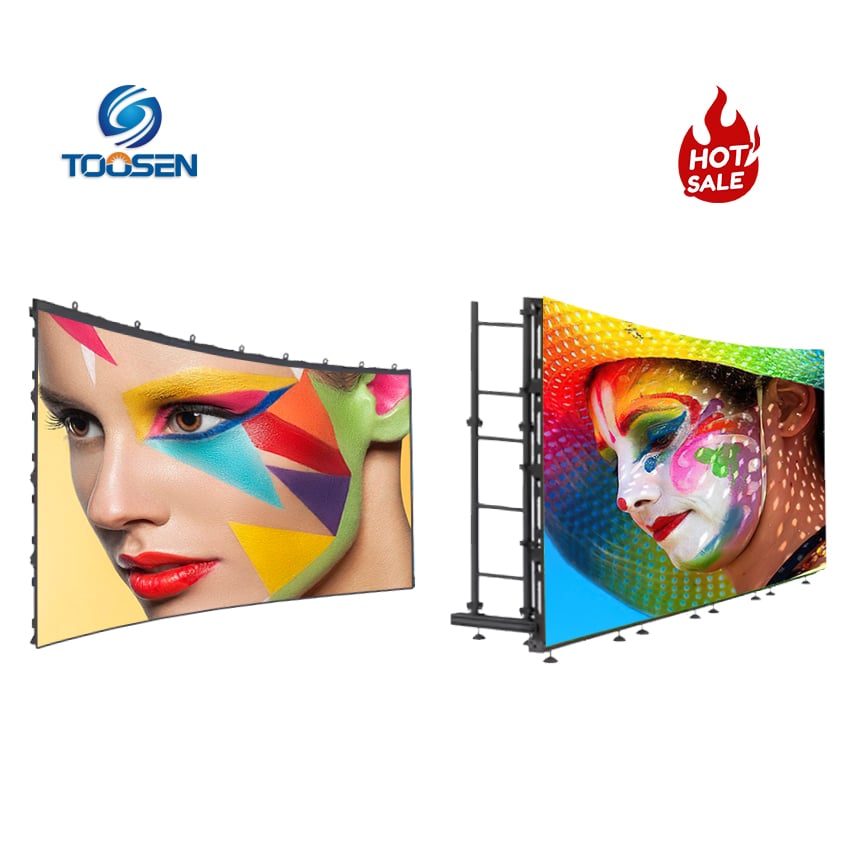
Shenzhen Toosen Optoelectronics Co., Ltd. provides indoor and outdoor LED displays as well as customized creative LED solutions, including sphere LED displays, curved LED screens and other custom-shaped LED displays.
From structural design and production to testing and installation support, we help customers develop LED solutions according to the actual project environment.
This 2m P1.8 sphere LED display project in South Korea shows how a fine-pitch spherical screen can combine high-resolution visual performance with a stable floor-mounted structure, creating an eye-catching centerpiece for indoor spaces.
 EN
EN
 AR
AR
 BG
BG
 HR
HR
 CS
CS
 DA
DA
 NL
NL
 FI
FI
 FR
FR
 DE
DE
 EL
EL
 HI
HI
 IT
IT
 JA
JA
 KO
KO
 NO
NO
 PL
PL
 PT
PT
 RO
RO
 RU
RU
 ES
ES
 SV
SV
 TL
TL
 ID
ID
 SR
SR
 UK
UK
 VI
VI
 ET
ET
 HU
HU
 TH
TH
 TR
TR
 FA
FA
 AF
AF
 MS
MS
 GA
GA
 HY
HY
 AZ
AZ
 MN
MN
 UZ
UZ