Home > News > Industry News
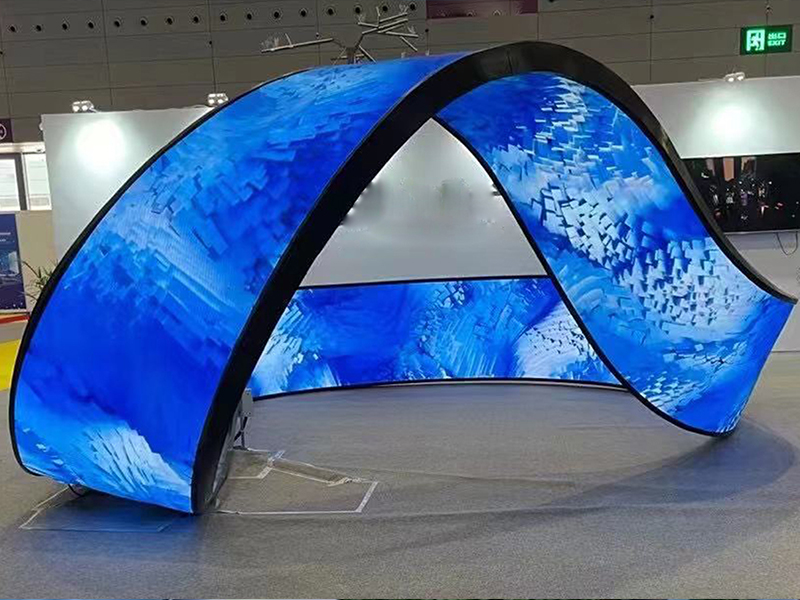
Manufacturing a Möbius LED display is not a conventional LED project. It requires interdisciplinary coordination across structural engineering, electronics, content mapping, and precision manufacturing. Because the Möbius form involves a continuous twist with a single surface, every stage—from design to assembly—must be tightly controlled.
Below is a practical, engineering-oriented breakdown of the process.
First, define the geometric parameters of the Möbius form:
Designers then build a 3D parametric model using CAD software. At this stage, you must also:
For companies like Toosen, this phase often includes close collaboration with architects or exhibition designers to ensure the display integrates seamlessly into the environment.
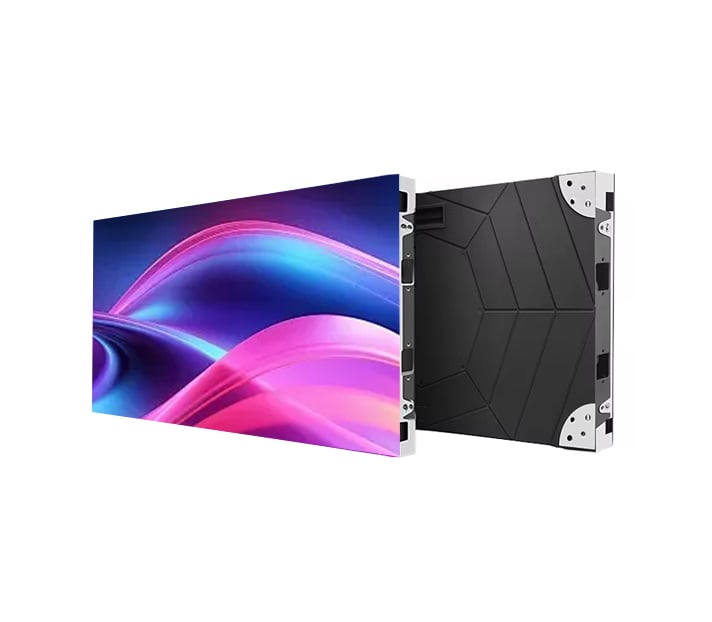
Standard rectangular LED modules cannot directly form a Möbius surface. Therefore, you need custom-shaped or flexible modules.
Two main approaches are used:
Toosen typically uses flexible PCB technology combined with trapezoidal circuit layouts. This hybrid approach ensures:
Next, manufacture the internal support structure. This is one of the most critical steps.
The frame is usually made from:
Key requirements:
Engineers often use CNC machining or 3D bending techniques to achieve the required precision.
Once the frame is ready, install the LED modules onto the structure.
During this process, technicians must:
Because the Möbius surface has no “front” or “back,” continuity is critical. Even minor misalignment can break the illusion of a single continuous surface.
After physical assembly, integrate the electrical systems:
Cable management is especially challenging here. Engineers must:
Toosen typically designs redundant signal paths to improve system reliability in complex shapes like Möbius displays.
This step is what truly brings the Möbius display to life.
Because the surface is non-Euclidean (twisted), standard video content will appear distorted unless properly mapped.
You must:
After mapping, perform calibration:
The goal is to ensure that content flows smoothly across the entire loop without visual breaks.
Finally, conduct full system testing:
Only after passing these checks should the display be commissioned.
Manufacturing a Möbius LED display involves several technical challenges:
This is why experienced manufacturers like Toosen play a crucial role. With over a decade in creative LED display R&D, they combine flexible module technology, structural engineering, and content integration to deliver reliable Möbius LED solutions.
A Möbius LED display is not just a screen—it is a synthesis of mathematics, engineering, and digital art. To manufacture one successfully, you must control every layer of the system, from geometry and hardware to software and content.
When executed correctly, the result is a seamless, infinite visual experience that stands out in any commercial, cultural, or architectural space.
 EN
EN
 AR
AR
 BG
BG
 HR
HR
 CS
CS
 DA
DA
 NL
NL
 FI
FI
 FR
FR
 DE
DE
 EL
EL
 HI
HI
 IT
IT
 JA
JA
 KO
KO
 NO
NO
 PL
PL
 PT
PT
 RO
RO
 RU
RU
 ES
ES
 SV
SV
 TL
TL
 ID
ID
 SR
SR
 UK
UK
 VI
VI
 ET
ET
 HU
HU
 TH
TH
 TR
TR
 FA
FA
 AF
AF
 MS
MS
 GA
GA
 HY
HY
 AZ
AZ
 MN
MN
 UZ
UZ