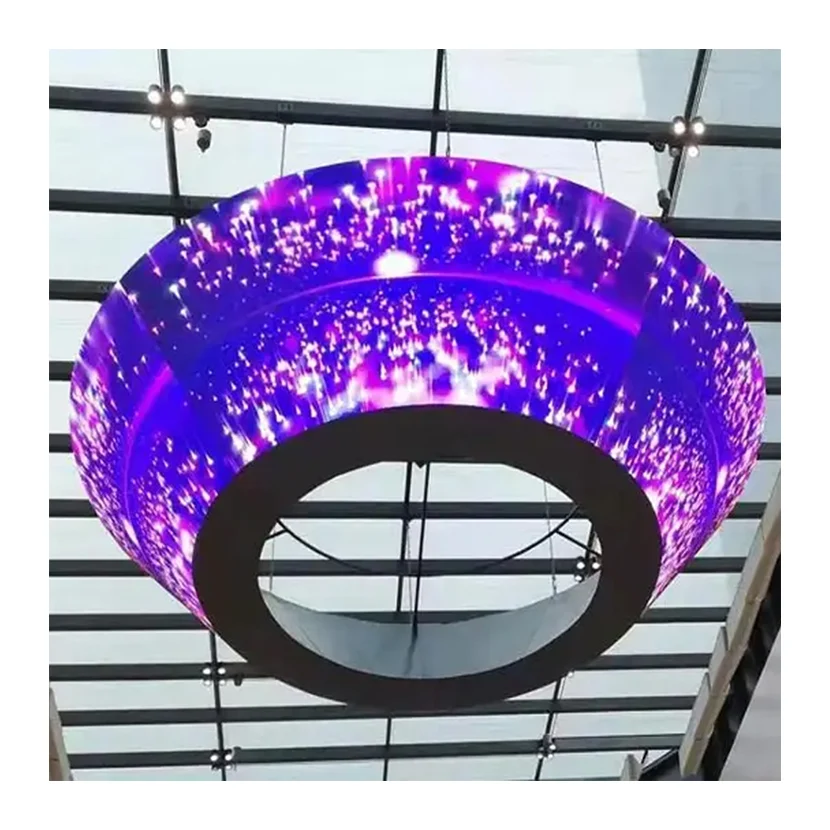
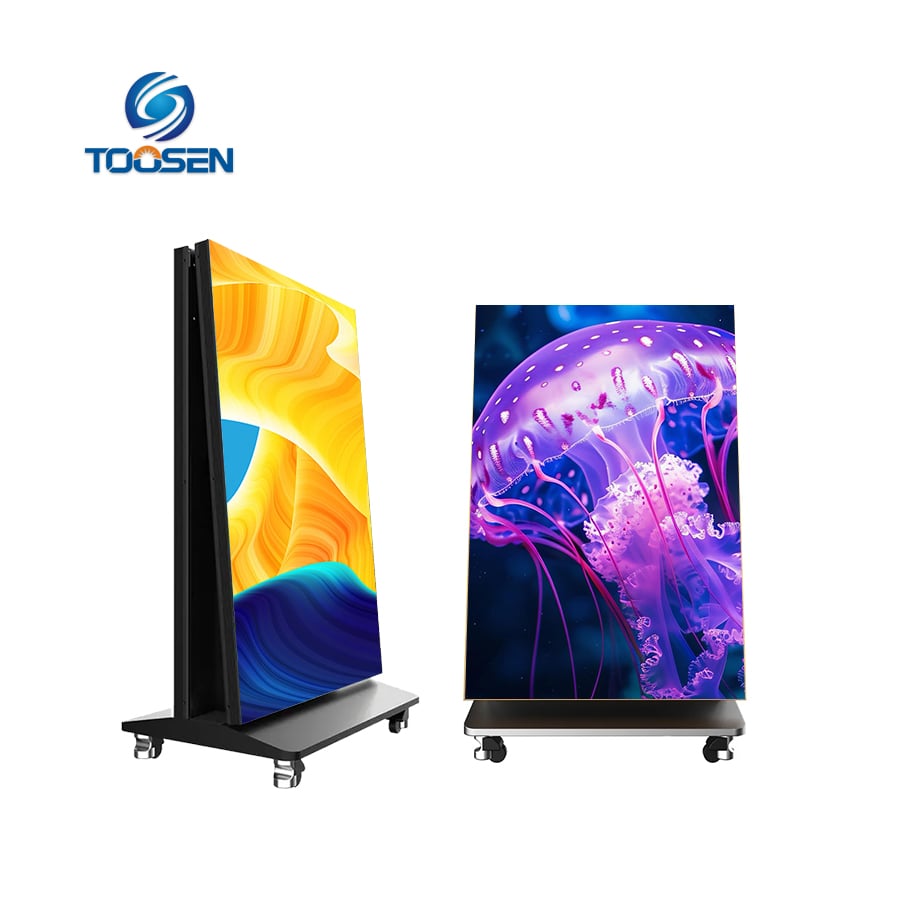
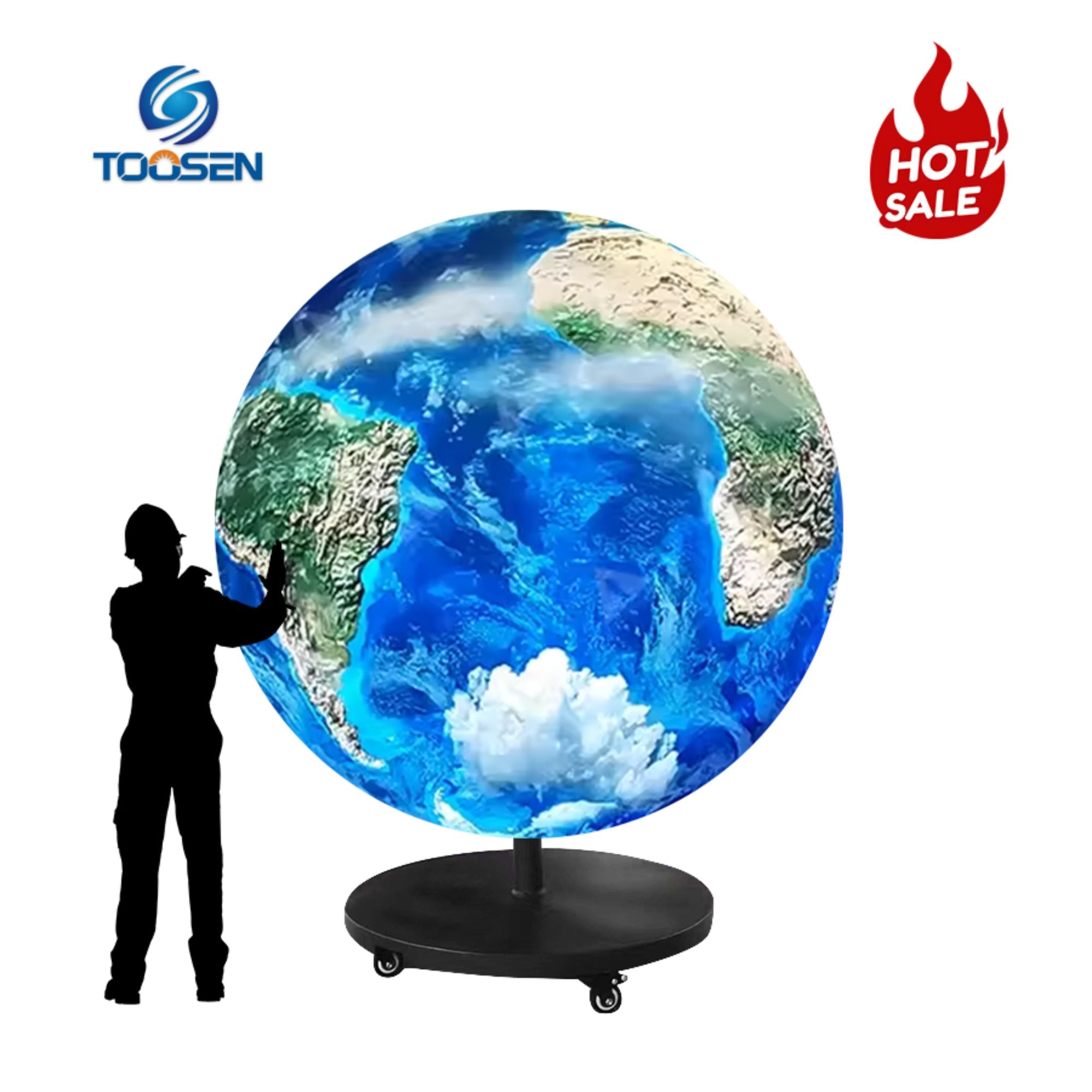
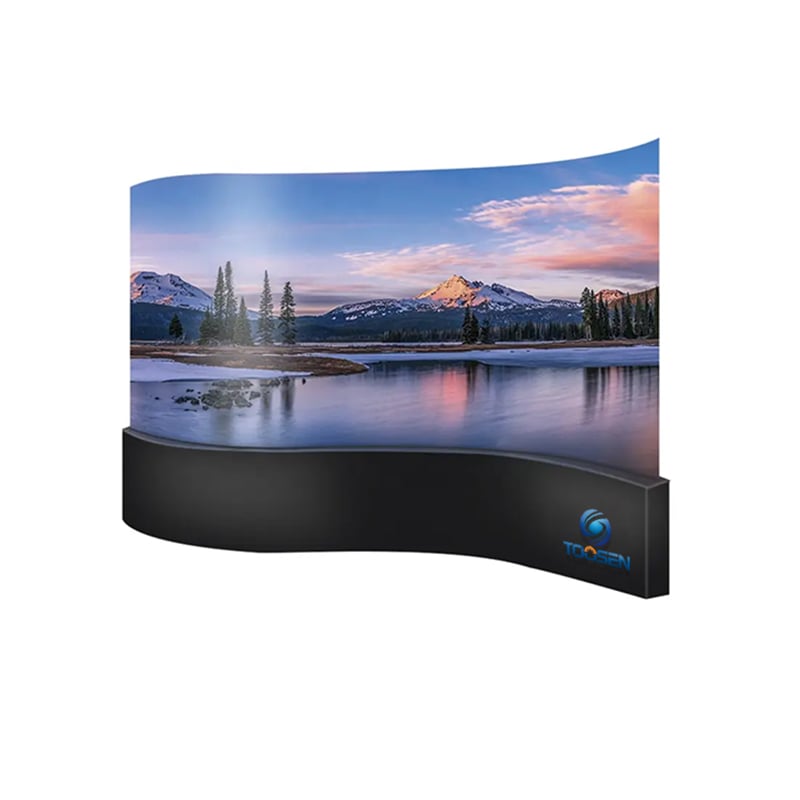
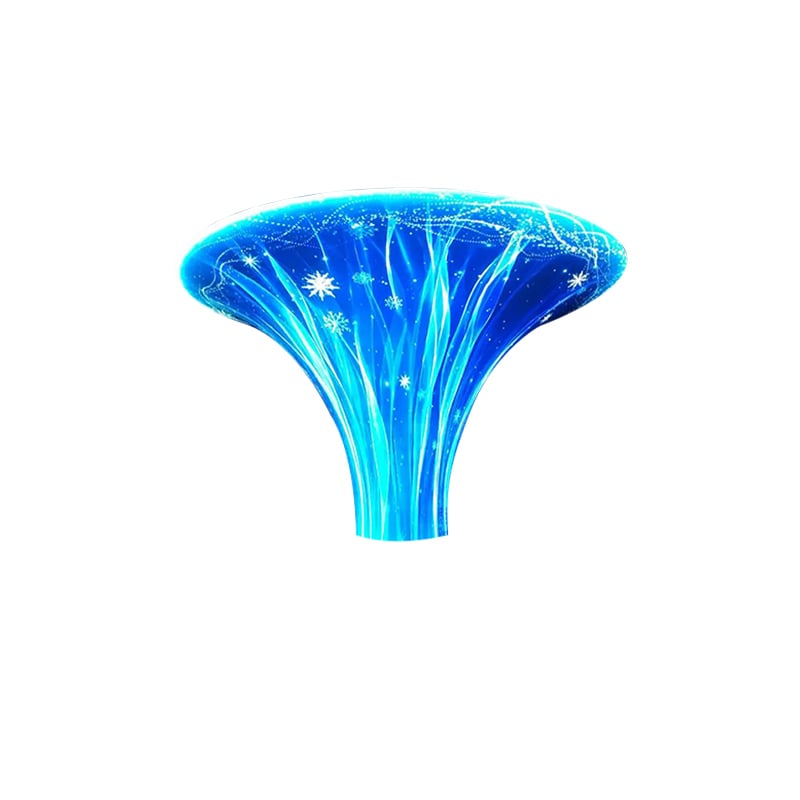
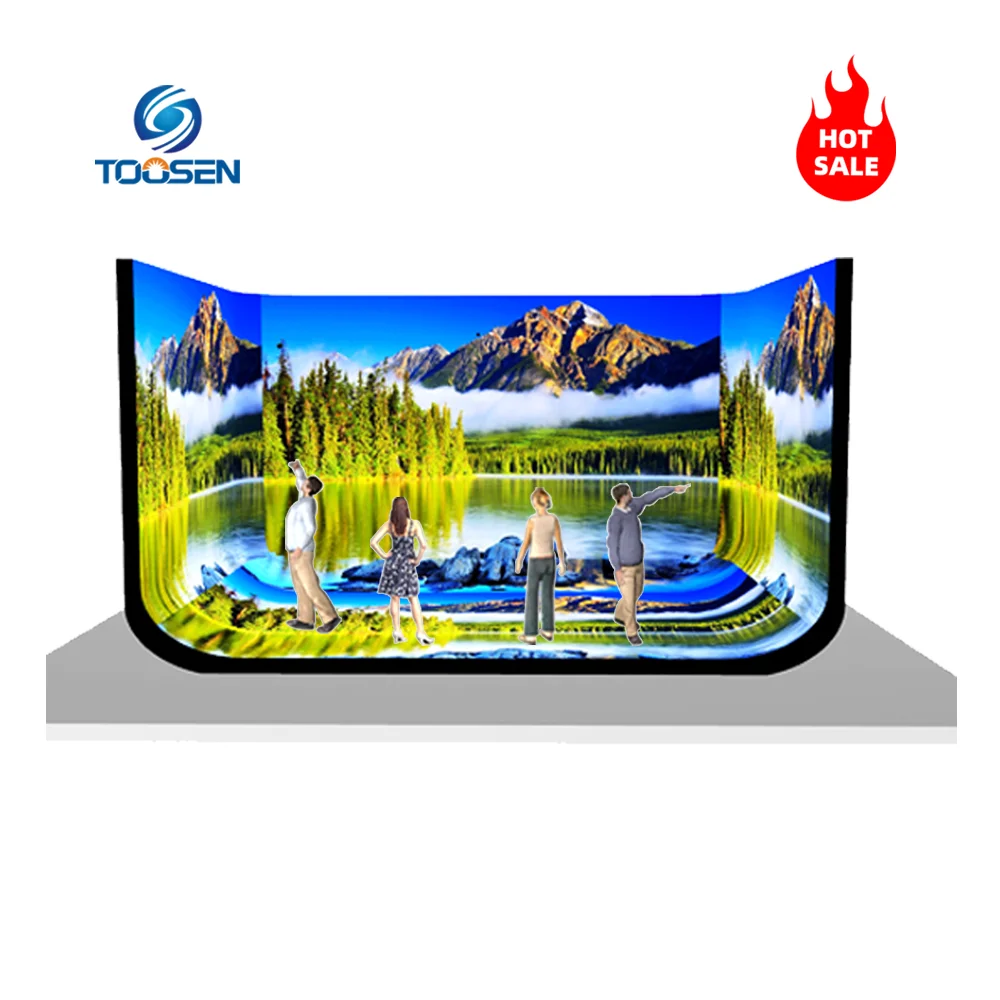
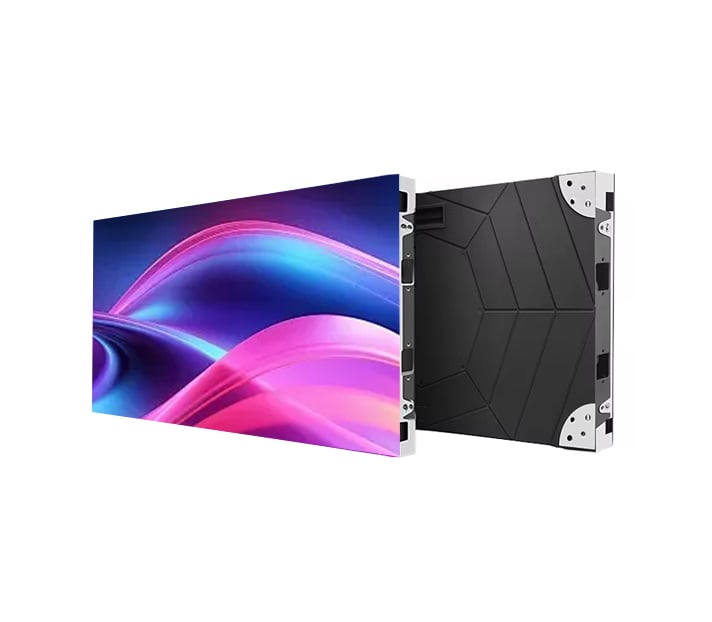
Custom shaped LED screens can turn a normal space into something memorable. Spheres, cylinders, curves, bottles, cans and other creative structures are now widely used in shopping malls, exhibitions, museums, retail stores and entertainment venues.
But unusual shapes also create an engineering problem that is easy to overlook: heat dissipation.
A traditional flat LED screen usually has a relatively regular internal structure. Air can move behind the modules, and power supplies can be arranged in predictable positions. A custom shaped LED display is different. Curved surfaces and enclosed structures can create small internal spaces where heat is more difficult to remove.
For this reason, heat dissipation should be considered when the shape of the LED display is designed—not after the screen has already been built.
Every LED display produces heat during operation. The main heat sources include LED modules, driver ICs, power supplies and other electronic components.
With a conventional flat LED wall, these components are usually distributed across a large and relatively open structure.
A custom shaped LED screen may have a very different internal layout.
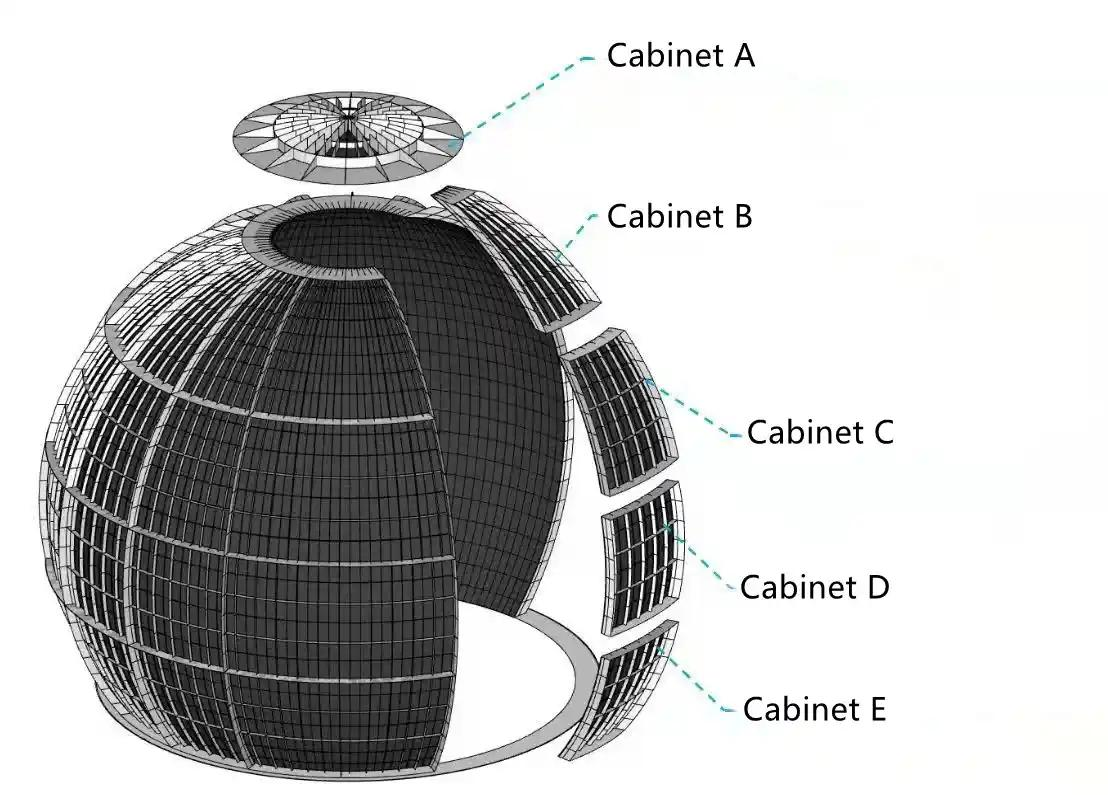
Consider a spherical LED display. Its modules surround an internal structure from multiple directions. A bottle-shaped or can-shaped LED display may have a narrow internal cavity. A curved screen may also have different distances between the LED modules and supporting frame.
These designs can create thermal hotspots, where one area becomes significantly warmer than another.
Poor thermal management can increase component stress and may eventually cause problems such as unstable operation, accelerated LED degradation, color inconsistency or shorter component life.
That is why cooling begins with the structural design.
Before designing a cooling system, engineers first need to understand where heat will be generated.
The major heat-producing components normally include:
The goal is not simply to remove heat. A better approach is to avoid concentrating too much heat in one small area.
For example, placing several power supplies together inside a narrow enclosed structure can create a local hotspot. A better layout distributes heat-producing components according to the available internal space.
This is particularly important for compact spherical, cylindrical, bottle-shaped and other irregular LED displays.
The supporting structure of an LED screen does more than hold the modules in position. It can also become part of the thermal management system.
Aluminum is commonly used because it combines relatively low weight with good thermal conductivity.
A simplified heat-transfer path may look like this:
LED module → PCB/backplate → metal structure → surrounding air
For this reason, the material and design of the internal frame matter.
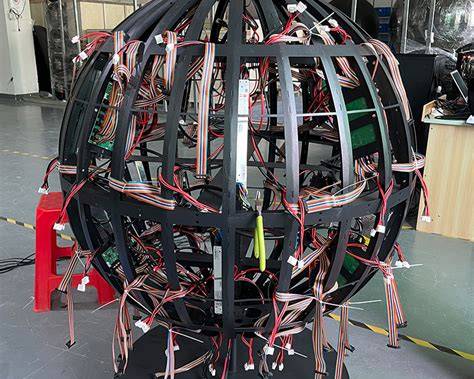
For example, TOOSEN spherical LED displays can use a hollow aluminum structure, which reduces structural weight while providing better conditions for heat dissipation.
This is especially useful for large spherical and creative LED installations where both weight and temperature must be considered.
Ventilation is one of the most important parts of LED screen thermal management.
Simply adding a fan does not automatically solve an overheating problem.
Air needs somewhere to enter, a clear path through the internal structure, and somewhere to leave.
When designing an irregular LED screen, engineers should consider:
Air inlet → heat-producing components → hot-air outlet
Warm air naturally rises. If the structure allows this movement, natural convection can remove part of the heat without requiring a large cooling system.
Problems occur when internal brackets, cables, power supplies or sealed structures block the airflow.
For this reason, enough space should be kept between important electronic components and the supporting structure whenever the design allows it.
Not every custom LED display needs the same cooling method.
Passive cooling does not depend heavily on powered cooling equipment.
Typical methods include:
For many indoor custom LED displays, a well-designed passive cooling structure can reduce unnecessary complexity and noise.
Larger displays or screens operating in demanding environments may require active cooling.
Common solutions include:
The correct method depends on the screen size, brightness, power consumption, installation environment and internal structure.
More cooling equipment is not always better. The goal is to maintain a stable operating temperature with a practical and serviceable design.
Different shapes create different thermal challenges.
A spherical LED screen has modules distributed around a 360-degree structure. Because the internal area can be relatively enclosed, heat-source distribution and internal airflow are important.
A lightweight hollow metal structure can help provide both structural support and better heat transfer.
A cylindrical screen wraps modules around a vertical structure. Natural upward airflow can be useful, but the internal frame and wiring should not block the path of rising warm air.
Curved LED displays are generally more open than fully enclosed spheres. However, very tight curves may reduce the space behind some modules. Engineers therefore need to consider both bending requirements and ventilation.
Bottle-shaped and can LED displays can have narrow internal spaces. Compact component layout is therefore important.
Instead of placing heat-producing components in one area, engineers can distribute them more evenly and keep important airflow paths open.
Outdoor screens face additional challenges from sunlight, high ambient temperatures, rain and long operating hours.
The cooling design must therefore work together with weather protection. Waterproofing should not simply seal the display so tightly that internal heat has no practical way to escape.
Good thermal design is not only about removing heat after it has been produced.
Reducing heat generation is equally important.
Engineers can consider efficient power supplies, appropriate operating brightness, optimized electrical design and suitable LED components.
Brightness should also match the actual environment. An indoor screen does not need to operate at outdoor-level brightness simply to appear powerful.
Lower unnecessary power consumption means less heat to manage.
This approach can make the complete cooling system simpler and more reliable.
Thermal performance should be checked before a custom LED display is delivered.
Testing may include running the screen for an extended period and checking whether specific areas become unusually hot.
Engineers can inspect:
An aging test is particularly useful because some thermal problems do not appear immediately after the screen is switched on.
The purpose is to find hotspots before the display reaches the installation site.
Heat does not always cause an immediate failure.
In many cases, excessive temperature gradually affects the components.
Long-term overheating can accelerate LED degradation, stress power supplies and electronic components, and increase the possibility of inconsistent performance.
For a custom shaped display, repairing components can also be more complicated than repairing a standard rectangular LED cabinet.
A reliable design should therefore consider heat dissipation and maintenance at the beginning of the project.
TOOSEN provides customized LED display solutions for indoor and outdoor projects, including spherical, cylindrical, curved, bottle-shaped, can-shaped and other irregular structures.
Our Shaped LED Screen solutions can be customized according to the required size, shape and installation environment.
For 360-degree creative installations, our Spherical LED Screen uses flexible modules and customized structural designs. Hollow aluminum structures can be used to reduce weight and improve heat dissipation.
For curved and irregular installations, Flexible LED Displays provide more freedom for creating arcs, domes and other creative surfaces.
For retail advertising and product-shaped installations, the Can LED Display can also be customized for different project requirements.
The objective is not simply to manufacture an unusual shape. Module layout, structural strength, maintenance access, waterproofing and heat dissipation all need to work together.
Heat dissipation for a custom shaped LED screen starts with the structure itself.
Engineers need to identify the heat sources, distribute electronic components properly, use suitable heat-conducting materials, create clear airflow paths and select passive or active cooling according to the operating environment.
Spherical, cylindrical, curved, bottle-shaped and other creative LED screens each require different thermal considerations.
When thermal management is included from the beginning, a creative LED screen can maintain both its unusual appearance and stable long-term performance.
Not always. Some indoor screens can rely mainly on passive cooling, aluminum structures and natural airflow. Larger or higher-power installations may require fans or additional cooling.
Aluminum is lightweight and conducts heat effectively. It can therefore provide structural support while helping transfer heat away from electronic components.
 EN
EN
 AR
AR
 BG
BG
 HR
HR
 CS
CS
 DA
DA
 NL
NL
 FI
FI
 FR
FR
 DE
DE
 EL
EL
 HI
HI
 IT
IT
 JA
JA
 KO
KO
 NO
NO
 PL
PL
 PT
PT
 RO
RO
 RU
RU
 ES
ES
 SV
SV
 TL
TL
 ID
ID
 SR
SR
 UK
UK
 VI
VI
 ET
ET
 HU
HU
 TH
TH
 TR
TR
 FA
FA
 AF
AF
 MS
MS
 GA
GA
 HY
HY
 AZ
AZ
 MN
MN
 UZ
UZ