Home > News > Industry News
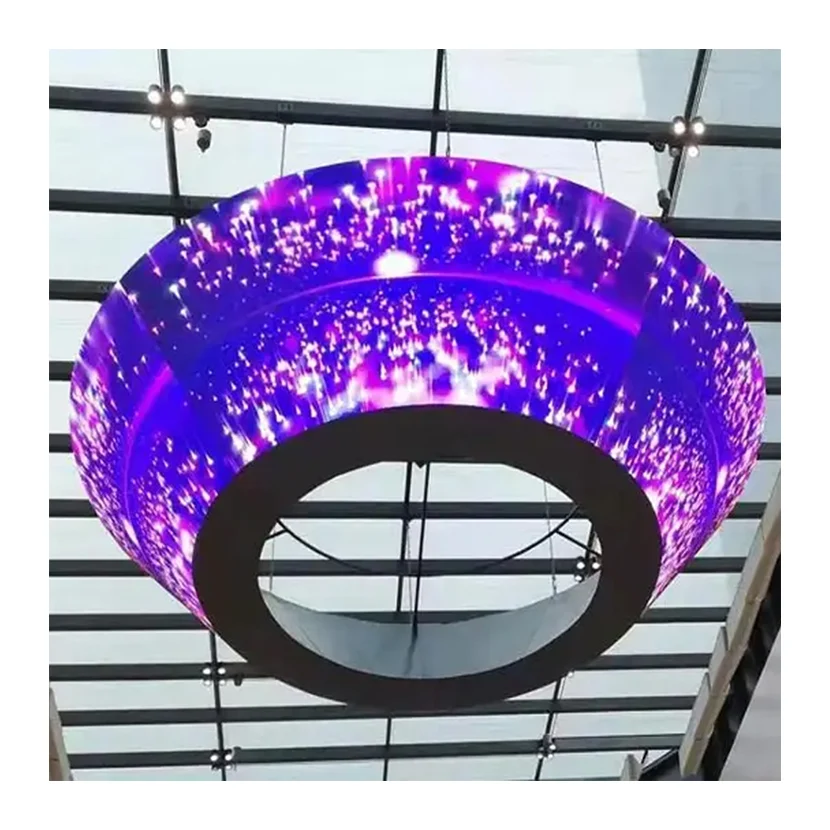
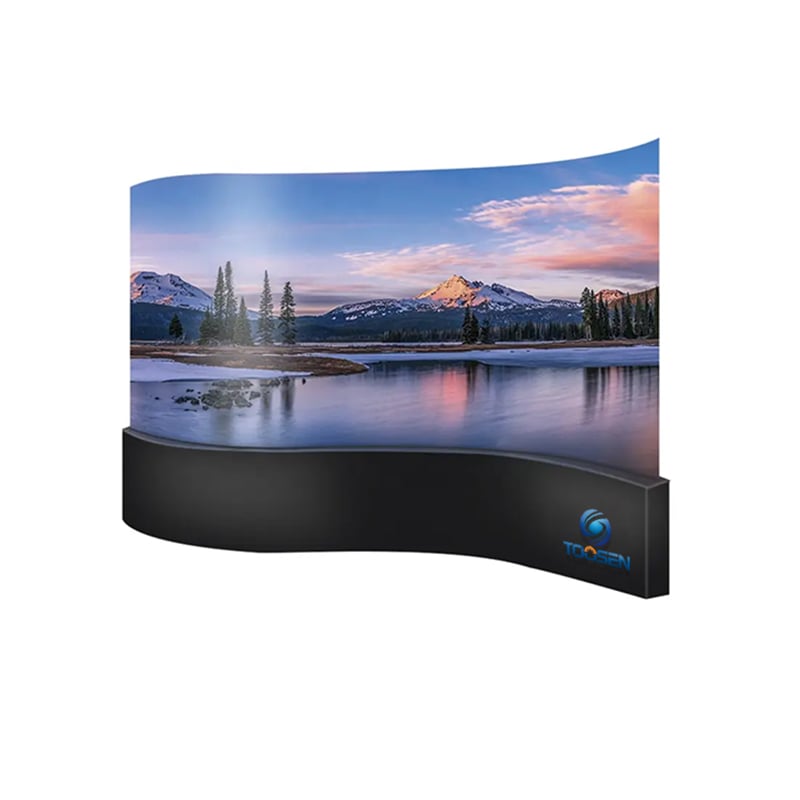
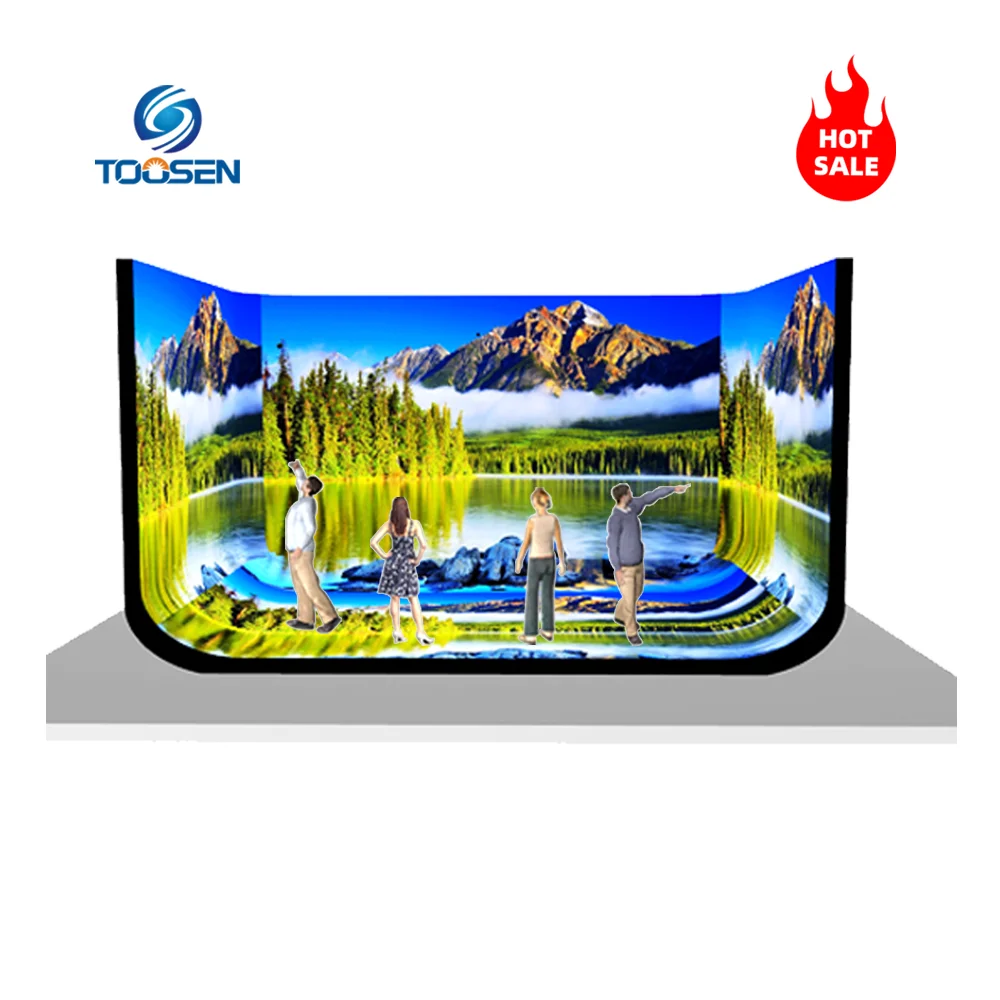
Curved LED screens are a stunning solution for modern displays. However, bending a screen introduces challenges for pixel spacing. On flat screens, pixels are evenly spaced and consistent. When the screen curves, pixels may compress or stretch. This can lead to uneven spacing, affecting the display quality. If the module is poorly designed, edges can be stressed and LEDs may fall off. Large pixel gaps can also reduce image clarity. To solve these problems, manufacturers use several techniques.
| Technique | Explanation | Benefits |
|---|---|---|
| Flexible PCB Design | Curved screens use flexible circuit boards instead of rigid ones. The flexible PCB can bend like silk without breaking the circuits. Designers can calculate physical deformation for a specific curve radius. They then adjust the LED positions during production. | Maintains pixel spacing even when bent. Prevents circuit damage. |
| Small Module Sizing | Using smaller modules instead of large ones helps create a smoother curve. Large modules form a polygon shape when bent. Smaller modules minimize angles between segments. | Pixels appear evenly spaced. The curve looks smooth and natural. |
| Control of Curvature Radius | Each module has a minimum bending radius. To maintain pixel consistency, the radius must match the pixel pitch. Smaller pitches (like P1.2) require larger radii for smoothness. | Prevents pixel overlap or stacking. Improves visual quality. |
| Seamless Splicing | Curved screens often use magnetic installation for micro-adjustments. Precise frame curvature ensures edges align perfectly. This eliminates “butterfly effects,” where small errors at one end create large gaps at the other. | Ensures smooth visuals. Avoids gaps or misalignment. |
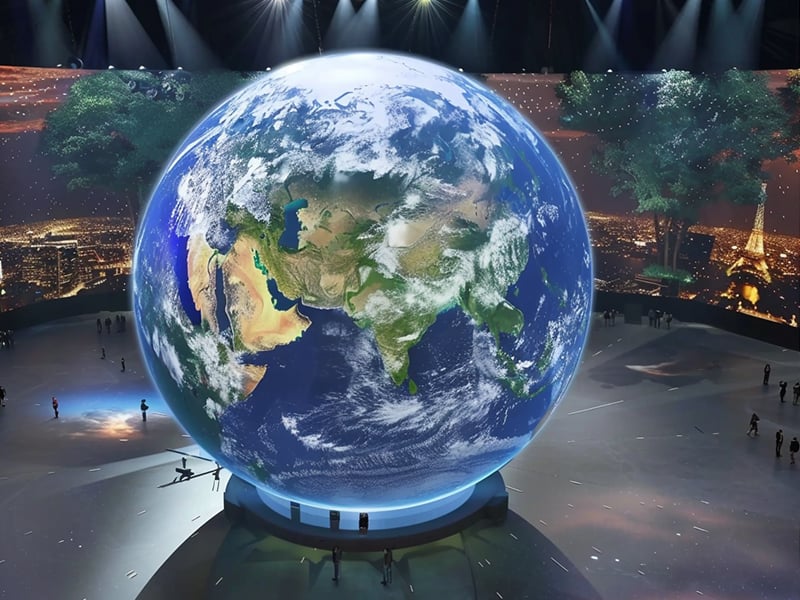
Check the wall's load capacity before installation, especially in older buildings.
Confirm the environment: indoor or outdoor, temperature and humidity, rain, dust, and corrosive gases. Match the screen’s IP rating accordingly.
Determine the optimal curve and pixel pitch based on viewing distance and angle.
Avoid directly washing the screen with water (unless it’s a high-IP outdoor model). Do not use hard objects, rough cloth, or chemical solvents.
Regularly check all structural connectors, cabinet locks, and adjustment screws. Micro-vibrations over time may loosen them.
Curved LED screens combine design, engineering, and precision. Flexible PCBs, small modules, proper curvature, and seamless splicing all work together to maintain consistent pixel spacing. Following installation and maintenance best practices ensures long-term performance and high-quality visuals.
Q1: Can curved LED screens have the same image quality as flat screens?
A1: Yes. Using flexible PCBs and small modules ensures pixels remain evenly spaced, keeping the image sharp.
Q2: What is the best way to maintain curved screen performance?
A2: Regularly check structural components and clean the screen carefully, avoiding harsh chemicals or rough tools.
Q3: How is the curve radius determined?
A3: The curve radius depends on pixel pitch. Smaller pixels need larger radii to prevent visual distortion.
 EN
EN
 AR
AR
 BG
BG
 HR
HR
 CS
CS
 DA
DA
 NL
NL
 FI
FI
 FR
FR
 DE
DE
 EL
EL
 HI
HI
 IT
IT
 JA
JA
 KO
KO
 NO
NO
 PL
PL
 PT
PT
 RO
RO
 RU
RU
 ES
ES
 SV
SV
 TL
TL
 ID
ID
 SR
SR
 UK
UK
 VI
VI
 ET
ET
 HU
HU
 TH
TH
 TR
TR
 FA
FA
 AF
AF
 MS
MS
 GA
GA
 HY
HY
 AZ
AZ
 MN
MN
 UZ
UZ