Home > News > Company News
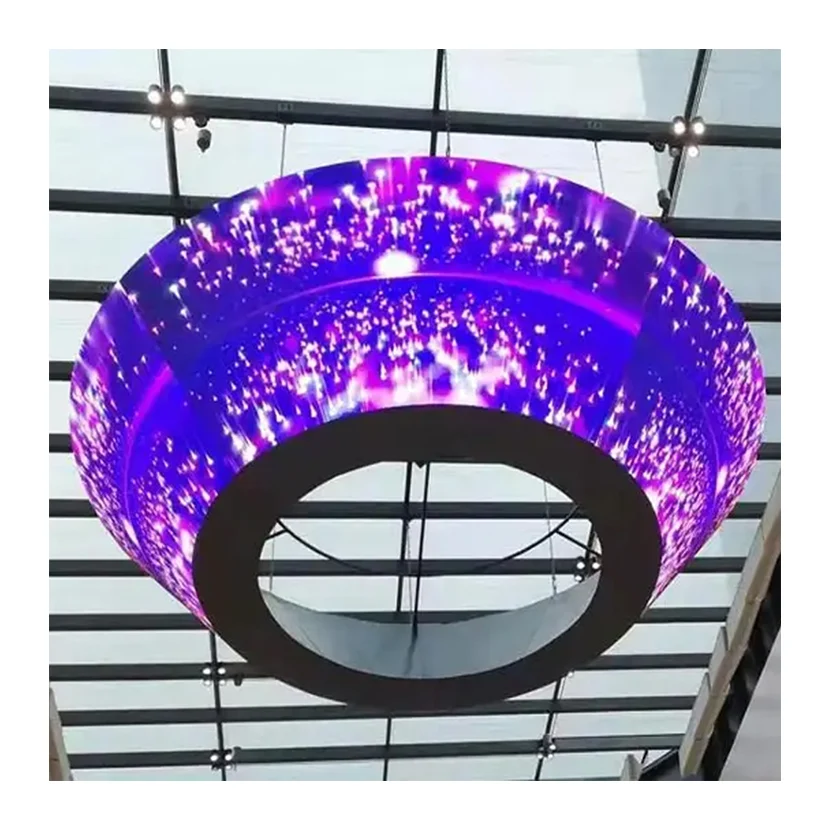
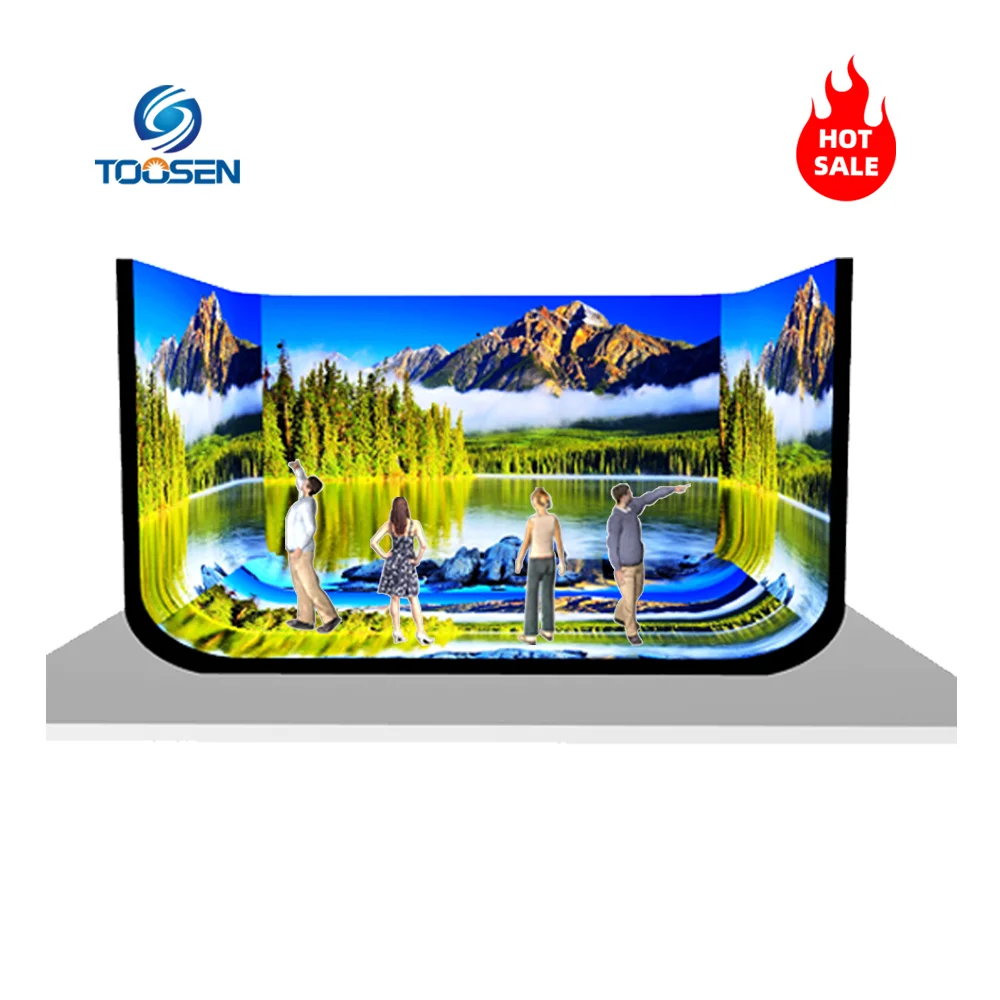
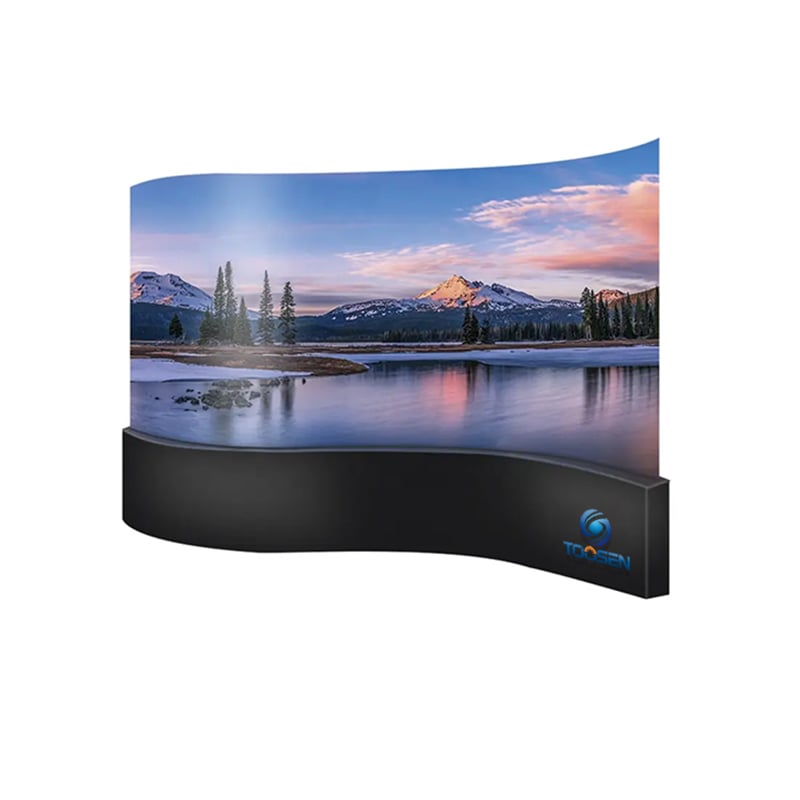
A curved LED DJ booth is more than a place for DJs to work. It is also a visual centerpiece that helps create the atmosphere of a club, music festival, or live event. Bright colors, moving graphics, and synchronized visuals can make the entire performance more engaging.
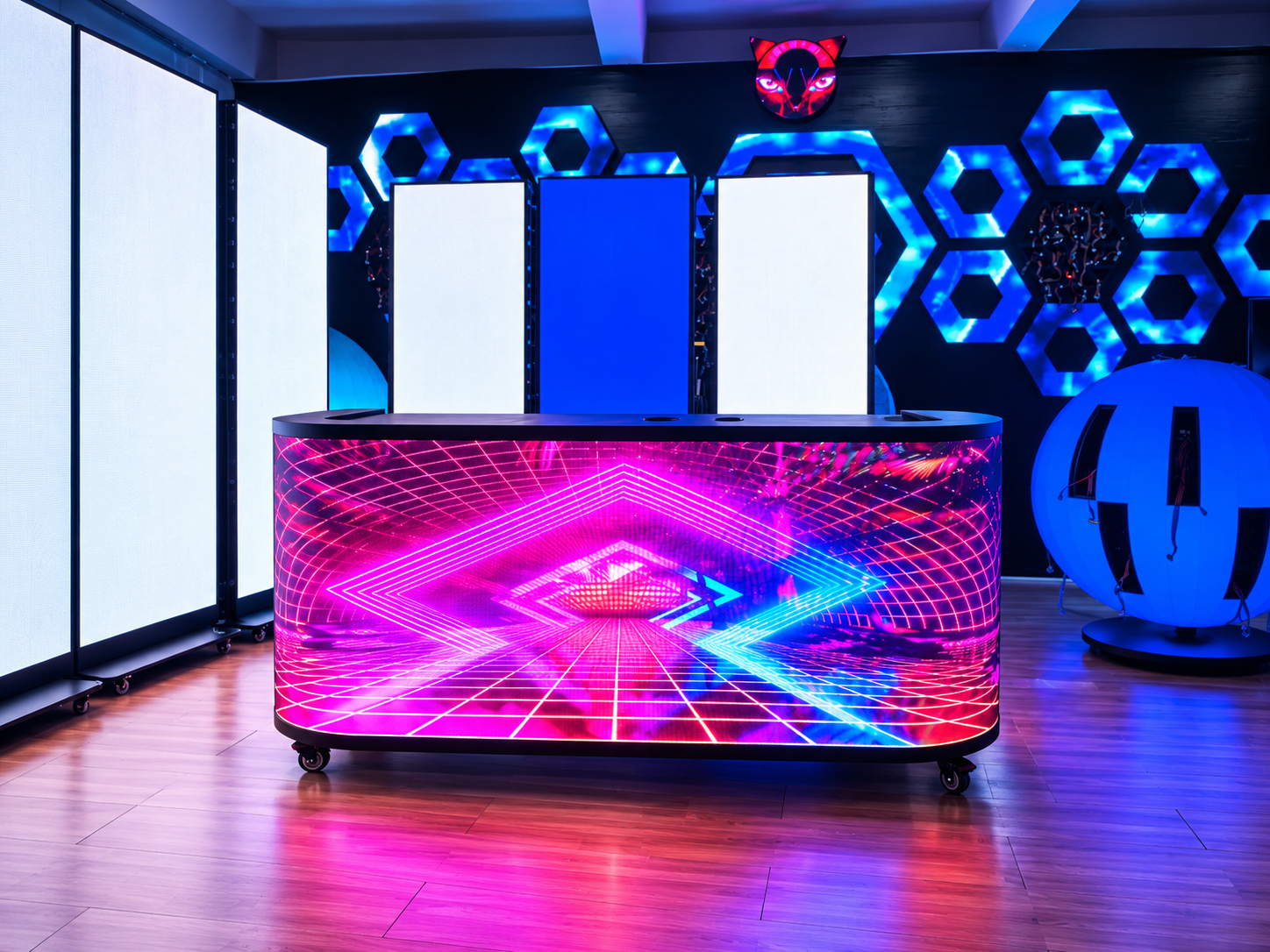
However, good visual performance is not just about brightness or screen resolution. Color gamut also matters. Understanding sRGB, Rec.709, and DCI-P3 helps buyers choose the right display and avoid paying for features they may not need.
Color gamut refers to the range of colors a display can reproduce. A wider gamut can show a broader range of colors, especially in highly saturated reds and greens.
For a curved LED DJ booth Display, color accuracy affects how logos, gradients, animations, and video content appear. If the display cannot reproduce the colors in the original content, some shades may look dull or different from what the designer intended.
This is particularly noticeable in dark clubs, where vivid graphics and strong color contrasts often play a major role in the visual experience.
Still, a wider color gamut does not automatically mean a better display. Brightness, contrast, grayscale performance, calibration, and viewing conditions are also important.
These three color standards serve different purposes.
sRGB: Best for General Digital Content
sRGB is widely used for websites, digital graphics, logos, and images. If your DJ booth mainly displays promotional graphics, brand logos, social media content, or visuals created for standard computer screens, sRGB is a practical reference.
It helps designers create content with predictable colors across common digital devices.
Rec.709: Best for Standard HD Video
Rec.709 is the standard color space for HDTV production. It is a useful reference when a curved LED DJ booth displays music videos, pre-recorded performances, or video content prepared for standard HD workflows.
Although sRGB and Rec.709 use the same primary colors and white point, their transfer functions differ. As a result, correct signal handling and gamma settings still matter.
DCI-P3: Best for Rich, Cinematic Colors
DCI-P3 covers a wider range of colors than sRGB and Rec.709, particularly in the red and green regions. It is commonly associated with digital cinema and other wide-color-gamut workflows.
For premium clubs, immersive entertainment venues, and high-end event productions, DCI-P3 may be worth considering when the content is created and delivered in that color space.
However, choosing DCI-P3 is only useful if the LED display can reproduce the required colors accurately and the complete playback chain supports them.
The first step is to understand your content, not simply choose the widest available gamut.
If your booth mainly shows logos, text, simple animations, and standard video, reliable sRGB or Rec.709 reproduction may be sufficient.
If you regularly display cinematic visuals, highly saturated graphics, or professionally produced wide-gamut content, a wider color gamut may offer a visible advantage.
The difference becomes more important when color consistency is part of the brand experience. For example, a sponsor's logo should look reasonably consistent across the DJ booth, side screens, and other stage displays.
Before purchasing, ask the manufacturer for measured color-gamut coverage rather than a general claim that the screen supports millions of colors. Also check brightness, grayscale uniformity, refresh rate, and calibration options.
A simple test can reveal whether a curved LED display meets your needs.
First, prepare test images and videos containing primary colors, skin tones, gradients, dark scenes, and highly saturated graphics. Include your actual DJ content whenever possible.
Next, check the display using the intended playback device, video processor, and signal settings. Compare the displayed colors with a suitable reference monitor or calibrated measurement system.
For more reliable results, use a colorimeter or spectroradiometer to measure color coordinates, gamut coverage, white point, and grayscale performance. Confirm whether the results are reported as gamut coverage or gamut area, since these measurements are not interchangeable.
Finally, inspect the entire curved surface from several viewing positions. Check for visible differences between modules, uneven brightness, color shifts, and distracting transitions across the curve.
Testing the complete system is more useful than relying on LED chip specifications alone.
A curved LED DJ booth combines display modules, a supporting frame, control systems, power supplies, cables, and content-processing equipment.
The curve creates a distinctive stage appearance, but the mechanical design must also maintain accurate module alignment and a consistent viewing surface. Poor alignment can make visual transitions more noticeable, even when the individual modules have good color performance.
A suitable configuration should consider the curve radius, pixel pitch, viewing distance, installation space, and maintenance access. For rental applications, convenient assembly and servicing are also important.
Color calibration should be considered during commissioning and after module replacement. Compatible control equipment and properly prepared content help the system deliver more consistent results.
In nightclubs, saturated colors and synchronized animations help build atmosphere. In music festivals, the booth may need to match large stage screens and lighting effects. At brand events, accurate logo colors can be more important than achieving the widest possible gamut.
For mobile DJs and rental companies, consistent performance, easy setup, and reliable operation may provide greater value than an expensive wide-gamut specification that the content rarely uses.
Is DCI-P3 always better than sRGB?
No. DCI-P3 covers a wider color range, but it is not automatically more accurate. The result depends on the display, calibration, and content.
Does a curved LED DJ booth need DCI-P3?
Not necessarily. Standard digital graphics and HD video may work well with sRGB or Rec.709. DCI-P3 is worth considering when the project genuinely requires wide-gamut content.
Can higher brightness improve color gamut?
Not directly. Brightness and color gamut are different characteristics. A brighter display may improve visibility in certain environments, but it does not guarantee a wider or more accurate color range.
What should buyers request from a supplier?
Ask for measured color-gamut coverage, brightness, grayscale performance, calibration information, and a demonstration using your actual content.
TOOSEN focuses on LED display research, development, design, and manufacturing, including shaped and customized LED display solutions. Its product range covers indoor and outdoor displays, flexible screens, and other specialized configurations.
For a curved LED DJ booth project, the right approach is to match the display structure, pixel pitch, control system, and color performance to the intended application. Discussing these requirements with the manufacturer before production can help reduce installation problems and unnecessary costs.
Ultimately, the best color gamut is not simply the widest one. It is the one that reproduces your content well, supports your production workflow, and delivers a consistent visual experience for your audience.
 EN
 AR
 BG
 HR
 CS
 DA
 NL
 FI
 FR
 DE
 EL
 HI
 IT
 JA
 KO
 NO
 PL
 PT
 RO
 RU
 ES
 SV
 TL
 ID
 SR
 UK
 VI
 ET
 HU
 TH
 TR
 FA
 AF
 MS
 GA
 HY
 AZ
 MN
 UZ