Home > News > Industry News
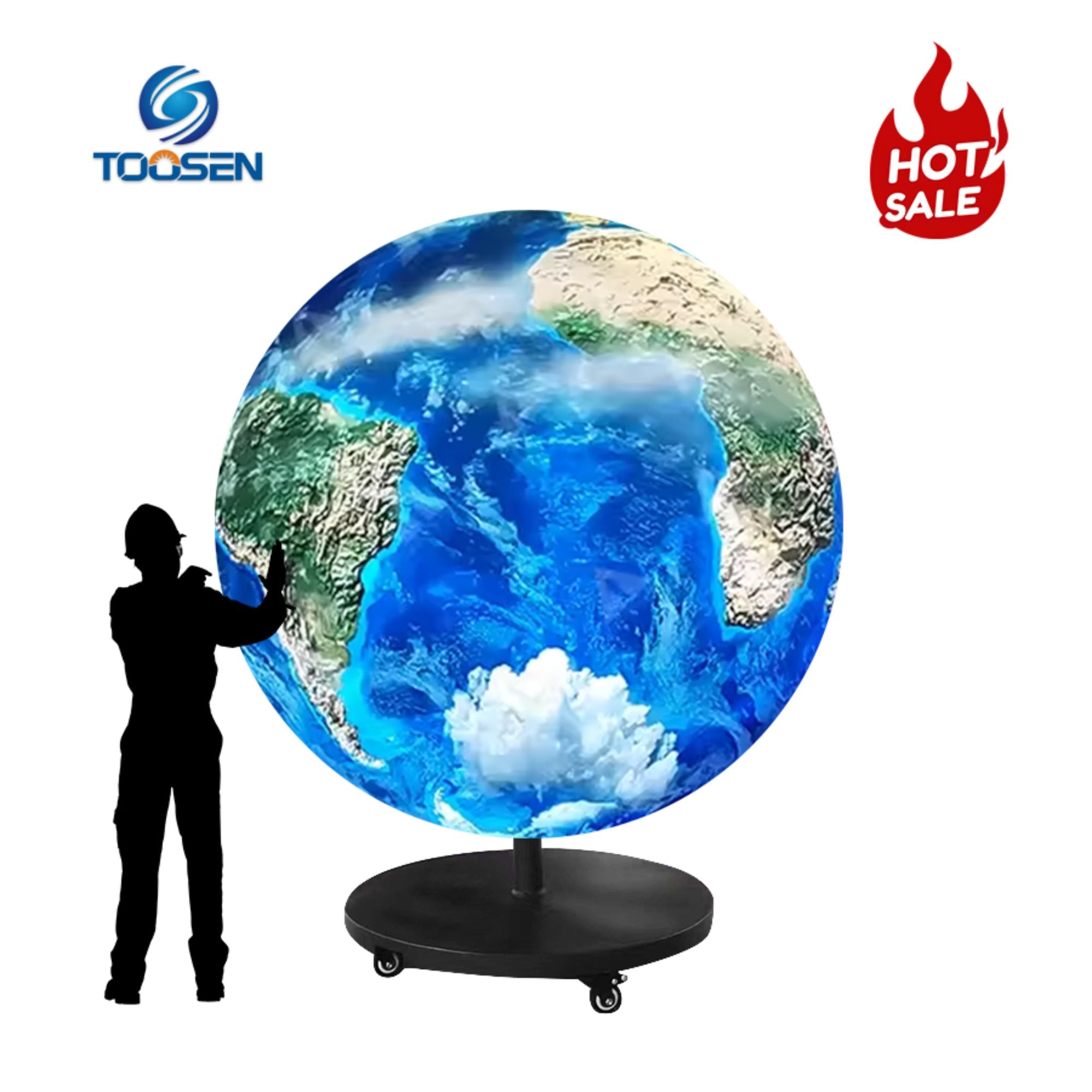
Spherical LED screens have become increasingly popular in exhibitions, retail spaces, museums, and immersive installations. Their unique shape allows brands and designers to create eye-catching, 360-degree visual experiences that stand out from conventional flat or curved screens. However, assembling a spherical LED display is far more complex than installing a standard flat panel, and several technical challenges must be addressed to ensure visual quality and structural reliability.
In this article, we explore the key difficulties in spherical LED screen assembly and explain why careful planning, precision engineering, and professional expertise are critical.
The most obvious challenge in spherical LED screens is the alignment of LED modules along a curved surface. Unlike flat walls, spheres require panels to follow a three-dimensional arc, which introduces multiple alignment issues:
To solve this problem, manufacturers often use custom-shaped modules or segmented panels specifically designed to fit spherical geometries. Advanced software can also simulate the sphere assembly in 3D before installation, helping technicians predict alignment challenges.
Pixel pitch—the distance between individual LEDs—plays a critical role in spherical displays. Unlike flat screens, curvature can exaggerate pixel spacing, making the display appear less sharp if not carefully calculated.
Key considerations include:
Manufacturers like Toosen often provide guidelines on optimal pixel pitch for spheres of different diameters, ensuring sharp, uniform visuals.
Spheres are inherently challenging to support due to their shape. Flat LED walls can rely on simple frames, but spherical screens require complex structural engineering to distribute weight evenly.
Challenges include:
Engineering teams must combine mechanical design, structural analysis, and electrical planning to ensure both safety and visual integrity.
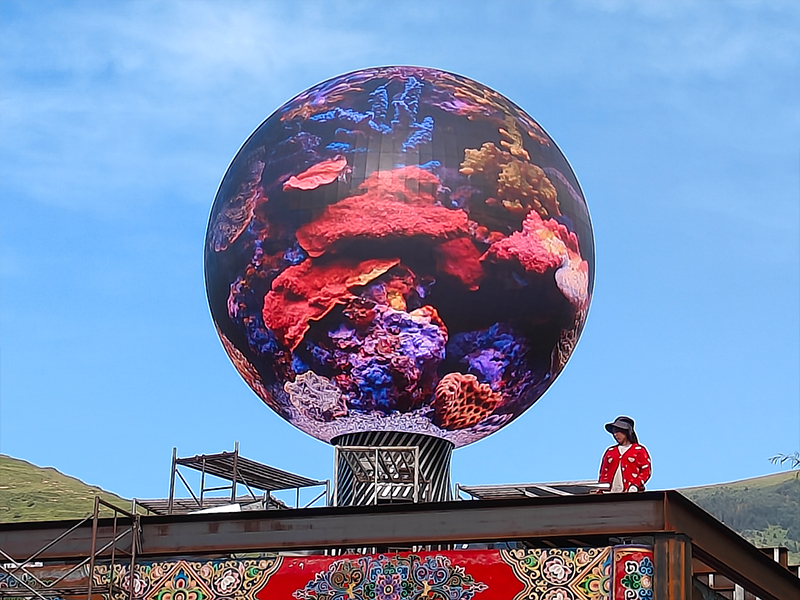
Once a spherical LED screen is physically assembled, content must be mapped precisely to the surface. Unlike flat screens, spheres have multiple viewing angles and potential blind spots, which introduces unique challenges:
Advanced LED controllers and media servers allow technicians to warp content digitally to match the sphere’s shape, but this step requires careful planning and technical expertise.
Spherical LED screens often have confined internal spaces, making heat dissipation a critical concern. Poor cooling can shorten the lifespan of the LEDs and power supplies.
Key measures include:
Manufacturers like Toosen provide spherical LED screens with built-in service access and optimized airflow systems to prevent overheating.
Finally, spherical LED screens often serve as architectural centerpieces, requiring precise integration with the surrounding space. Designers must consider:
Failure to account for these factors can undermine the visual impact of the spherical display, no matter how well it is assembled.
Assembling a spherical LED screen combines mechanical, electrical, and visual engineering challenges. From module alignment and pixel pitch to structural support, content mapping, and thermal management, each step requires careful planning and professional expertise.
When done correctly, spherical LED displays create immersive, attention-grabbing experiences that standard screens cannot match. Partnering with experienced manufacturers like Toosen ensures that your spherical LED installation achieves both visual perfection and structural reliability, making it a powerful centerpiece for branding, exhibitions, or interactive installations.
 EN
EN
 AR
AR
 BG
BG
 HR
HR
 CS
CS
 DA
DA
 NL
NL
 FI
FI
 FR
FR
 DE
DE
 EL
EL
 HI
HI
 IT
IT
 JA
JA
 KO
KO
 NO
NO
 PL
PL
 PT
PT
 RO
RO
 RU
RU
 ES
ES
 SV
SV
 TL
TL
 ID
ID
 SR
SR
 UK
UK
 VI
VI
 ET
ET
 HU
HU
 TH
TH
 TR
TR
 FA
FA
 AF
AF
 MS
MS
 GA
GA
 HY
HY
 AZ
AZ
 MN
MN
 UZ
UZ