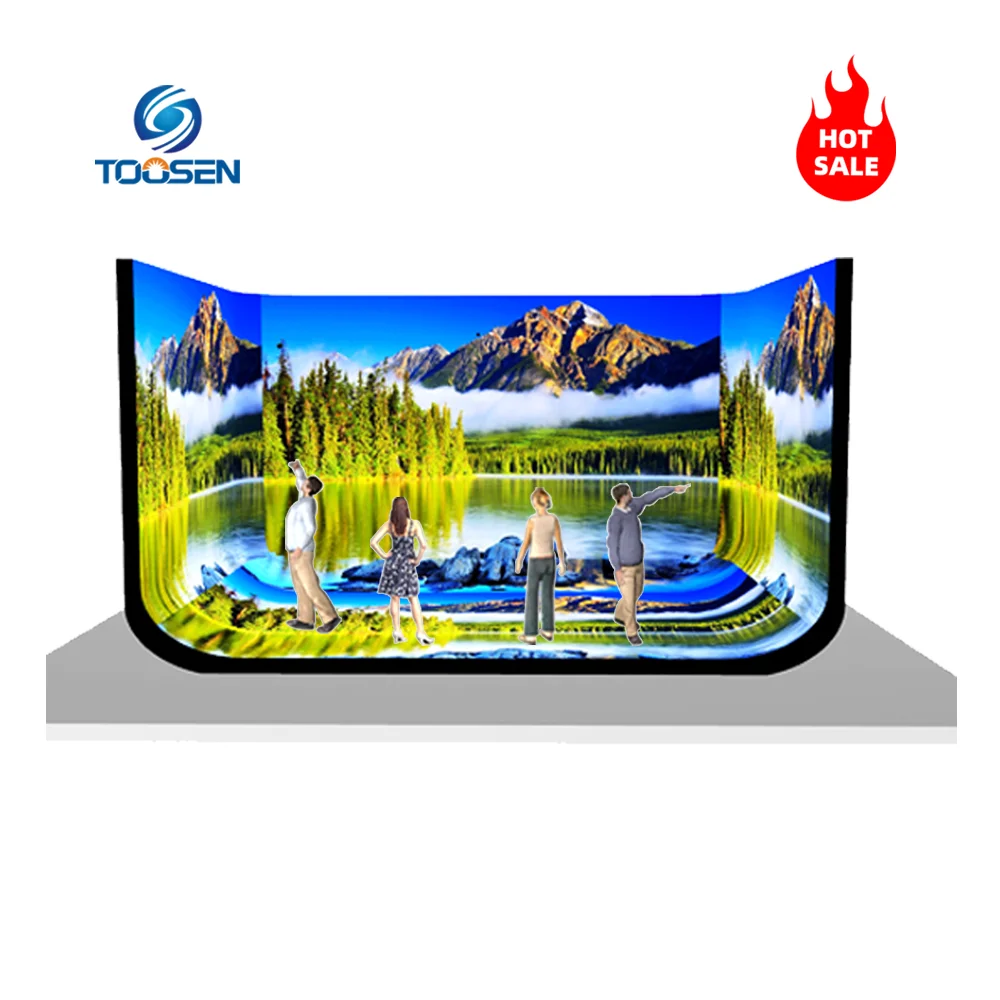
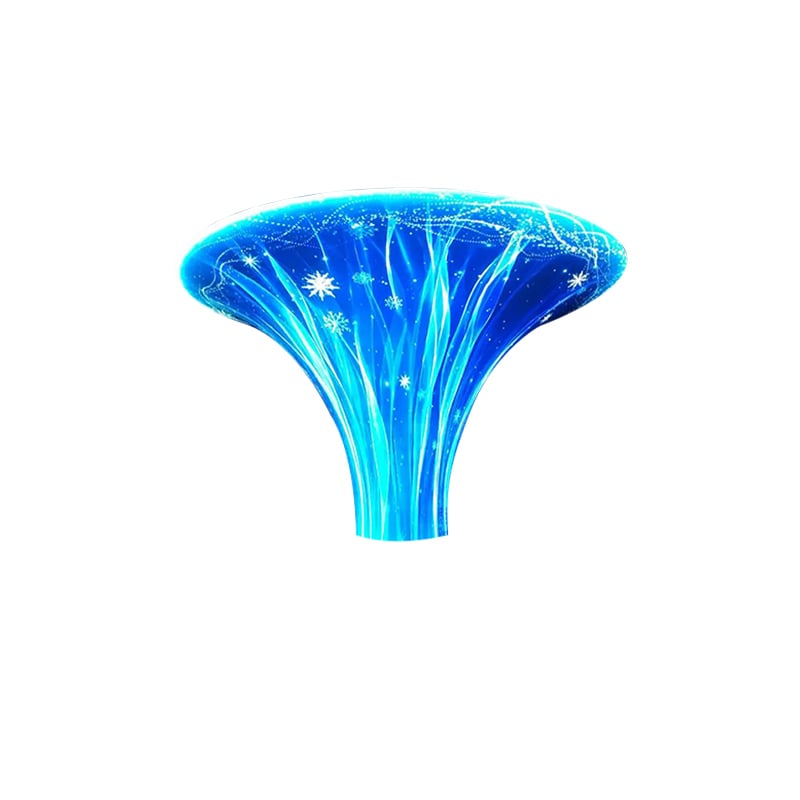
ʼN Meganiese LED-skermskerm, ook bekend as ʼn kinetiese LED-verskyning , meganiese matriks-skermskerm of golf-LED-skermskerm, verskil aansienlik van ʼn tradisionele plat LED-skermskerm. In plaas daarvan om al die LED-module vas op een plek te hou, laat ʼn meganiese LED-skermskerm elke vertoonseenheid toe om onafhanklik deur ingeboude motors, glystelsels of draaimeganismes te beweeg.
As gevolg hiervan kan die skerm dinamiese visuele effekte soos golwe, rimpelings, uitbreiding, draaiing en 3D-beweging skep wat gesinchroniseer is met videoinhoud.
Weens hierdie komplekse struktuur vereis die samestelling van ʼn meganiese LED-skermskerm beide LED-skermskerm-integrasie en presisie-meganiese ingenieurswese.
Voordat samestelling begin, verdeel ingenieurs die stelsel in vier groot substelsels:
| Subsisteem | Hoofkomponente |
|---|---|
| Weergaveeenhede | LED-module, buigbare of stywe maskers |
| Meganiese bewegingsstelsel | Servomotors, mikromotors, glyrails, drukstange, verminderders, dryfasse, koppeling, lager |
| Strukturele Ondersteuningstelsel | Staalraamwerke, riglyne, hanghouers, roterende strukture, basisraamwerke |
| Beheerstelsel | Hoofbeheerder, veelasse bewegingsbeheerder, motorstuurders, kragvoorsienings, seinverspreiders |
In teenstelling met konvensionele LED-skermes tree elke module in ’n meganiese LED-skerm op as ’n onafhanklike elektromeganiese eenheid.
Die installasietspan monteer eers die primêre ondersteuningsstruktuur en riglynstelsel.
Ingenieurs bou ’n metaalraam volgens die ontwerpte matriksopstelling terwyl hulle die volgende verseker:
Vir groot buiteprojekte moet installateurs ook ingebedde fondamente of swaar hangstaalstrukture voorberei.
Hierdie raamwerk dien as die fondament vir alle bewegende LED-eenhede.
Daarna installeer tegnici die bewegingstelsel op die agterkant van elke LED-module.
Afhanklik van die projekontwerp kan vervaardigers verskillende bewegingsmeganismes gebruik.
In skyf-tipe stelsels monteer tegnici:
Die motor dryf die skuifplaat vorentoe en agtertoe, wat dit moontlik maak vir die LED-module om glad uit te steek of in te trek.
Sommige projekte gebruik tande- en spil-oordragstrukture in plaas daarvan.
In hierdie opstelling:
Hierdie metode verskaf sterk posisioneringsakkuraatheid en stabiele beweging.
Indien die vertoon rotasie-effekte vereis, voeg ingenieurs die volgende by:
Hierdie struktuur laat elke LED-module toe om tydens bedryf onafhanklik te roteer.
Op hierdie stadium word die grootste verskil tussen 'n meganiese LED-skyf en 'n konvensionele LED-muur duidelik: elke module kombineer vertonings tegnologie en meganiese beweging in een geïntegreerde eenheid.
Nadat die bewegingstelsels vooraf saamgestel is, installeer tegnici die modules een vir een op die strukturele rels volgens die matriksopstelling.
Die meeste projekte gebruik:
Hierdie metodes verseker dat die modules stewig vasgemaak word, terwyl dit steeds gladde beweging langs die rails toelaat.
Terselfdertyd beheer installateurs noukeurig die spasie tussen die modules om botsings tydens beweging te voorkom.
Vir grootskaalse projekte vervoer vervaardigers gewoonlik die stelsel in partye en voltooi die opslag en installasie ter plase stap vir stap.
Byvoorbeeld het die beroemde Dongdaemun-golfskermprojek in Suid-Korea 936 bewegende eenhede gebruik wat in vier afsonderlike versendings oor agt kontainers gelewer is.
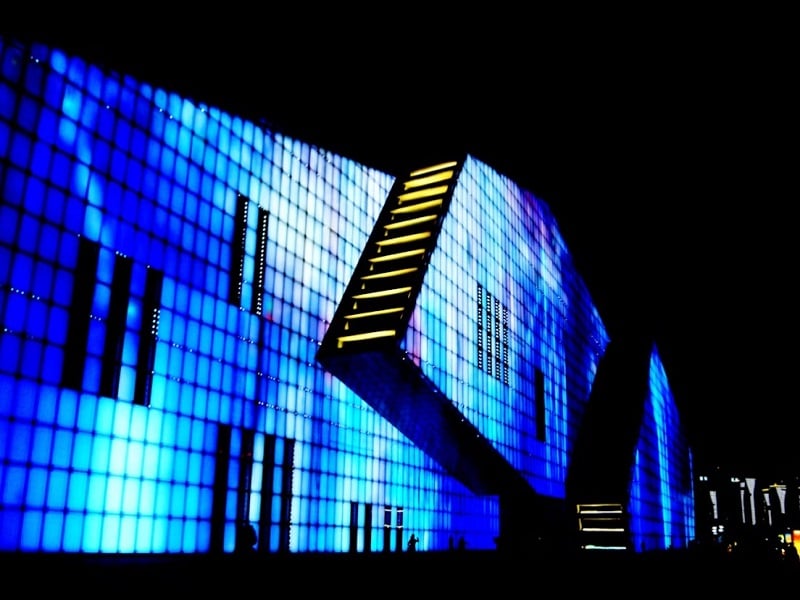
Meganiese LED-vertonings vereis baie meer ingewikkelde bedrading as standaard LED-skerms omdat beide die LED-modules en die bewegingstelsels onafhanklike krag- en sein-oordrag benodig.
Elke module en motor vereis 'n stabiele kragtoevoer.
Daarom gebruik ingenieurs gewoonlik 'n verspreide kragvoorsieningstelsel met voldoende redundantie om langtermynbetroubaarheid te waarborg.
Die LED-vertoningsein volg gewoonlik hierdie pad:
Hoofbeheerder → Subbeheerder → Kaskade-LED-modules
Intussen volg die bewegingsbeheersignaal 'n afsonderlike pad:
Multi-as bewegingsbeheerder → Motorstuurders → Individuele motors
Hierdie argitektuur laat toe dat honderde of selfs duisende modules in sinchronisasie beweeg.
Aangesien die module voortdurend vorentoe, agtertoe of roteer beweeg, moet installateurs genoeg kabeluitbreidingsruimte voorraad hou.
Die meeste projekte gebruik:
Hierdie oplossings voorkom kabelvermoeidheid, verwarrende en herhaalde buigskade.
Kalibrasie is die mees kritieke en tydrowende fase van die hele projek.
Tegnici kalibreer:
Hierdie proses verseker dat alle modules konsekwent en akkuraat beweeg.
Die span pas ook aan:
As gevolg hiervan behou die skerm 'n naadlose voorkoms, selfs wanneer dit stilstaan.
Laastens programmeer ingenieurs die bewegingsbeheersofterware om die volgende te sinkroniseer:
met die video-inhoud wat op die LED-oppervlak vertoon word.
Hierdie sinkronisasie skep die kenmerkende effek van 'n "bewegende argitektuur" wat gesien word in hoë-end kinetiese LED-installasies.
In groot projekte soos die Dongdaemun-golfskerm het spanne die installasie, bedrading, kalibrering en aanskakeltoetse binne net twee weke voltooi, dankie aan gevorderde beplanning en modulêre monteringsmetodes.
Meganiese LED-vertonings behels verskeie ingenieursuitdagings wat standaard LED-skerm nie onderwerp is nie.
| Uitdaging | Oplossing |
| Multi-as-sinkronisasie | Servomotors + hoë-presisie-spoor + toegewyde bewegingsbeheerders |
| Kabelbewegingsbestuur | Buigsame sleepkettings en veerkabelstelsels |
| Modulebotsingsvoorkoming | Sagteware-veiligheidsafstande + hardeware-eindskakelaars |
| Buitematige waterdigtheid | Geseëlde bewegingstelsels + modules gevul met dubbelkantige lymsel |
| Langdurige duursaamheid | Industriële graad slytvas en korrosiebestand materiale |
Meganiese LED-vertonings buite vereis addisionele beskerming omdat die bewegende dele voortdurend aan omgewingsinvloede blootgestel word.
Vervaardigers gebruik dus:
Daarbenewens moet onderhoudspanne die meganiese komponente gereeld smeervet om stabiele langtermynprestasie te handhaaf.
Die monteringsproses van 'n meganiese LED-skyf kan in een sin opgesom word:
“Installeer eers die spore, installeer dan die bewegingstelsels, verbind die bedrading as derde stap, en kalibreer laastens die beweging.”
In teenstelling met tradisionele LED-wande lê die primêre uitdaging nie in die samestelling van 'n plat vertoonoppervlak nie. In plaas daarvan moet ingenieurs elke LED-module transformeer na 'n presiese bewegende meganiese komponent terwyl hulle verseker dat honderde of duisende eenhede saam in perfekte sinkronisasie beweeg.
Weens hierdie kompleksiteit vereis meganiese LED-skermprojekte gewoonlik gespesialiseerde ingenieurspanne, aangepaste bewegingsprogrammering en toegewyde kreatiewe video-inhoud. Wanneer alles saamwerk, skep die finale resultaat 'n onderdompelende visuele ervaring waarbinne die skerm self lyk of dit saam met die inhoud beweeg.
 EN
EN
 AR
AR
 BG
BG HR
HR
 CS
CS
 DA
DA
 NL
NL
 FI
FI FR
FR
 DE
DE EL
EL
 HI
HI
 IT
IT JA
JA
 KO
KO
 NO
NO PL
PL PT
PT RO
RO
 RU
RU
 ES
ES
 SV
SV
 TL
TL
 ID
ID
 SR
SR
 UK
UK VI
VI
 ET
ET
 HU
HU
 TH
TH
 TR
TR
 FA
FA
 AF
AF
 MS
MS
 GA
GA
 HY
HY
 AZ
AZ
 MN
MN
 UZ
UZ