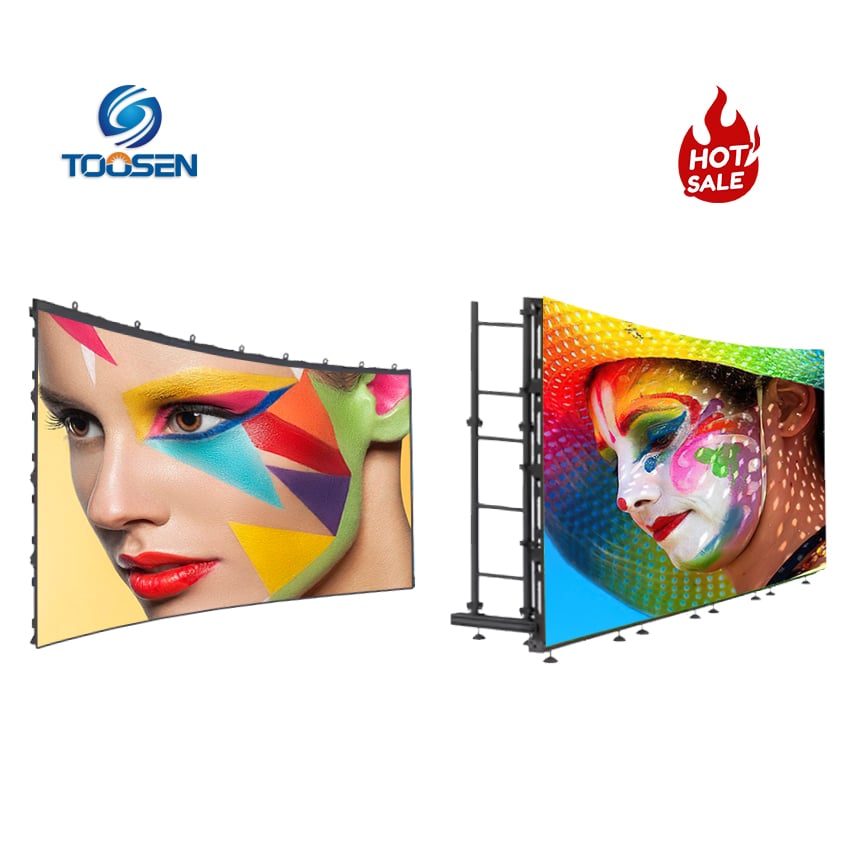
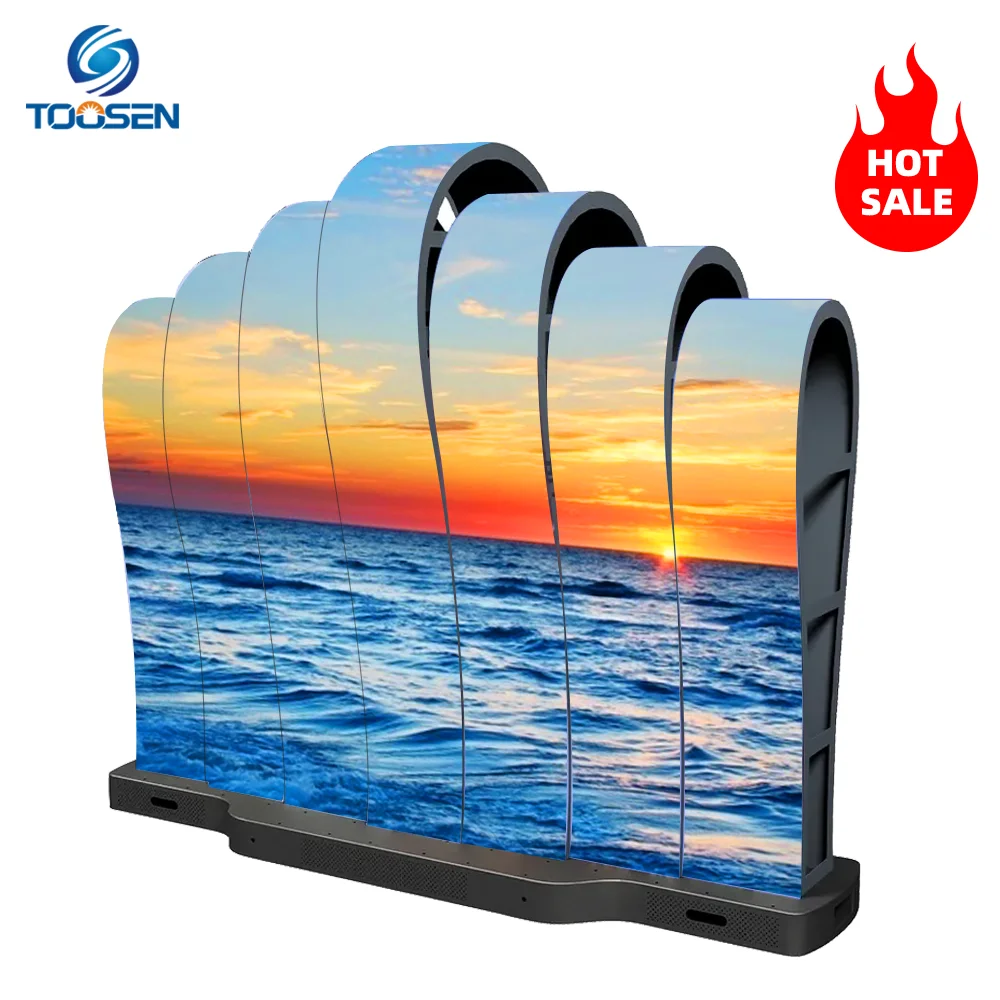
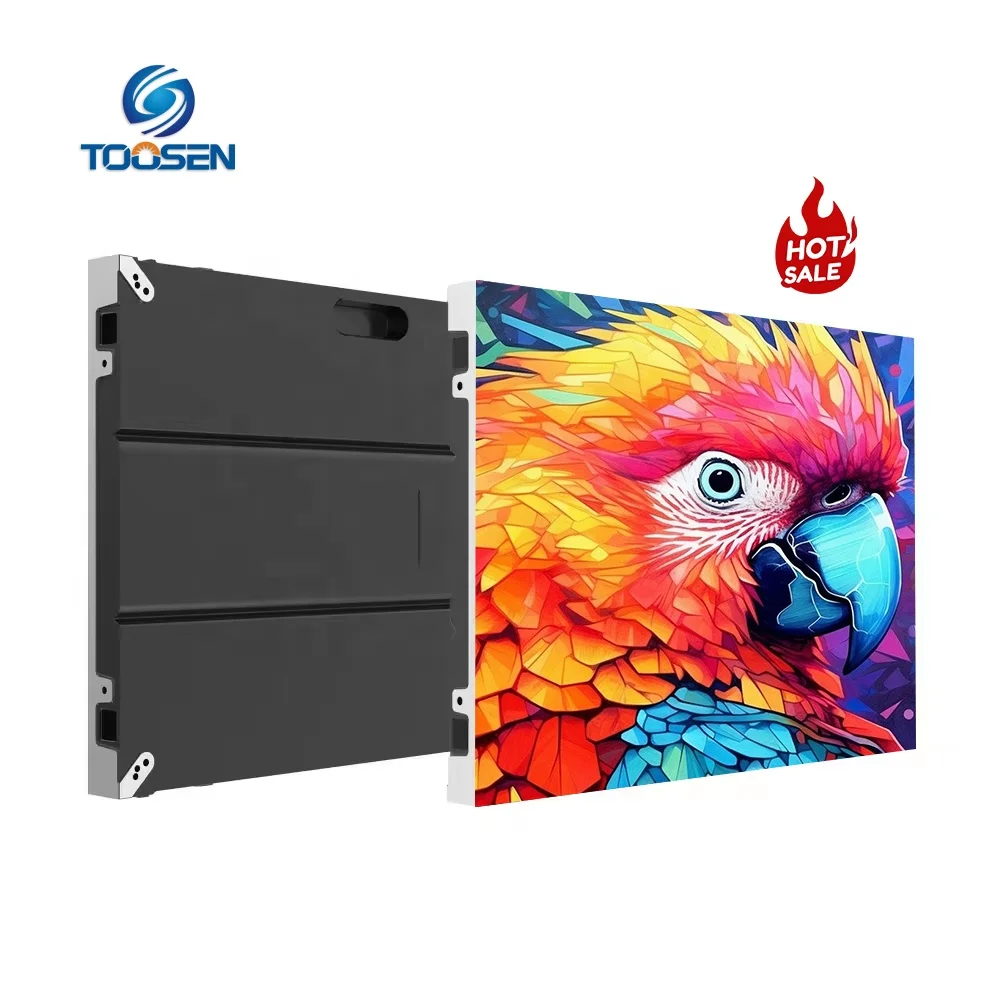
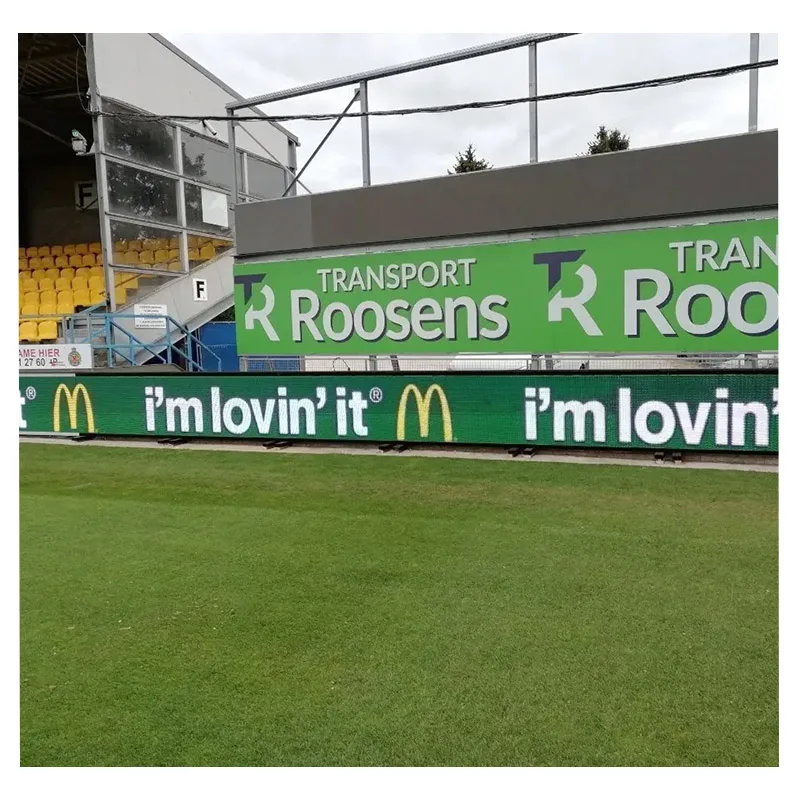
5.76 × 1.92m P1.8 indoor LED screen project in Singapore with ≥7680Hz refresh rate, Input 90–264V and DC 5V output.
Contact Us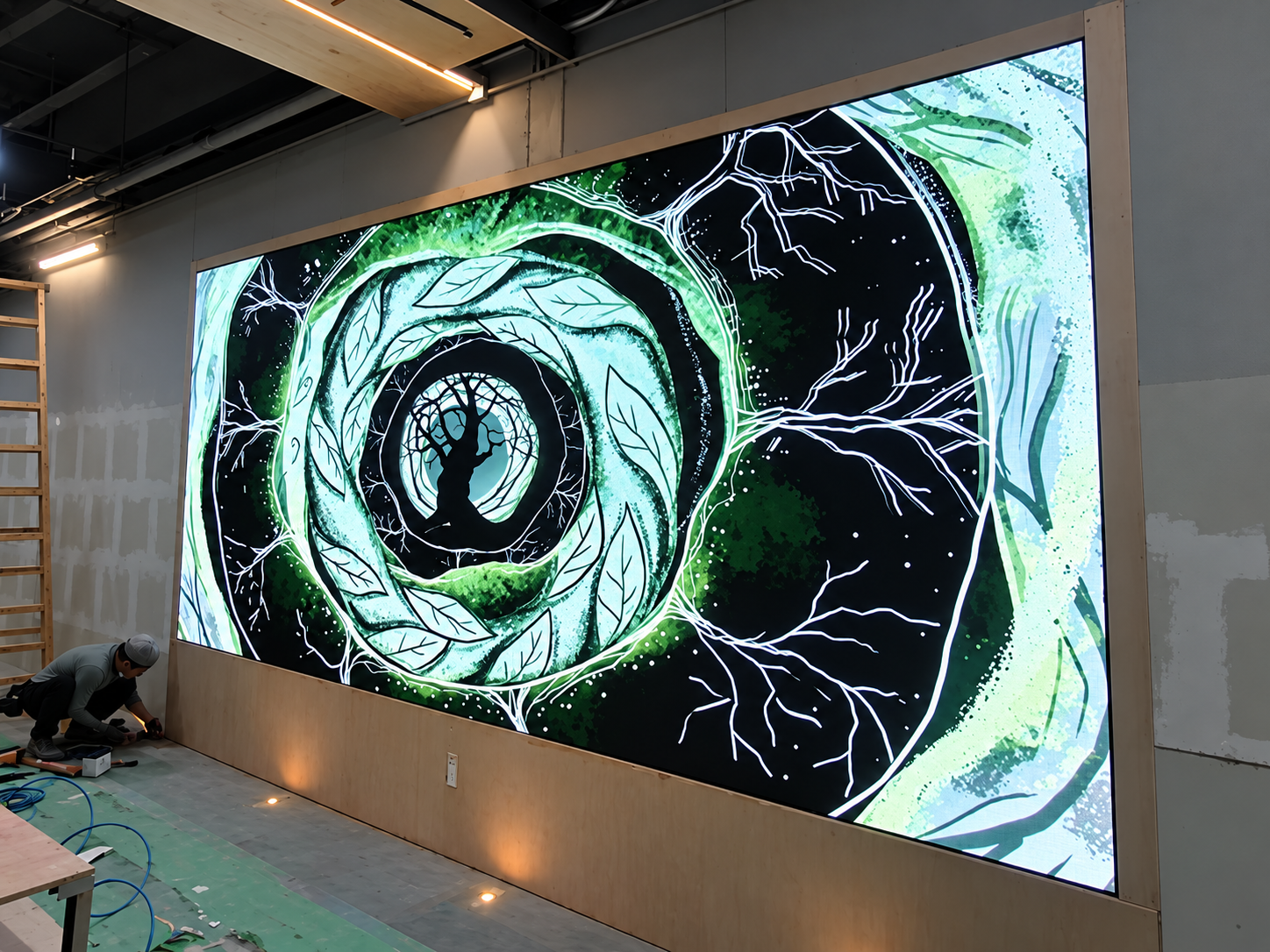
A P1.8 indoor LED screen was recently completed for a customer project in Singapore. The final LED display measures 5.76 × 1.92 meters, creating a wide-format digital display suitable for indoor commercial and presentation environments.
The customer needed a screen that could show clear text, detailed images, videos, and branded content at relatively close viewing distances. Because the installation was indoors and viewers could stand close to the display, image sharpness and smooth playback were important parts of the project.
Project Location: Singapore
Product: Indoor LED Screen
Pixel Pitch: P1.8
Screen Size: 5.76 × 1.92m
Refresh Rate: ≥7680Hz
Input Voltage: 90–264V
Output Voltage: DC 5V
Installation Environment: Indoor
Display Format: Wide LED Video Wall
The 5.76-meter width gives the screen a strong horizontal visual presence, while the 1.92-meter height keeps the display proportion suitable for advertising, presentations, promotional videos, and information content.
For an indoor project, pixel pitch has a direct influence on viewing quality.
A P1.8 LED screen has a relatively small distance between LED pixels, so the image appears smoother when people view the display from a shorter distance. This is especially useful in indoor spaces where visitors may walk directly in front of the screen.
Compared with a larger pixel pitch, P1.8 indoor LED display technology provides better detail for:
Small text
Product images
Company logos
Presentation graphics
High-resolution videos
Information dashboards
For this Singapore project, the screen needed to work as more than a distant advertising display. Visitors could see it from different positions inside the venue, so fine image detail was necessary.
A large indoor LED screen is made from multiple LED cabinets or modules connected together.
Even when the total screen is rectangular, installation accuracy still affects the final visual result. If one cabinet is positioned slightly higher or deeper than the others, visible lines may appear across the screen.
Before final delivery, the structure and LED cabinets therefore need to be checked for:
Horizontal alignment
Vertical alignment
Cabinet flatness
Module seams
Signal connection
Power cable connection
For a screen measuring 5.76 × 1.92m, keeping the complete surface flat helps maintain consistent image quality across the entire display.
The screen uses a refresh rate of at least 7680Hz.
A high refresh rate is particularly useful when the LED screen is photographed or recorded by cameras. It helps reduce visible scan lines, flickering, and dark bands that may appear in photos or video recordings.
This makes the screen more suitable for venues where visitors may take photos, record videos, or create social media content in front of the display.
It also improves the visual stability of moving images and presentation content.
The electrical specification for the project includes:
Input: 90–264V
Output: DC 5V
The wide input voltage range helps the LED power system adapt to different electrical environments, while the LED modules operate using a stable DC 5V output.
For a large LED screen, power distribution should also be planned carefully. Power supplies, receiving cards, signal cables, and power cables should remain accessible so that future maintenance does not require removing large sections of the display.
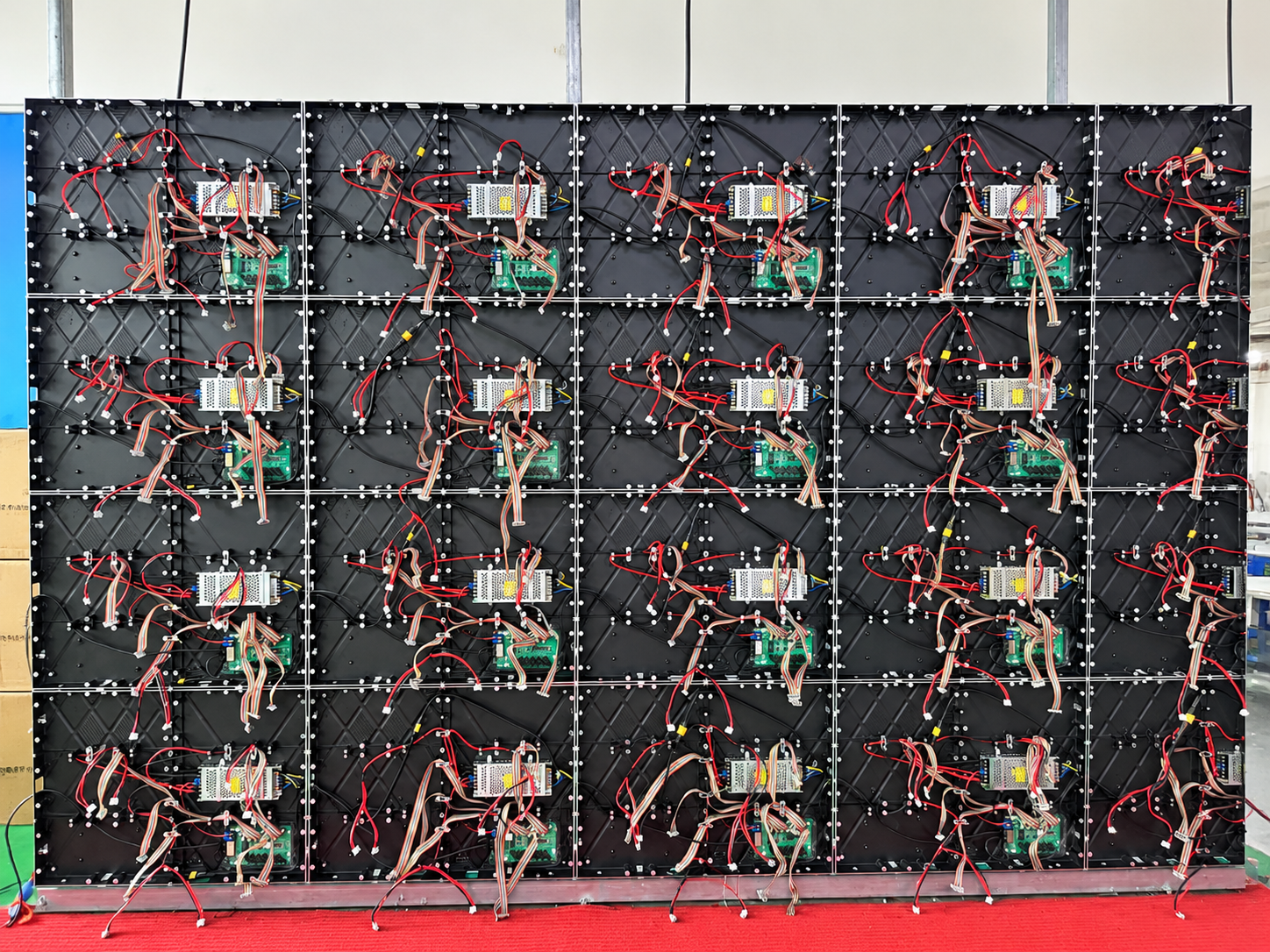
Before shipment, the complete LED display should be assembled and tested in the factory whenever possible.
For this type of indoor P1.8 LED screen, testing normally focuses on several areas.
First, a full white image can be used to check brightness consistency and identify abnormal modules.
A red, green, and blue test can help identify dead pixels or color differences.
Gray-scale images are useful for checking whether dark areas remain smooth instead of showing visible blocks or uneven transitions.
Video playback is also tested to confirm that the receiving cards, signal cables, and control system work correctly across the complete screen.
Finally, the physical surface is checked again to make sure cabinet seams remain controlled.
These tests help reduce adjustment work after the screen arrives at the project site.
A P1.8 indoor LED screen of this size can be used in many indoor environments, including:
Corporate showrooms
Shopping malls
Conference rooms
Exhibition halls
Retail stores
Reception areas
Brand experience centers
Indoor advertising spaces
Its relatively fine pixel pitch makes it particularly suitable for environments where visitors are close to the screen and image detail is important.
After installation, the 5.76 × 1.92m P1.8 LED screen provides a continuous wide-format display surface for the Singapore indoor space.
The fine pixel pitch supports detailed images and readable text, while the ≥7680Hz refresh rate helps maintain stable visual performance during photography and video recording.
For indoor LED projects, screen size alone does not determine the final result. Pixel pitch, cabinet flatness, power configuration, control system setup, and factory testing all affect how the display performs after installation.
This Singapore project shows how a properly configured P1.8 indoor LED display can provide both high-resolution image quality and reliable operation for commercial indoor applications.
TOOSEN can provide customized sphere diameter, pixel pitch, installation structure and control solutions according to your indoor space and viewing distance.
TOOSEN LED Official Website:https://www.toosenled.com/
 EN
EN
 AR
AR
 BG
BG
 HR
HR
 CS
CS
 DA
DA
 NL
NL
 FI
FI
 FR
FR
 DE
DE
 EL
EL
 HI
HI
 IT
IT
 JA
JA
 KO
KO
 NO
NO
 PL
PL
 PT
PT
 RO
RO
 RU
RU
 ES
ES
 SV
SV
 TL
TL
 ID
ID
 SR
SR
 UK
UK
 VI
VI
 ET
ET
 HU
HU
 TH
TH
 TR
TR
 FA
FA
 AF
AF
 MS
MS
 GA
GA
 HY
HY
 AZ
AZ
 MN
MN
 UZ
UZ