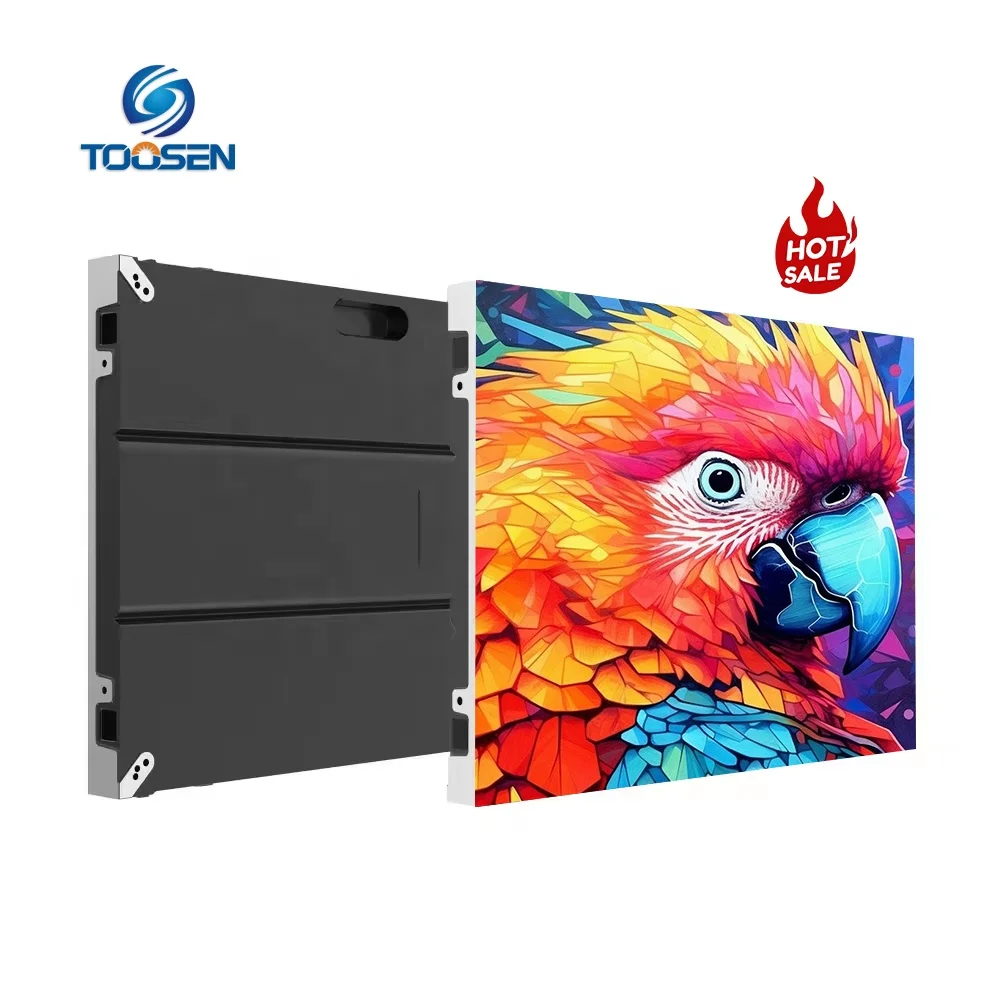
Mexico indoor P2.5 LED screen project featuring a 2.88 × 1.92m display, ≥7680Hz refresh rate, 90–264V input and DC 5V output for clear indoor viewing.
Contact Us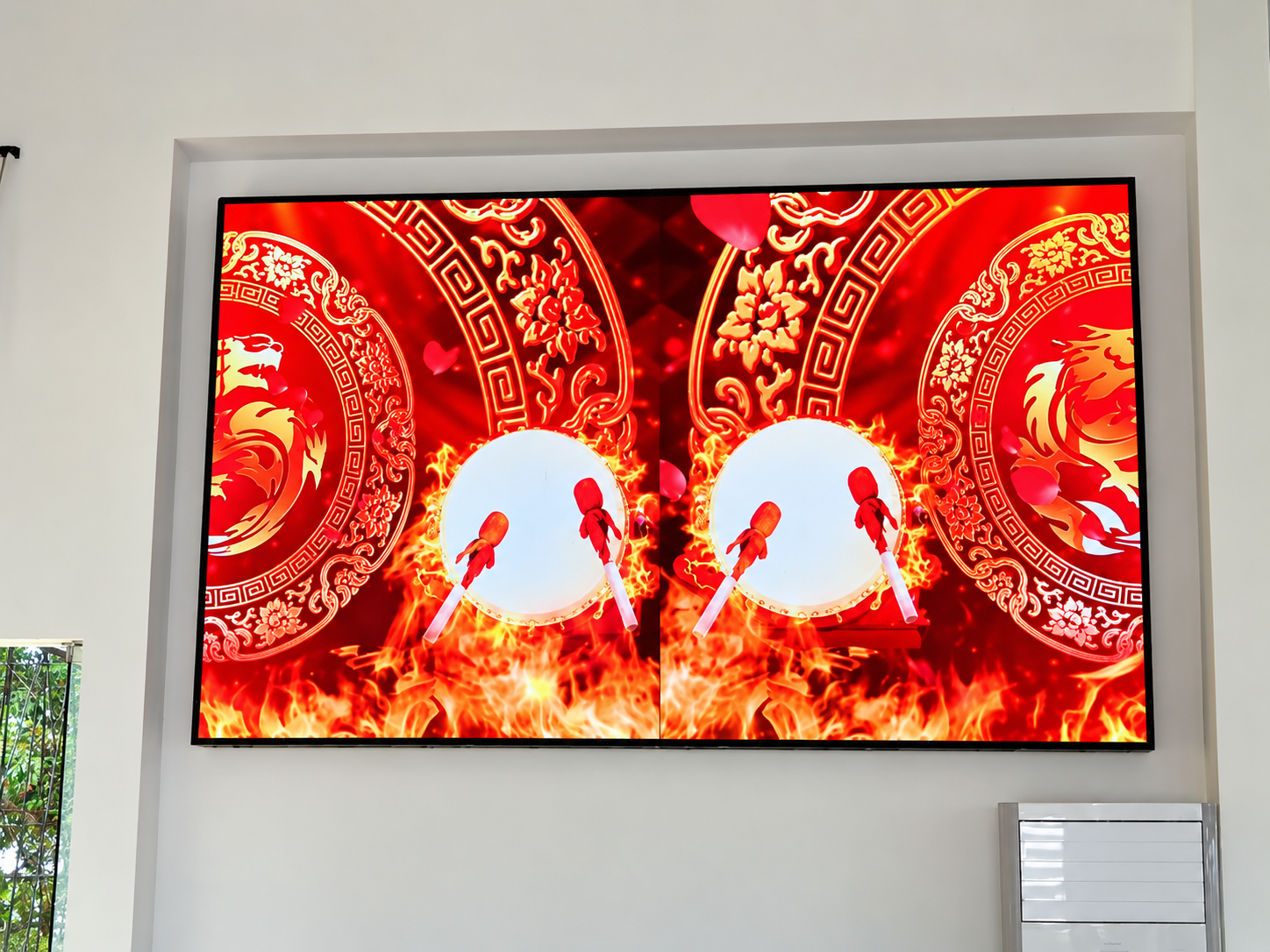
A compact indoor LED screen does not need to be large to create a strong visual effect. For this project in Mexico, a P2.5 indoor LED screen measuring 2.88 × 1.92 meters was supplied for an indoor commercial space where viewers could stand relatively close to the display.
Because the screen was installed at a short viewing distance, the project focused on image detail, smooth module alignment, stable power supply, and high refresh performance.
Project Location: Mexico
Product: Indoor LED Screen
Pixel Pitch: P2.5
Screen Size: 2.88 × 1.92 m
Refresh Rate: ≥7680Hz
Input Voltage: 90–264V AC
Output Voltage: DC 5V
Installation Environment: Indoor
Application: Commercial information and digital visual display
The 2.88 × 1.92 m format provides enough display area for advertising videos, branded graphics, promotional information, and presentation content while remaining suitable for locations with limited wall space.
For an indoor display, pixel pitch directly affects the viewing experience.
A larger pixel pitch may be acceptable when viewers stay far away, but in indoor commercial spaces, people often walk much closer to the screen.
P2.5 provides a good balance between resolution, screen size, and project cost.
At a normal indoor viewing distance, text, logos, product images, and video details remain clear without requiring an extremely fine pixel pitch.
This made the P2.5 LED screen suitable for the Mexico project.
The final screen size was 2.88 meters wide and 1.92 meters high.
One advantage of this size is that it fits easily into indoor walls, reception areas, showrooms, meeting spaces, or commercial display zones.
However, compact LED screens also require careful installation.
If one cabinet is slightly higher or lower than the next, the seam becomes easier to notice because viewers are close to the display.
During installation, the cabinet position and module surface were therefore checked carefully before final calibration.
The objective was to create one continuous display surface rather than a visible combination of separate LED cabinets.
The screen uses a refresh rate of ≥7680Hz.
A high refresh rate is useful when visitors use smartphones or cameras to photograph or record the LED screen.
Low-refresh LED displays may show scanning lines, flicker, or dark bands in recorded video even when the screen looks normal to the human eye.
For commercial spaces where customers may take photos or videos, this can affect how the screen appears online.
The ≥7680Hz refresh rate helps provide smoother camera performance and more stable visual output.
The system supports:
Input: 90–264V AC
Output: DC 5V
The wide AC input range gives the power system flexibility for different electrical environments.
Inside the LED display, the power supply converts AC input into stable DC 5V for LED modules, receiving cards, and other electronic components.
Before shipment, power connections should be checked to confirm that cables are secure and that voltage remains stable under normal operating conditions.
Before delivery to Mexico, the LED screen was assembled and tested.
The inspection included:
LED module lighting test
Cabinet alignment check
Color consistency inspection
Dead-pixel inspection
Power-on stability test
Receiving-card communication check
Video playback test
High-refresh camera test
The complete screen was also operated continuously before packing.
This process helps identify module, cable, power supply, or control-system problems before the equipment arrives at the installation site.
After mechanical installation, the LED screen still required several software adjustments.
The receiving-card coordinates were checked first to make sure every cabinet displayed the correct image section.
Brightness and color were then adjusted according to the indoor lighting environment.
For this type of installation, maximum brightness is not always necessary.
The goal is to make the screen clearly visible without making it uncomfortable for nearby viewers.
A balanced brightness level also helps improve the appearance of dark images and fine content details.
After installation and calibration, the Mexico P2.5 indoor LED screen provided a clean and continuous image across the full 2.88 × 1.92 m display area.
The compact screen size, P2.5 pixel pitch, and ≥7680Hz refresh rate made the display suitable for close indoor viewing as well as smartphone photography and video recording.
The project also shows that choosing an LED screen should not depend only on screen dimensions. Pixel pitch, viewing distance, refresh rate, cabinet alignment, power stability, and calibration all influence the final visual result.
For indoor commercial projects in Mexico or other markets, a properly configured P2.5 Indoor LED screen can provide a practical balance between image quality, installation size, and overall project cost.
TOOSEN can provide customized sphere diameter, pixel pitch, installation structure and control solutions according to your indoor space and viewing distance.
TOOSEN LED Official Website:https://www.toosenled.com/
 EN
EN
 AR
AR
 BG
BG
 HR
HR
 CS
CS
 DA
DA
 NL
NL
 FI
FI
 FR
FR
 DE
DE
 EL
EL
 HI
HI
 IT
IT
 JA
JA
 KO
KO
 NO
NO
 PL
PL
 PT
PT
 RO
RO
 RU
RU
 ES
ES
 SV
SV
 TL
TL
 ID
ID
 SR
SR
 UK
UK
 VI
VI
 ET
ET
 HU
HU
 TH
TH
 TR
TR
 FA
FA
 AF
AF
 MS
MS
 GA
GA
 HY
HY
 AZ
AZ
 MN
MN
 UZ
UZ