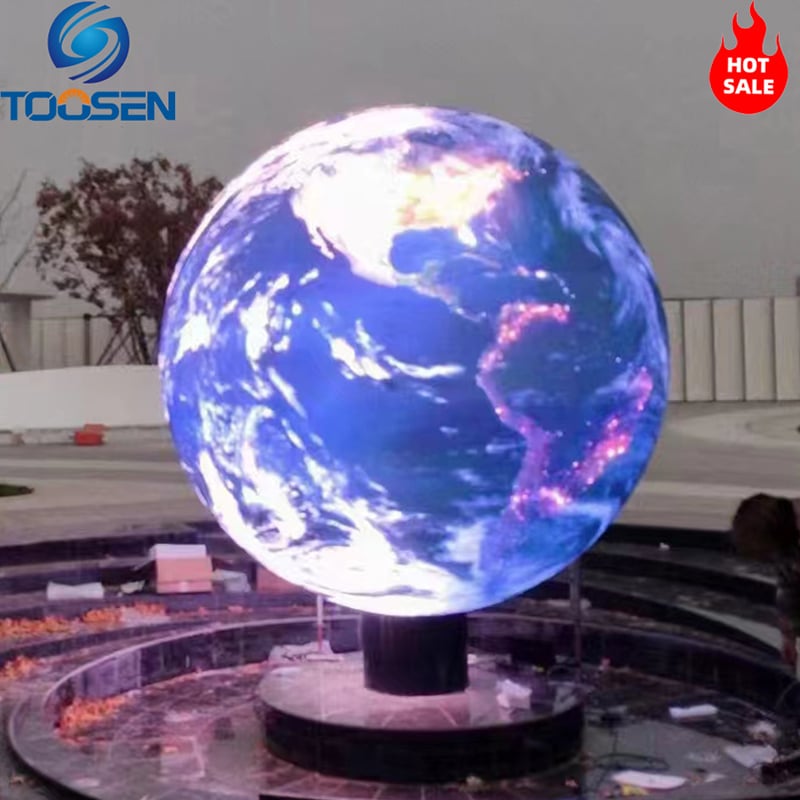
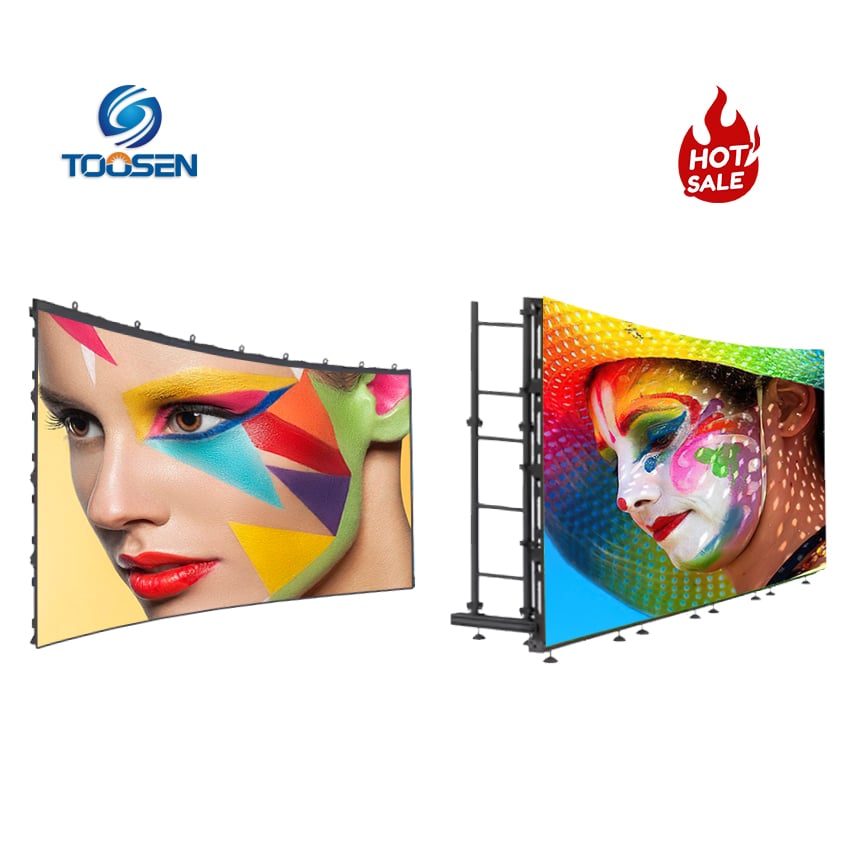
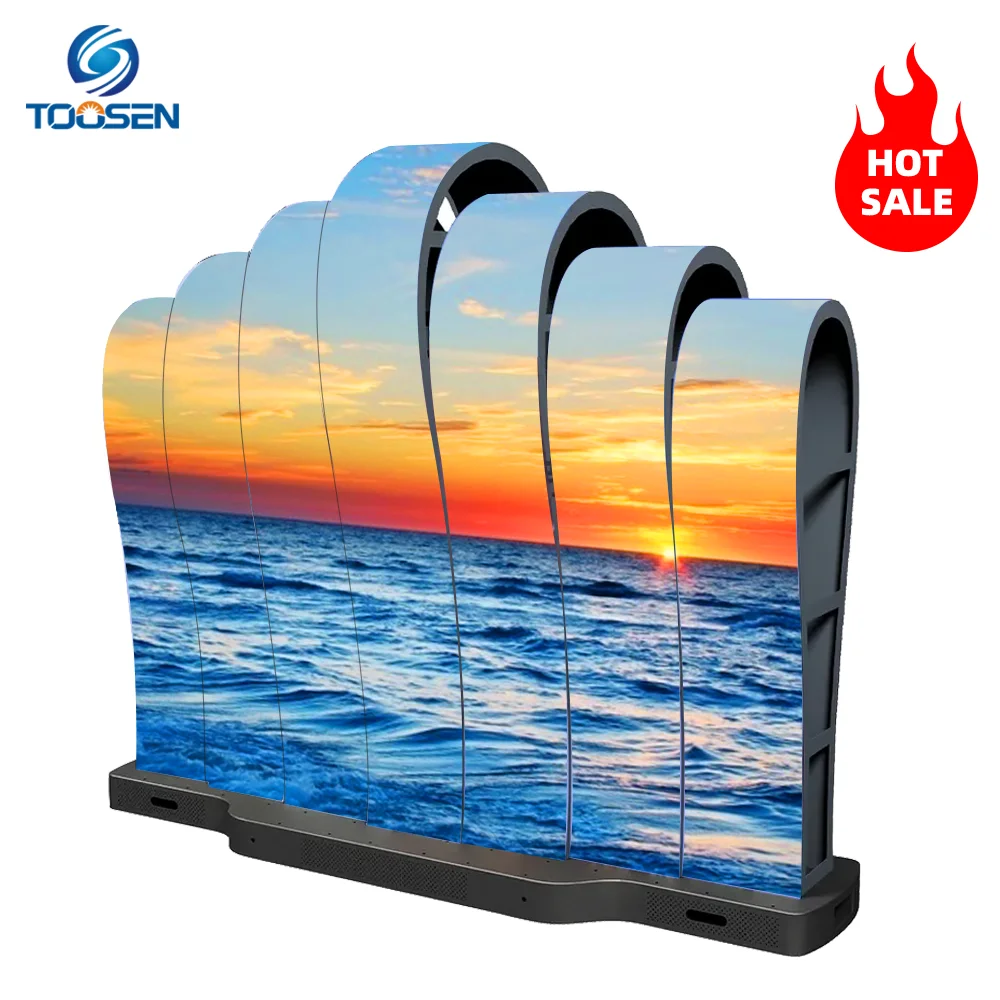
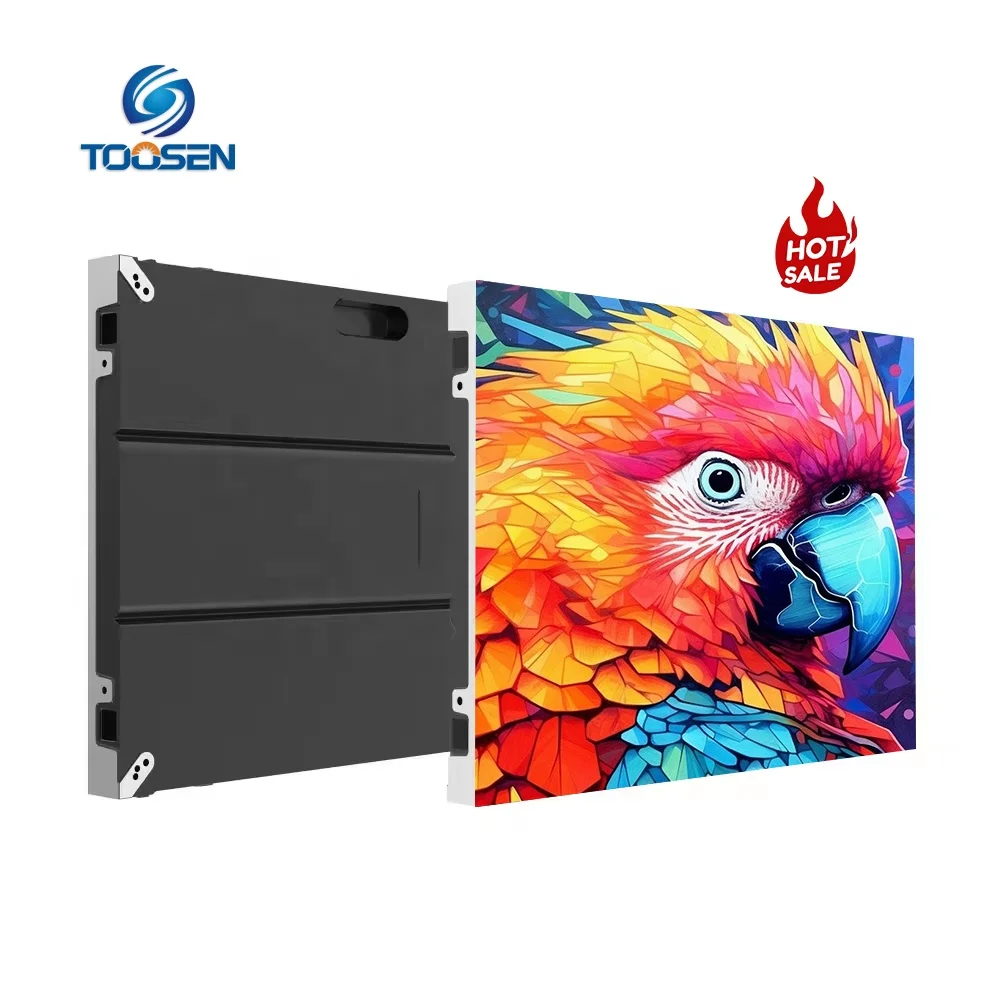
Indoor P3 Circular LED Display project in Dubai with ≥7680Hz refresh rate, 90–264V input and DC 5V output for commercial indoor spaces.
Contact Us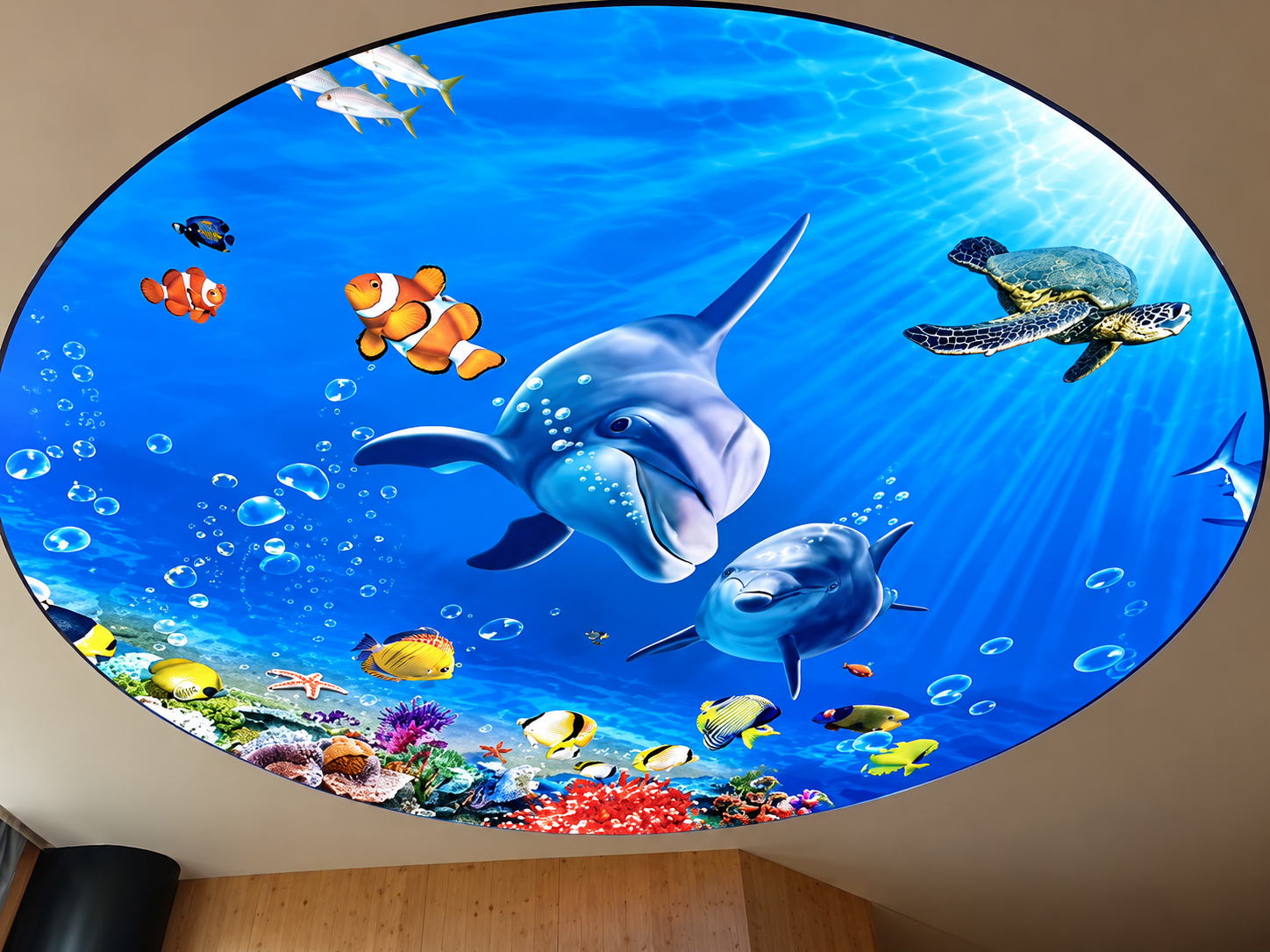
Dubai is known for modern architecture, luxury retail spaces, exhibitions, and creative commercial interiors. For indoor digital displays, a standard rectangular LED screen does not always match the design of the space.
For this project in Dubai, an Indoor P3 Circular LED Display was selected to create a clear visual center while maintaining the curved design language of the interior.
Unlike a normal flat rectangular screen, a circular LED display requires more attention to screen diameter, module arrangement, content layout, edge accuracy, and installation position.
The customer needed an indoor LED display that could work as both a digital information screen and a decorative visual element.
The main requirements included:
Circular display structure
Indoor installation
P3 pixel pitch
High refresh rate for smooth video playback
Clean screen edge without visible rectangular corners
Stable operation for long daily working hours
Easy content control
Accurate image positioning inside the circular display area
Because the screen was installed in a modern indoor environment, the appearance of the structure was almost as important as the image quality.
| Item | Specification |
|---|---|
| Product | Indoor Circular LED Display |
| Pixel Pitch | P3 |
| Installation Location | Dubai |
| Application | Indoor Commercial Display |
| Refresh Rate | ≥7680Hz |
| Input Voltage | 90–264V |
| Output Voltage | DC 5V |
| Display Shape | Circular |
| Display Type | Full-Color LED Display |
The P3 pixel pitch provides a suitable balance between viewing distance, image detail, and project cost for indoor commercial applications.
A refresh rate of ≥7680Hz also helps the screen maintain smooth image performance when displaying videos, animation, brand graphics, and camera-recorded content.
The installation area already contained several curved architectural elements.
Installing a standard rectangular LED screen would have introduced strong straight edges that did not match the surrounding design.
The circular LED display created a softer visual transition.
More importantly, the screen could become part of the architecture rather than looking like an additional electronic device mounted on the wall.
This is one of the main reasons circular LED displays are increasingly used in:
Shopping malls
Luxury stores
Hotel interiors
Exhibition halls
Corporate showrooms
Museums
Reception areas
Entertainment spaces
A circular LED screen creates a different content problem from a rectangular screen.
Most advertising videos and images are originally produced in a 16:9 rectangular format. If this content is sent directly to a circular display, text or logos near the corners can disappear outside the visible area.
For the Dubai project, the content area was therefore treated as a circular safe zone.
Important information, including logos, product names, and key text, was positioned closer to the center of the image.
Background graphics could extend beyond the visible circle, while important visual elements remained inside the effective display area.
This simple adjustment greatly improved the final visual result.
Another important part of the project was the circular frame.
Even when the LED modules operate correctly, a small mechanical error around the outside diameter can make the screen look uneven.
Before final installation, the structure was checked for:
Overall diameter
Circular edge consistency
Module position
Screen flatness
Connection points
Cable routing
Maintenance clearance
The modules also needed to follow the circular outline without creating obvious steps around the edge.
For indoor projects where customers can approach the screen closely, these small structural details become especially visible.
The ≥7680Hz refresh rate was selected to support smooth playback and improve camera performance.
This is useful in Dubai commercial spaces where visitors often take photos or record short videos with smartphones.
A high refresh rate helps reduce visible scanning lines or flicker during recording.
For retail displays, exhibitions, events, and branded installations, this can be an important part of the actual user experience.
The system supports an Input Voltage of 90–264V and an Output of DC 5V.
The wide input voltage range provides flexibility for different installation environments, while the DC 5V output supplies the LED modules and related electronic components.
During assembly and testing, power distribution was arranged according to the screen configuration instead of placing excessive load on one circuit.
Cable routing was also kept inside the structure as much as possible so that the finished display maintained a clean appearance.
Before shipment, the circular LED display was assembled and tested to confirm that the mechanical structure, LED modules, control system, and content mapping worked together correctly.
The inspection included:
Full-screen white test
Red, green, and blue color test
Video playback test
Refresh performance check
Circular edge inspection
Module alignment check
Power-on stability test
Content position verification
For circular LED displays, checking only whether the LEDs light up is not enough.
The relationship between the physical circle and the digital content must also be verified.
After installation, the Indoor P3 Circular LED Display became a natural visual focal point inside the space.
Its circular structure matched the surrounding interior design, while the P3 pixel pitch provided clear image performance at indoor viewing distances.
The screen can be used for brand videos, promotional graphics, animated content, product information, and decorative visual effects.
Compared with a traditional rectangular LED wall, the circular design gives designers more freedom when the display needs to become part of the architecture itself.
Circular LED displays are not limited to one fixed diameter or one installation method.
Different projects may require different screen sizes, mounting structures, pixel pitches, maintenance methods, and content resolutions.
Before producing a customized circular LED display, it is useful to confirm:
Required outer diameter
Active display diameter
Pixel pitch
Viewing distance
Installation method
Wall or structure dimensions
Maintenance direction
Content type
Project location
These details help avoid problems between the LED screen, surrounding decoration, and actual display content.
For indoor commercial environments such as this Dubai project, a properly designed P3 Circular LED Display can combine digital advertising, architectural decoration, and creative visual communication in one installation.
TOOSEN can provide customized sphere diameter, pixel pitch, installation structure and control solutions according to your indoor space and viewing distance.
TOOSEN LED Official Website:https://www.toosenled.com/
 EN
EN
 AR
AR
 BG
BG
 HR
HR
 CS
CS
 DA
DA
 NL
NL
 FI
FI
 FR
FR
 DE
DE
 EL
EL
 HI
HI
 IT
IT
 JA
JA
 KO
KO
 NO
NO
 PL
PL
 PT
PT
 RO
RO
 RU
RU
 ES
ES
 SV
SV
 TL
TL
 ID
ID
 SR
SR
 UK
UK
 VI
VI
 ET
ET
 HU
HU
 TH
TH
 TR
TR
 FA
FA
 AF
AF
 MS
MS
 GA
GA
 HY
HY
 AZ
AZ
 MN
MN
 UZ
UZ