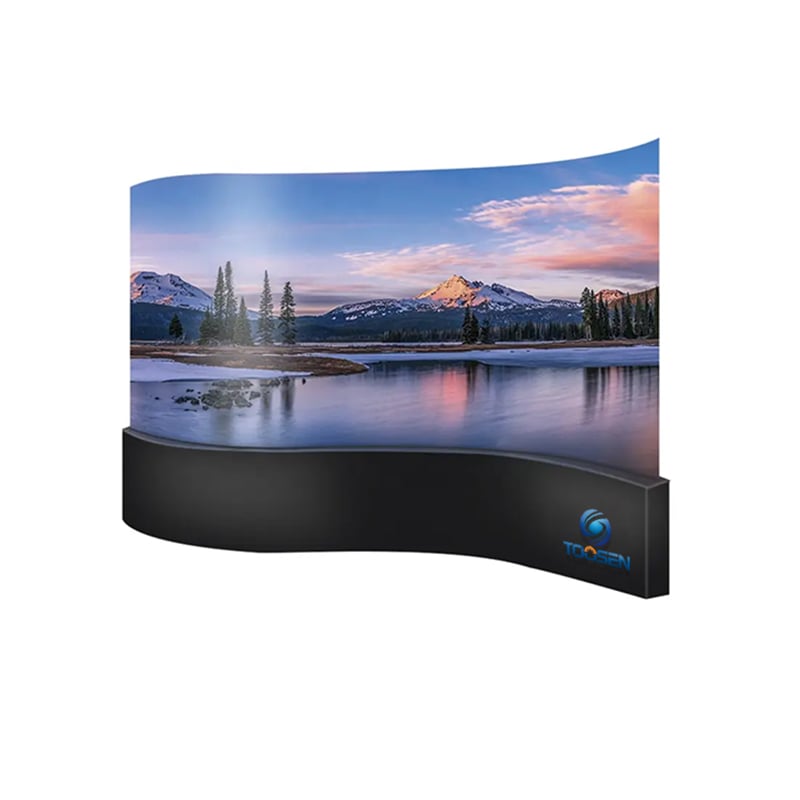
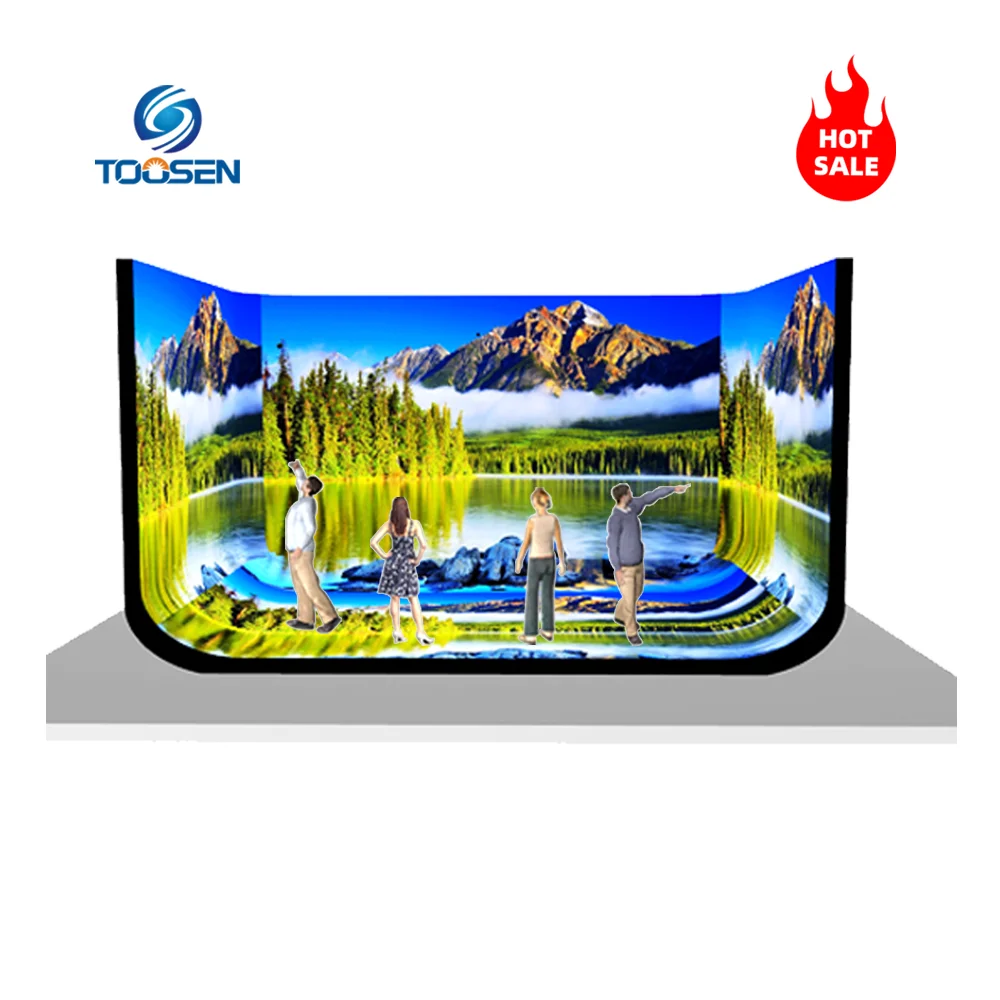
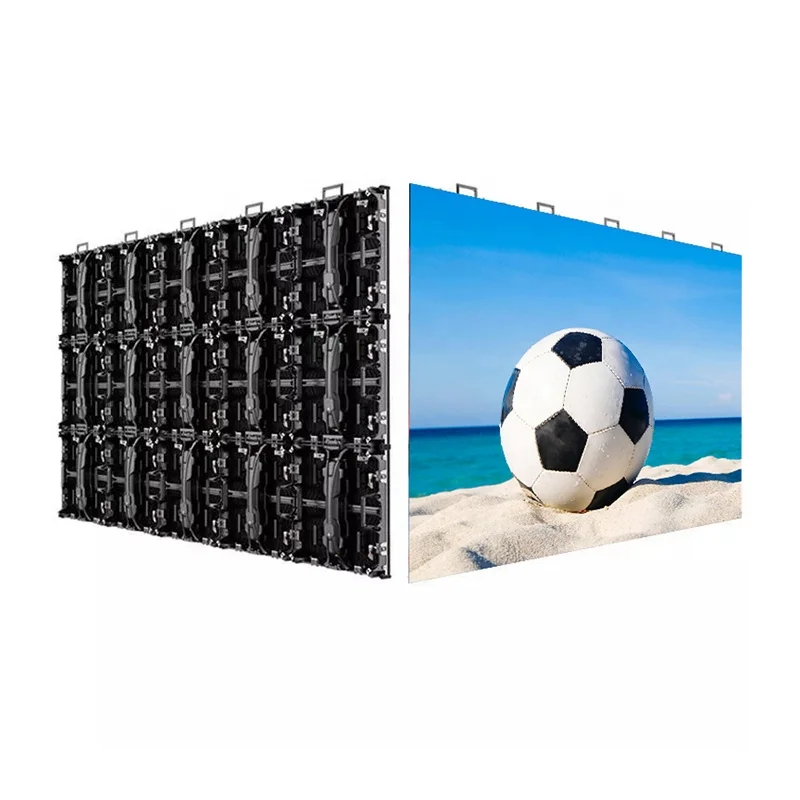
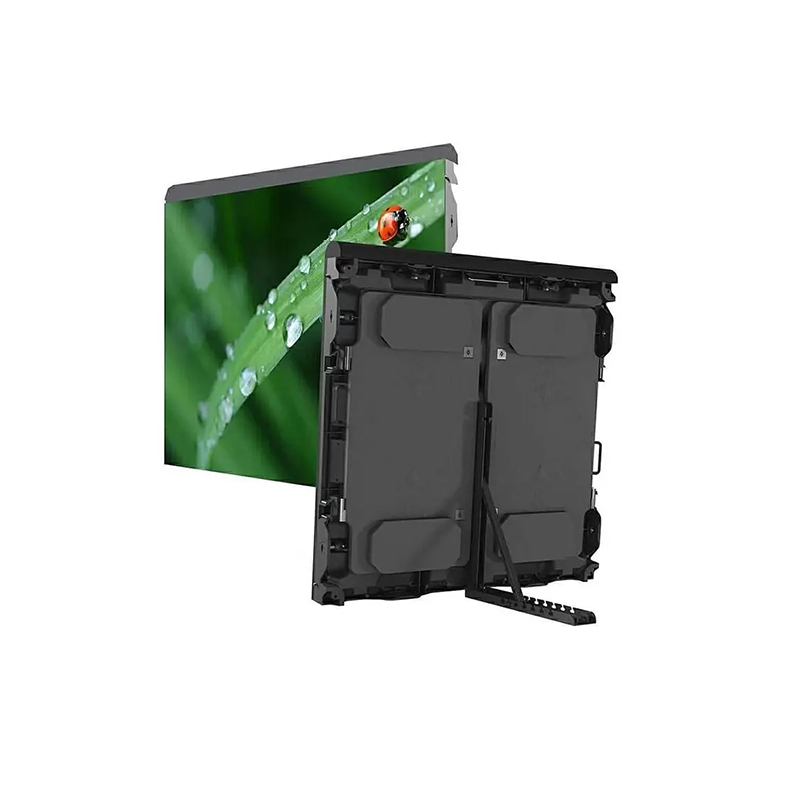
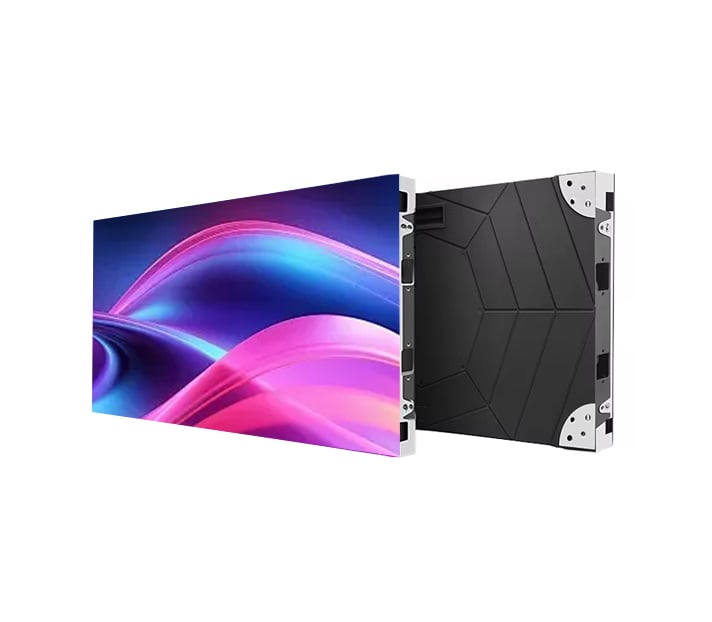
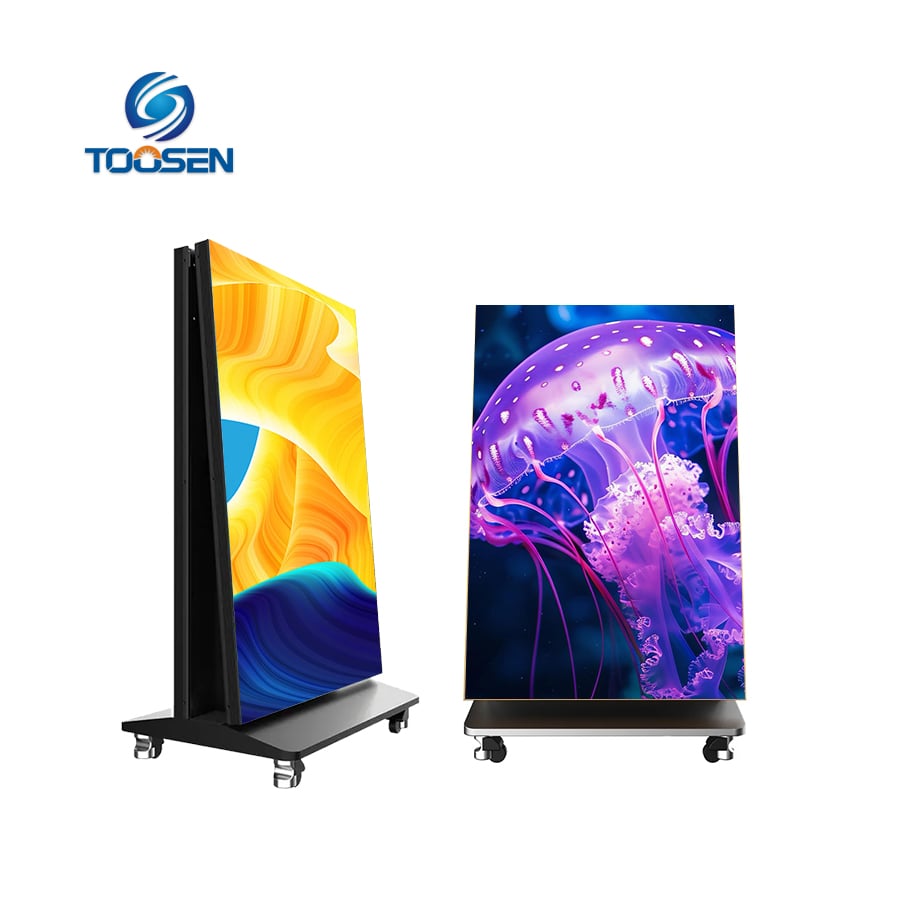
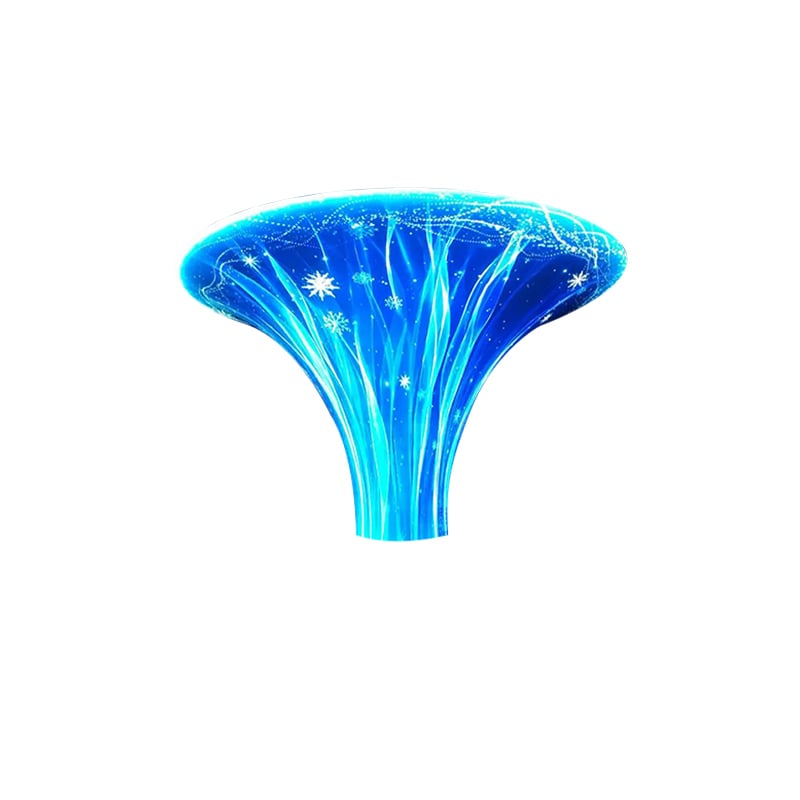
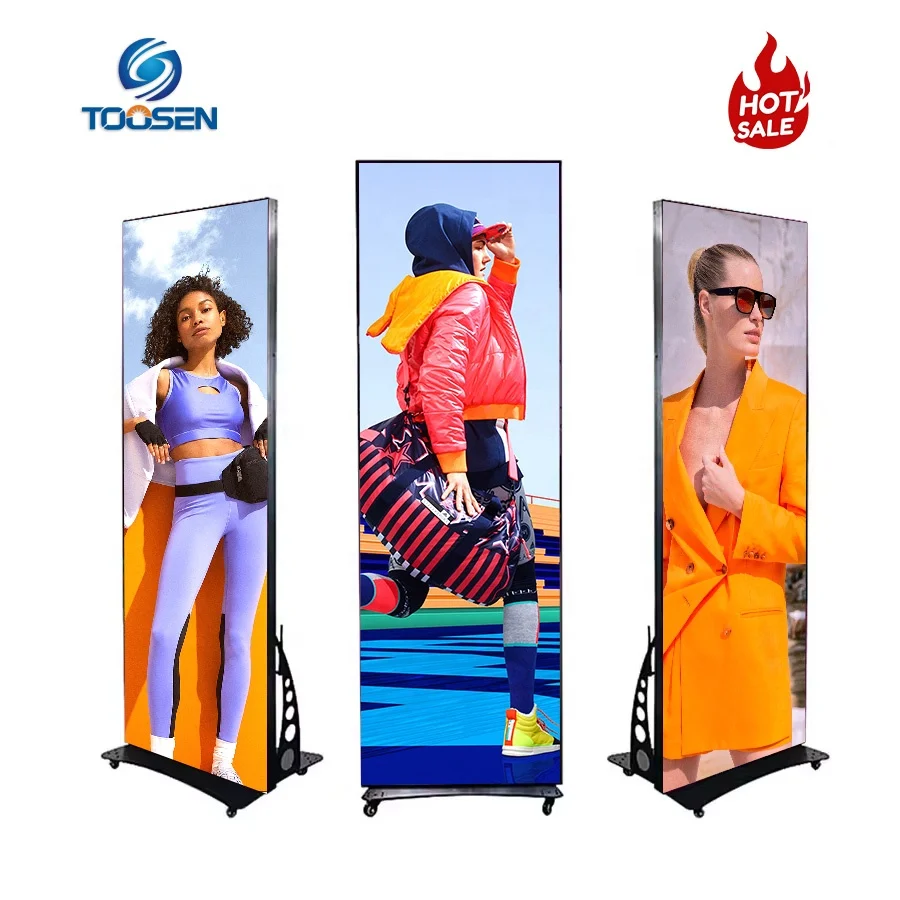
Alayar LED Mekanis menggabungkan Modul tampilan LED, sistem transmisi mekanis presisi, dan teknologi pengendali gerak multi-sumbu . Berbeda dengan tampilan LED statis konvensional, sistem ini memungkinkan struktur layar itu sendiri bergerak. Melalui pengendalian terprogram, unit-unit individual dapat terbuka, tertutup, diangkat, diputar, atau digeser , menciptakan bentuk tiga dimensi dinamis seperti gelombang, logo skulptural, dan permukaan melengkung bergerak sekaligus tetap menampilkan gambar atau video berdefinisi tinggi.
Karena layar bergerak secara sinkron dengan konten digital, tampilan LED mekanis menghadirkan dampak visual yang kuat dan transformasi spasial yang dramatis . Desainer juga dapat mengintegrasikannya dengan konten 3D tanpa kacamata untuk menciptakan pengalaman yang sangat imersif. Namun, sistem-sistem ini biasanya memerlukan investasi yang lebih tinggi dan pemeliharaan yang lebih kompleks dibandingkan layar LED standar.
Layar LED pembuka terbagi menjadi beberapa bagian yang bergerak ke kiri dan kanan, ke atas dan bawah, atau dilipat dalam beberapa panel . Desainer sering menggunakannya sebagai latar belakang panggung besar atau layar pusat stadion .
Selama pertunjukan atau acara, panel-panel tersebut terbuka secara dramatis untuk memperlihatkan visual baru atau elemen panggung. Gerakan ini menciptakan kesan yang kuat efek seremonial untuk momen pembukaan atau transisi adegium .
Tampilan mekanis matriks terdiri dari banyak modul LED independen yang disusun dalam bentuk kisi . Setiap modul mengintegrasikan motor servo atau motor stepper , sehingga memungkinkannya bergerak secara independen.
Akibatnya, layar dapat berubah menjadi bentuk dinamis seperti:
Pola gelombang
Struktur menyerupai pegunungan
Logo merek tiga dimensi
Jenis ini bekerja sangat baik di atrium pusat perbelanjaan, landmark budaya, dan instalasi seni digital , di mana struktur yang berubah-ubah itu sendiri menjadi bagian dari daya tarik.
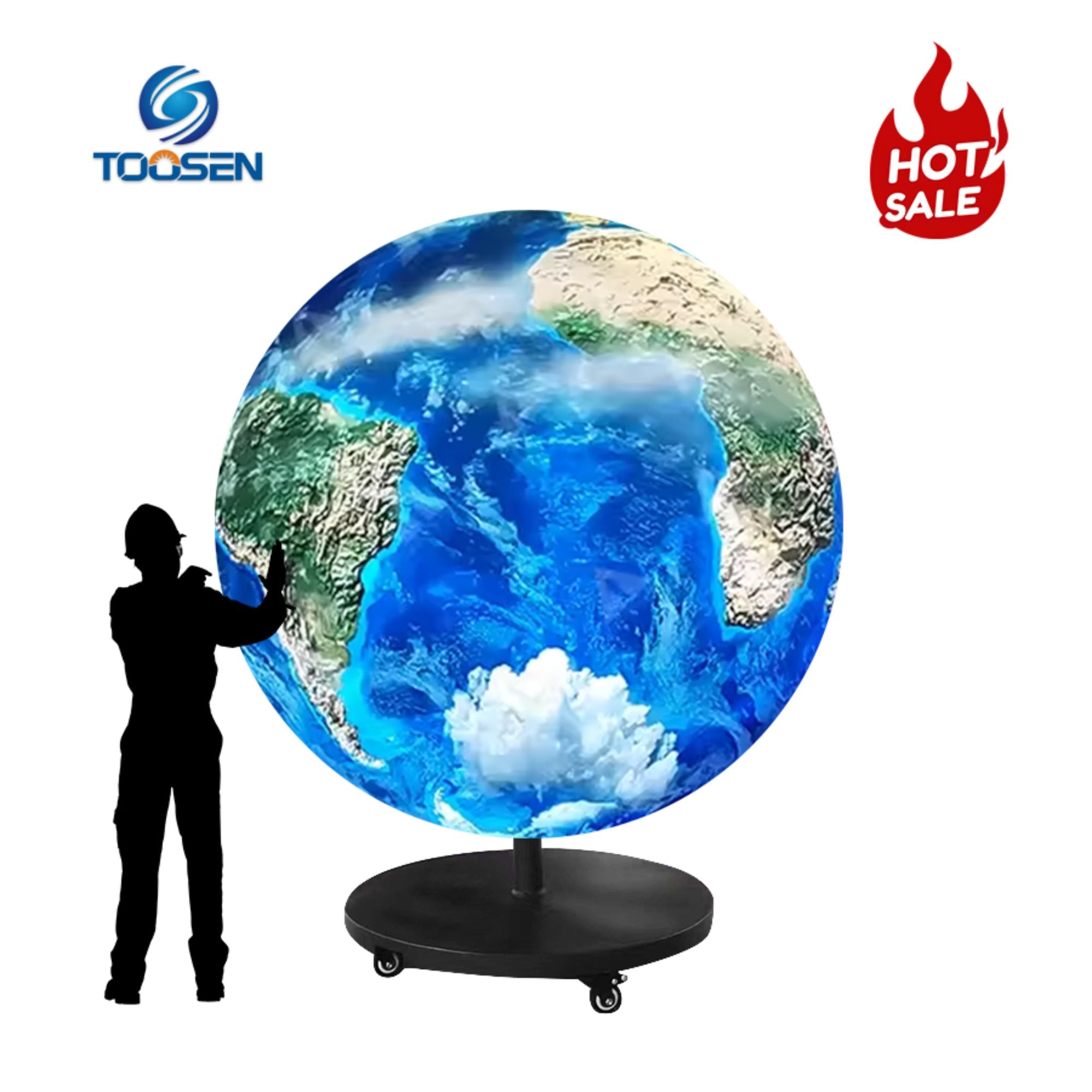
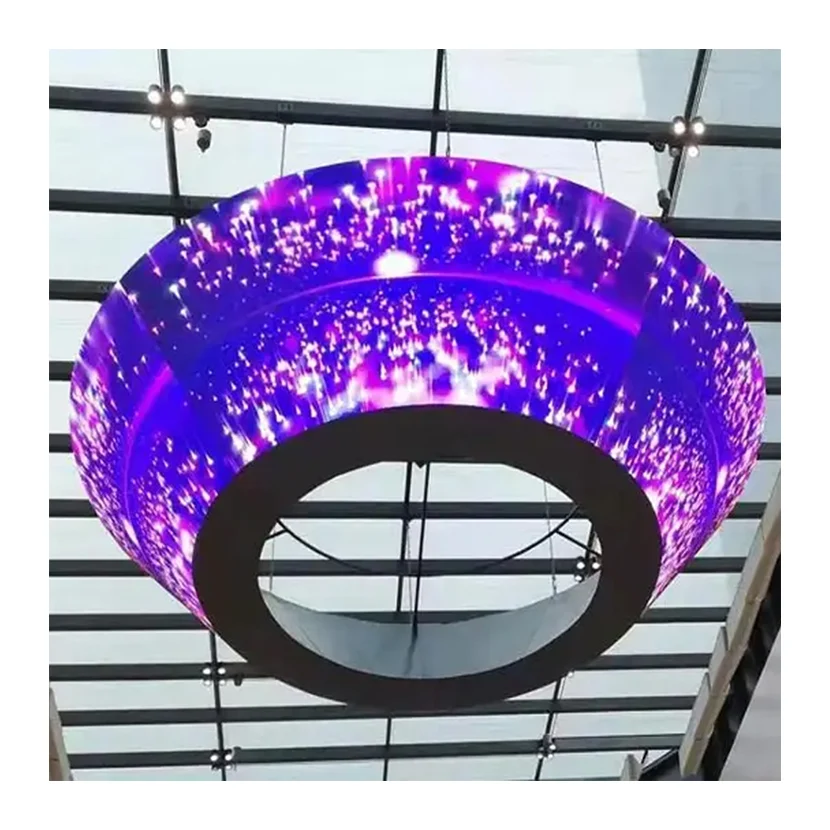
Beberapa tampilan LED mekanis menggunakan unit berputar atau struktur multi-sisi seperti kubus, bola, atau cincin. Panel-panel individual berputar mengelilingi suatu sumbu, memungkinkan penayangan 360 derajat dan perubahan sudut pandang .
Instalasi semacam ini sering muncul di museum sains, pusat pengalaman merek, dan ruang pameran imersif , di mana pengunjung dapat mengamati tampilan dari berbagai arah.
Tampilan LED geser bergerak sepanjang rel panduan yang telah ditentukan sebelumnya , baik sebagai layar penuh maupun sebagai panel-panel terpisah. Desainer sering menyelaraskan gerakan ini dengan jalur pergerakan pengunjung atau urutan narasi cerita.
Karena fleksibilitas ini, layar geser banyak digunakan di ruang pameran, ruang acara, dan ruang pamer pengalaman yang mengandalkan penyampaian narasi secara dinamis.
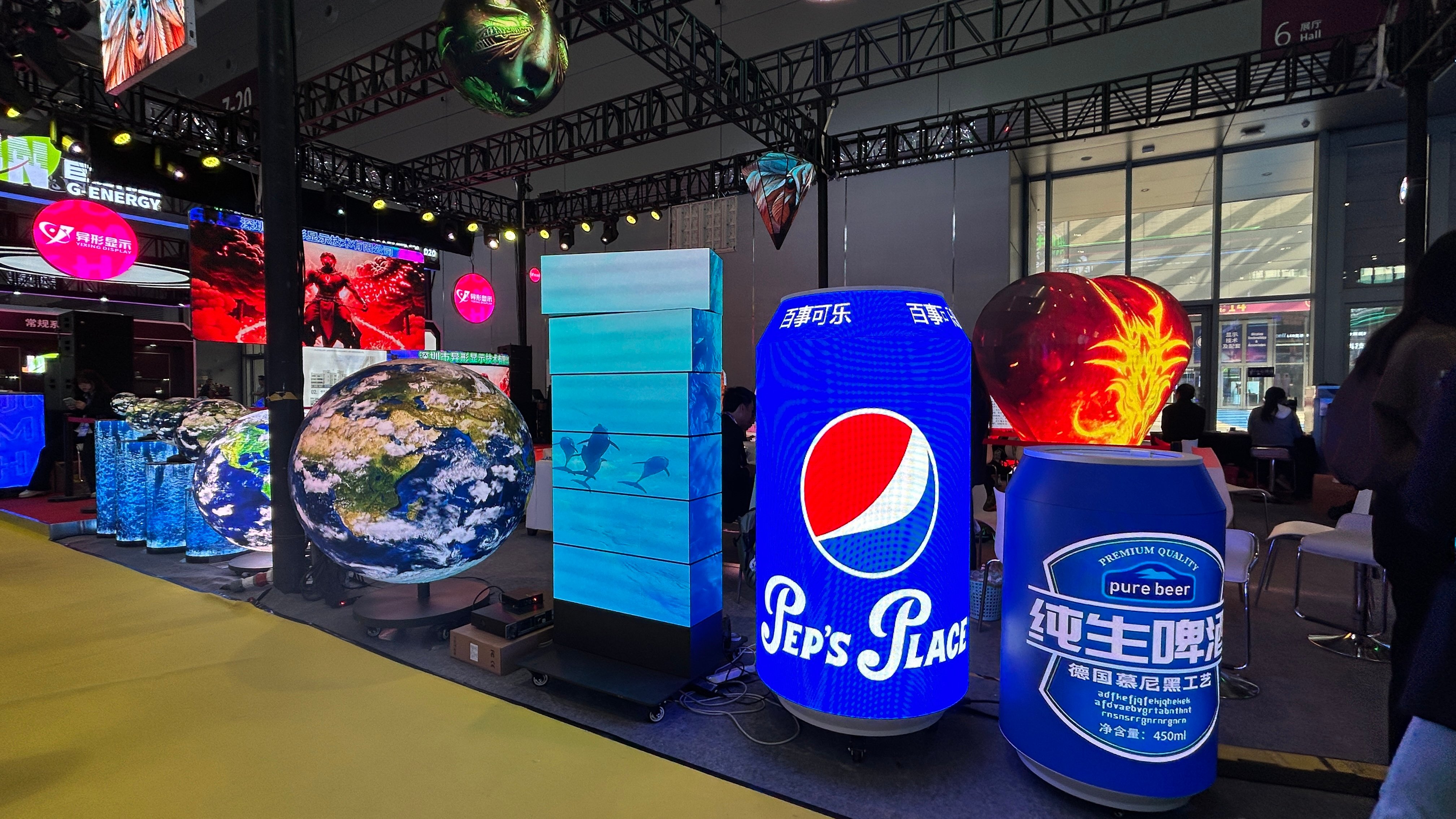
Tampilan LED mekanis biasanya terdiri dari tiga lapisan terintegrasi.
Lapisan tampilan
Lapisan ini menggunakan modul LED SMD penuh warna , sedangkan versi kelas atas mengadopsi Teknologi Mini LED . Jarak piksel umumnya berkisar antara P2–P6 untuk instalasi dalam ruangan dan P6–P10 untuk proyek di luar ruangan .
Lapisan Mekanis
Struktur mekanis mencakup motor servo atau motor stepper, rel panduan presisi, sekrup pengarah, dan rangka baja . Insinyur juga mengintegrasikan sistem peredaman kebisingan, pengendalian getaran, dan perlindungan batas untuk memastikan pergerakan yang stabil.
Lapisan Pengendali
Sistem kontrol mengintegrasikan Pengontrol tampilan LED, kartu pengendali gerak, dan platform perangkat lunak terpusat . Sebagian besar sistem mendukung protokol seperti DMX512, Art-Net, dan TCP/IP , yang memungkinkan sinkronisasi dengan sistem pencahayaan, peralatan audio, dan otomatisasi panggung selain itu, fitur perlindungan terhadap kehilangan daya dan diagnosis kesalahan merupakan standar pada instalasi profesional.
| Parameter | Proyek Dalam Ruangan | Proyek-proyek outdoor | Catatan |
|---|---|---|---|
| Frekuensi Pembaruan | ≥3840 Hz | ≥3840 Hz | Mencegah flicker dan moiré selama pengambilan gambar atau siaran langsung |
| Kecerahan | 1000–2000 cd/m² dengan sensor cahaya otomatis | 6000–10000 cd/m² dengan proteksi IP65 | Model luar ruangan memerlukan ketahanan terhadap sinar UV dan toleransi suhu |
| Kecepatan & Ketepatan Gerak | Kecepatan yang dapat disesuaikan, akurasi posisi ≤0,1 mm | Kontrol kecepatan adaptif terhadap angin dengan perhitungan beban angin | Memastikan pergerakan halus serta melindungi komponen mekanis |
| Skala Abu-abu | 16-bit | 16-bit | Mempertahankan transisi warna yang halus pada kecerahan rendah |
 EN
EN
 AR
AR
 BG
BG HR
HR
 CS
CS
 DA
DA
 NL
NL
 FI
FI FR
FR
 DE
DE EL
EL
 HI
HI
 IT
IT JA
JA
 KO
KO
 NO
NO PL
PL PT
PT RO
RO
 RU
RU
 ES
ES
 SV
SV
 TL
TL
 ID
ID
 SR
SR
 UK
UK VI
VI
 ET
ET
 HU
HU
 TH
TH
 TR
TR
 FA
FA
 AF
AF
 MS
MS
 GA
GA
 HY
HY
 AZ
AZ
 MN
MN
 UZ
UZ